

Dharmachakra Mudra Statue
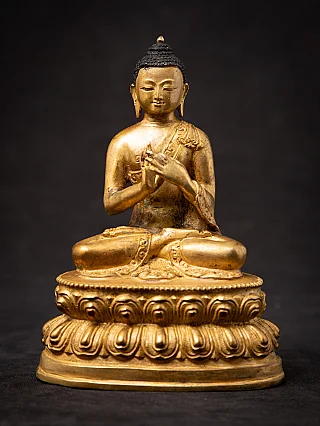
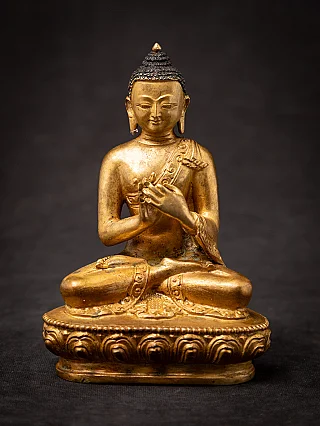
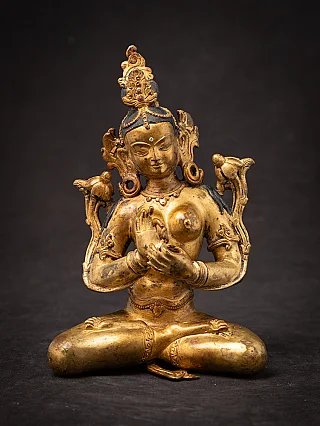
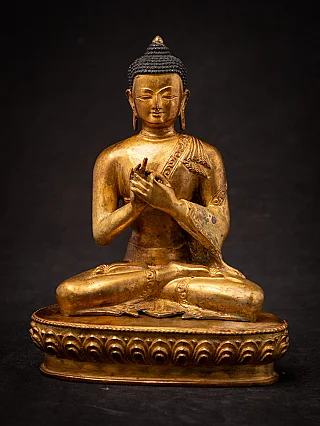
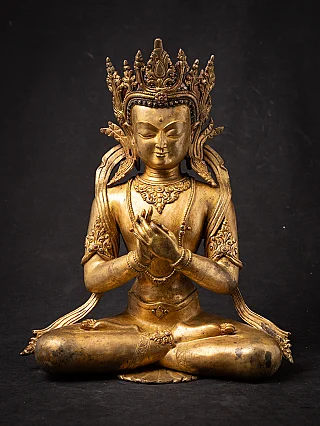
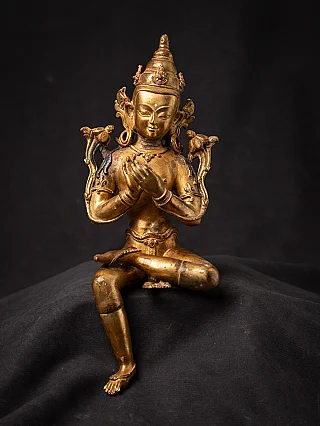
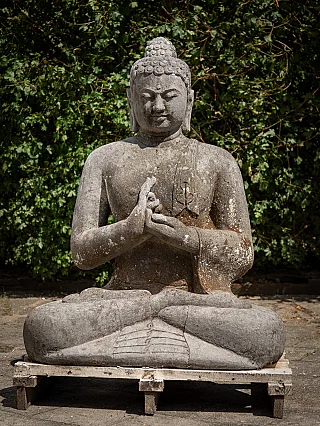
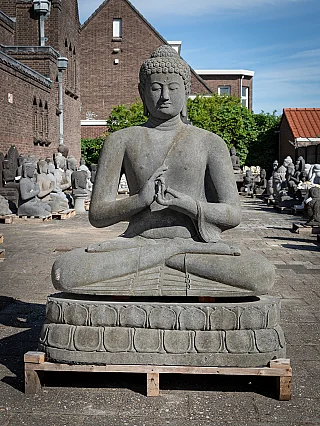
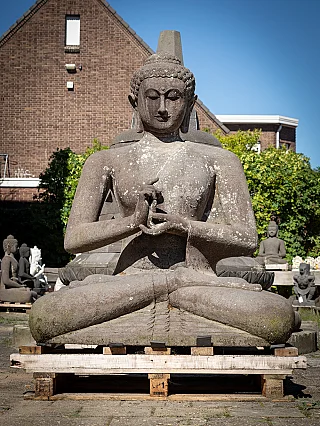
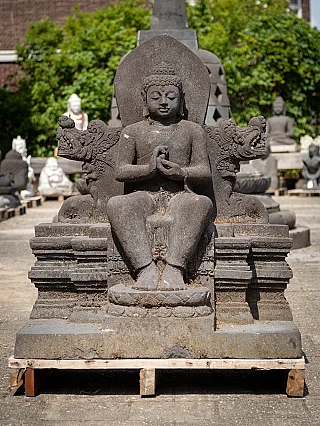
The Dharmachakra Mudra, meaning "turning the Wheel of Dharma," marks the moment the Buddha delivered his first sermon at Sarnath. Formed by joining the thumb and index finger of the right hand, it symbolizes the transmission of the Four Noble Truths and the Eightfold Path. Our collection features antique bronze and wooden statues from Nepal, Thailand, and Burma.
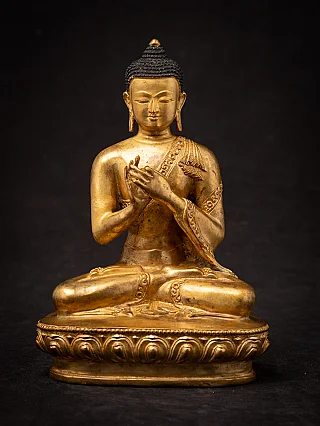
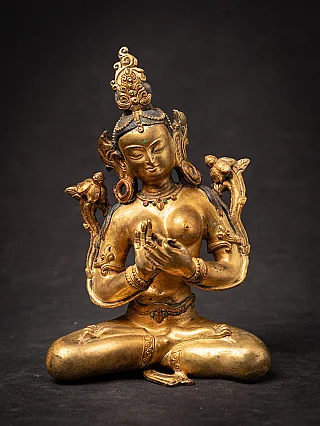
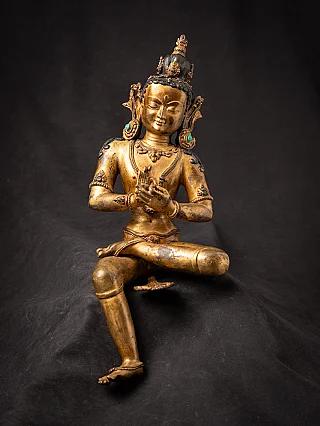
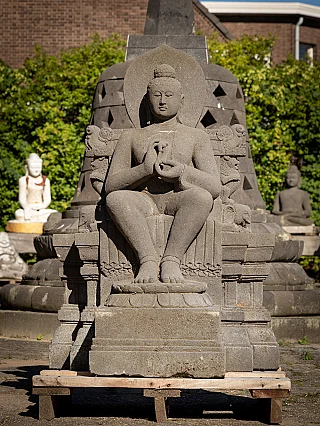
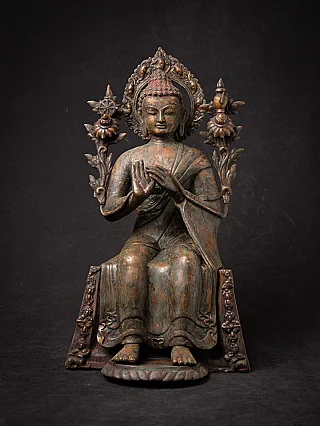
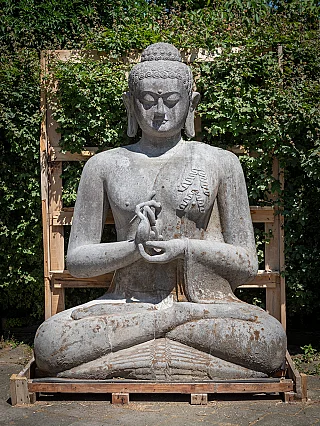
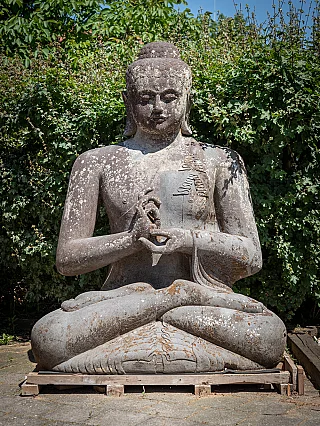
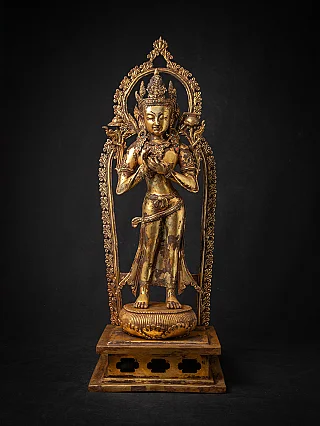
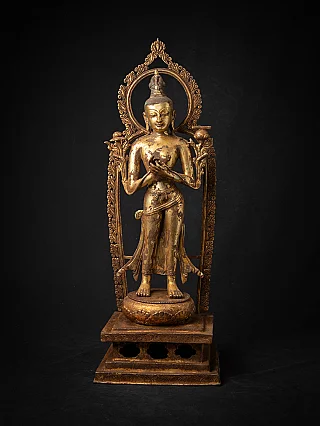
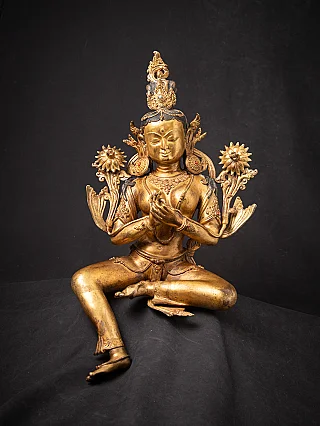
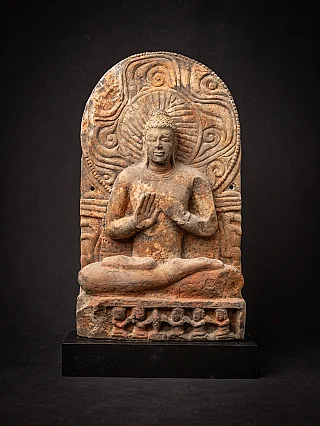
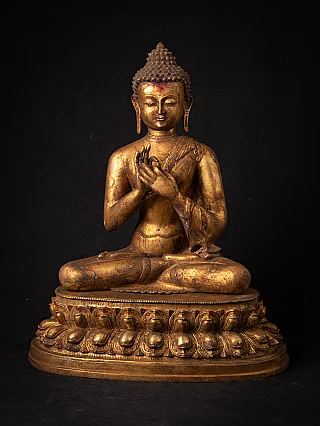
Materials and Craftsmanship of Dharmachakra Mudra Statues
Each Dharmachakra Mudra statue in our collection is carved or cast by hand, using materials chosen for both beauty and longevity. Below are the materials most commonly found in this collection:
- Wooden statues: hand-carved with a warm, natural grain that deepens in character over time.
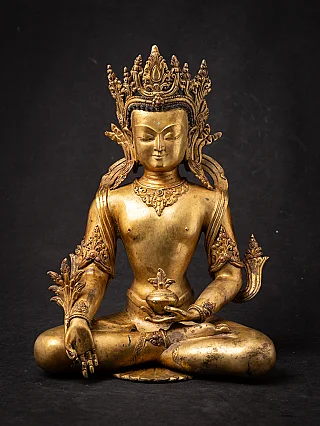
- Bronze statues: cast using traditional lost-wax methods, prized for crisp detail and a patina that improves with age.
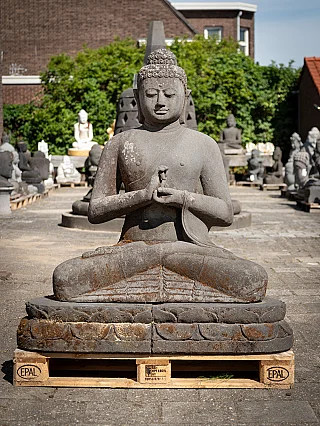
- Stone statues: weathered and enduring, suited to both indoor altars and outdoor courtyards.
- Lavastone statues: a volcanic stone with a rugged, organic texture built for outdoor display.
- Marble statues: polished and refined, favored for formal interiors.
What Does the Dharmachakra Mudra Mean?
The Dharmachakra Mudra ("gesture of the Wheel of Dharma") marks the Buddha's first sermon at Sarnath, where he taught the Four Noble Truths and the Eightfold Path. The right hand forms a circle with the thumb and index finger while the left hand faces upward, a shape said to represent the eternal, turning wheel of Buddhist teaching. Together, the two hands express the union of wisdom and compassion, method and insight, at the heart of Buddhist practice.
Spiritual Benefits of a Dharmachakra Mudra Statue
A Dharmachakra Mudra statue is traditionally kept as a reminder to keep learning and to pass on what is learned. Practitioners describe its presence as encouraging clarity of mind, patience with study, and a steadier connection to the Buddha's teaching in daily life. For collectors, it also stands as one of the more historically significant mudras: the gesture the Buddha is said to have used at the very beginning of his teaching career.
Where to Place a Dharmachakra Mudra Statue
Because the gesture is associated with teaching and transmission, a Dharmachakra Mudra statue suits any space set aside for study, reflection, or quiet practice:
- Personal altar: paired with candles and incense as a focal point for meditation or prayer.
- Study or library: a fitting companion to a reading or writing space.
- Yoga or meditation studio: a visual anchor for teaching and practice.
- Garden or courtyard: stone or lavastone pieces hold up well outdoors and bring a sense of calm to the space.
Explore Other Mudra Statues
The Dharmachakra Mudra is one of several hand gestures represented across our collection, each with its own meaning and history:
- Bhumisparsha Mudra statues: the earth-touching gesture that calls the earth to witness the Buddha's enlightenment.
- Namaskara Mudra statues: the gesture of greeting, reverence, and respect.
- Abhaya Mudra statues: the raised hand of fearlessness and protection.
- Varada Mudra statues: the open, downward hand of generosity and compassion.
- Vitarka Mudra statues: the gesture of teaching and intellectual discussion.
- Dhyana Mudra statues: the resting hands of deep meditation.
Frequently Asked Questions
What does the Dharmachakra Mudra symbolize?
It symbolizes the Buddha's first sermon at Sarnath and the turning of the Wheel of Dharma, representing the transmission of the Four Noble Truths and the Eightfold Path to the world.
Which hand forms the Dharmachakra Mudra?
The right hand forms a circle by joining the thumb and index finger, while the left hand rests with the palm facing upward, often touching the fingers of the right hand.
Is the Dharmachakra Mudra the same as the Vitarka Mudra?
No. Both use a similar thumb-and-index-finger circle, but Vitarka Mudra is made with one hand raised in a gesture of teaching or discussion, while Dharmachakra Mudra uses both hands together to represent the turning of the Wheel of Dharma itself.
Where should I place a Dharmachakra Mudra statue?
Most collectors place it on a personal altar, in a study or meditation space, or, for stone and lavastone pieces, outdoors in a garden or courtyard.