

Abhaya Mudra Buddha Statues
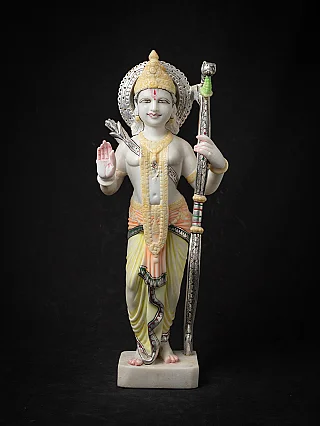
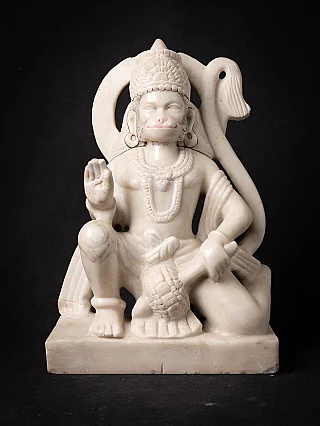
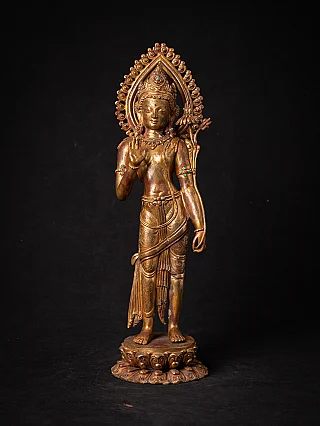
Abhaya Mudra, meaning "the gesture of fearlessness," is one of the oldest and most widely recognized hand positions in Buddhist and Hindu iconography. It is formed by raising the right hand to shoulder height, palm facing outward and fingers extended upward, while the left hand typically rests at the side or on the lap. The name comes from the Sanskrit a ("without") and bhaya ("fear"). According to Buddhist tradition, the Buddha first made the gesture shortly after his enlightenment, when his jealous cousin Devadatta released a rampaging elephant in his path the Buddha simply raised his hand, and the animal stopped and bowed before him. The earliest surviving depictions date to the Gandhara period (1st-3rd century CE), and the gesture later spread into Hindu, Jain, and Sikh imagery as well, always carrying the same message: protection, reassurance, and freedom from fear. Today it appears most often on standing Buddha statues from Nepal, Thailand, and Burma.
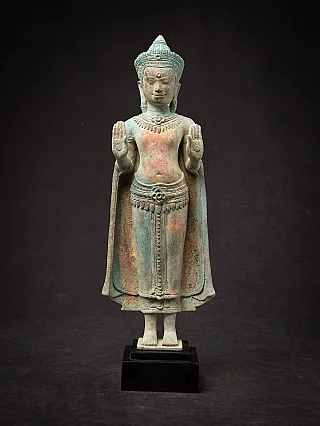
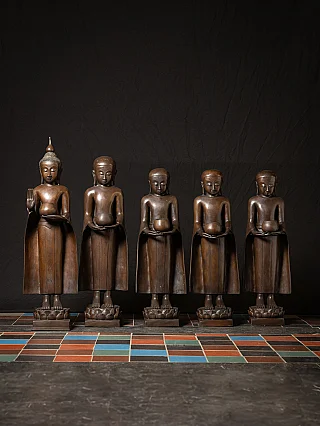
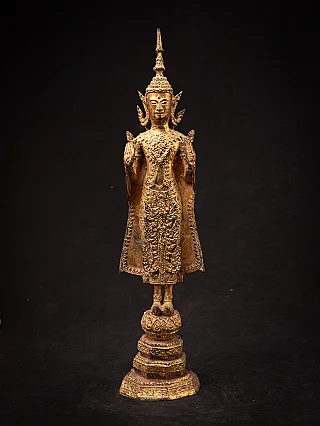
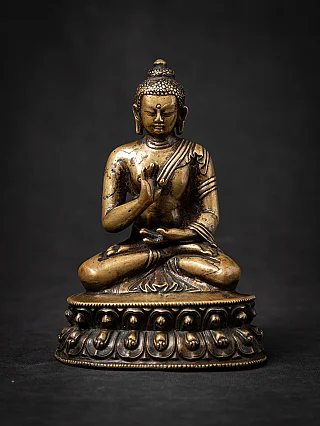
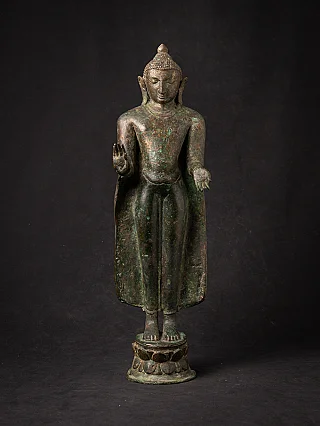
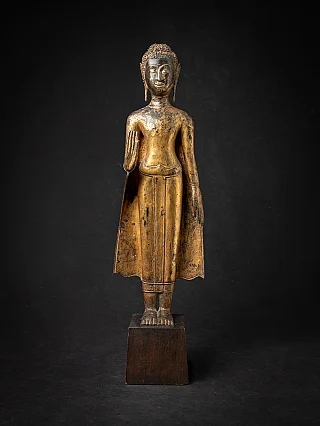
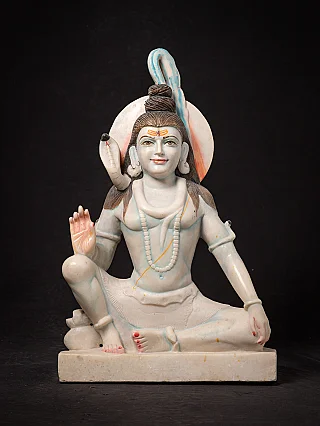
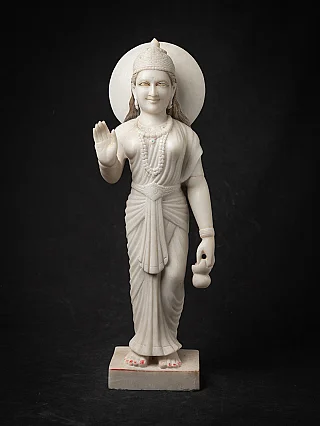
The meaning and origin of Abhaya Mudra
Abhaya - "fearlessness" - is one of the oldest recorded hand gestures in South Asian sacred art, and quite possibly older than Buddhism itself. Scholars believe the open, raised palm was already in use as a general sign of peaceful intent - the same instinctive gesture a stranger might use today to show they carry no weapon - before it was formally adopted into Buddhist iconography. The earliest surviving Buddhist depictions come from the Gandhara period (1st-3rd century CE), a region where Indian Buddhist and Hellenistic Greek artistic traditions met; some art historians have noted a formal resemblance between the Abhaya gesture and the Roman adlocutio - the raised, open-palmed address of a general or emperor - though the two developed independently and the parallel is one of visual form rather than direct influence.
Buddhist tradition attaches a specific story to the gesture: shortly after his enlightenment, the Buddha's jealous cousin Devadatta released a rampaging elephant into his path in the city of Rajagaha. Rather than flee or retaliate, the Buddha raised his right hand, palm outward, and the elephant stopped in its tracks and bowed. The story is used across Buddhist teaching to illustrate a central doctrinal point: that non-violence and calm presence are a more powerful response to aggression than force. From this episode, Abhaya Mudra became permanently associated with courage, protection, and the Buddha's promise of safety to anyone who approaches him.
The gesture did not stay confined to Buddhist art. It appears on Hindu deity statues - including Vishnu and Shiva in his Nataraja form, where one of his four hands makes the Abhaya gesture - as well as in Jain Tirthankara imagery and Sikh iconography, always carrying the same core meaning of reassurance and protection from a divine or enlightened figure toward the devotee.
The major forms of Abhaya Mudra statues
Abhaya Mudra is not a single fixed pose - it appears in several distinct sculptural forms across Buddhist Asia, each with its own regional home and slightly different meaning. Recognizing these forms is useful both for understanding a statue's origin and for choosing the piece that best fits the space it will occupy.
Standing single-hand Abhaya
The most common and widely produced form: a standing Buddha with the right hand raised in Abhaya Mudra and the left hand hanging at the side or holding the edge of the robe. This is the classic "protection" pose found across Nepal, Thailand, and Burma, and the form most buyers picture when they think of an Abhaya Mudra statue.
Double Abhaya - both hands raised
In some Southeast Asian traditions, particularly in Thai and Lao statuary, the Buddha is shown with both hands raised in Abhaya Mudra simultaneously. This "double Abhaya" form is often associated with episodes of the Buddha pacifying a dispute or calming a crowd, and it intensifies the sense of active, outward-facing protection compared with the single-hand version.
Abhaya-Varada - protection and generosity combined
A frequently seen combination pairs Abhaya Mudra on the right hand with Varada Mudra (the gesture of giving) on the left, palm facing outward and fingers pointing down. Together the two gestures express a double promise - protection from fear and the granting of blessings - making this one of the most reassuring and complete standing forms in the collection.
Walking Buddha - the Sukhothai "Lila" pose
Thailand's Sukhothai tradition (13th-14th centuries) developed a uniquely graceful walking Buddha, known as the pang lila or "floating" pose: one foot forward as if in mid-stride, the body in gentle S-curve movement, and the right hand raised in Abhaya Mudra as the figure advances. In Thailand and Laos, this walking form is often called "the Buddha placing his footprint," and it represents the Buddha actively moving through the world to teach, rather than standing still in reassurance.
Crowned and royal Abhaya Buddha
In several Southeast Asian courts, the Buddha was depicted in royal attire - crowned, jewelled, and dressed as a monarch - while still performing Abhaya Mudra, merging the ideas of spiritual and temporal authority. See our crowned Buddha statues collection for examples of this regal form.
Materials and regional traditions in Abhaya Mudra sculpture
Because Abhaya Mudra spread across so much of Buddhist Asia, it was reproduced in every major sculptural material and regional workshop tradition - and each region left its own stylistic signature on the gesture.
Nepalese Abhaya Mudra figures are most often cast in bronze by Newar workshops in the Kathmandu Valley, prized for fine facial modelling, precise hand and finger casting, and - on finer pieces - mercury-gilding and inlaid stones. Thai Abhaya statues span several period styles, from the flowing Sukhothai walking form to the more rigid, formal Rattanakosin standing figures, in both wood and bronze. Burmese Abhaya statues draw on a distinct set of regional styles - including Mandalay, Shan, and Ava period traditions - and are frequently carved in wood or finished in gilded lacquerware. Lao and Khmer (Cambodian) Abhaya figures tend toward more elongated proportions and are found in wood, bronze, and sandstone depending on period. Across all regions, stone Abhaya statues are the most weather-resistant choice for outdoor or garden placement.
How to assess an Abhaya Mudra statue before purchase
The raised hand is both the iconographic heart of an Abhaya Mudra statue and its most physically vulnerable point - check the fingers, wrist, and the join where the forearm meets the body for old repairs, replacements, or losses, since this area takes the most damage over decades of handling. On wood statues, look for stable, insect-free grain and a natural, even patina from handling and age rather than an artificially darkened surface. On bronze statues, assess the sharpness of the casting at the fingers and robe edges, and the depth and evenness of the patina, which develops unevenly and convincingly on a genuinely old piece. On stone statues, examine surface weathering and any old losses on the extended arm, which are common and - when stable and honestly disclosed - are part of the piece's history rather than a defect. The drape and folds of the robe, and the specific proportions of the face and body, can also help place a statue within a regional style and period, since Sukhothai, Rattanakosin, Mandalay, and Newar workshops each followed distinct conventions.
Where to place an Abhaya Mudra statue
Because the gesture represents active reassurance rather than a specific ritual act, Abhaya Mudra statues work well anywhere calm and protection are welcome: an entryway or hallway (to greet arriving guests), a meditation corner, a living room, or - for stone pieces - a garden or courtyard shrine. They pair naturally with pieces from our temple & home altar collection and with other standing Buddha statues, the posture the mudra appears on most often. Bronze pieces benefit from warm, directional lighting that brings out the depth of the patina; wood statues are best kept out of direct sun and steady humidity to protect the grain.
Frequently Asked Questions
What is Abhaya Mudra?
Abhaya Mudra is a Buddhist and Hindu hand gesture meaning "fearlessness," made by raising the right hand to shoulder height with the palm facing outward. It symbolizes protection, reassurance, and the dispelling of fear.
What does the Abhaya Mudra Buddha statue mean?
An Abhaya Mudra Buddha statue represents the Buddha offering safety and courage to those who seek it. The gesture is traditionally linked to the story of the Buddha calming a charging elephant with a single raised hand.
Which hand is used in Abhaya Mudra?
The right hand is used, raised to shoulder height with the palm facing outward and fingers pointing upward. The left hand typically rests at the statue's side, holds the robe, or - in the Abhaya-Varada combination - makes the gesture of giving.
What does it mean when a Buddha statue has both hands raised in Abhaya Mudra?
This "double Abhaya" form, found mainly in Thai and Lao statuary, intensifies the gesture's meaning of active, outward-facing protection and is often associated with the Buddha pacifying a dispute or calming a crowd.
What is the difference between a standing and a walking Abhaya Mudra Buddha?
A standing Abhaya Buddha represents stillness and steady reassurance. A walking Abhaya Buddha - most famously the Sukhothai pang lila pose from Thailand - represents the Buddha actively moving through the world to teach, with the same raised-hand gesture of protection carried into motion.
Is Abhaya Mudra the same as Vitarka Mudra?
No. Abhaya Mudra (open palm, fingers up, at shoulder height) signals protection and fearlessness, while Vitarka Mudra (thumb and index finger touching) signals teaching and intellectual discussion. They are visually similar but symbolically distinct.
Where do Abhaya Mudra Buddha statues come from?
Antique and original Abhaya Mudra statues are most commonly sourced from Nepal, Thailand, Burma (Myanmar), Laos, and Cambodia, crafted in wood, bronze, or stone.
Are the Abhaya Mudra statues at Original Buddhas antique?
The majority of our Abhaya Mudra statues are antique or vintage pieces sourced directly from private collectors, monasteries, and temples across Asia. Each listing specifies the estimated period, origin, material, and condition, and we do not sell newly manufactured decorative reproductions.
Do you ship Abhaya Mudra statues internationally?
Yes. Original Buddhas ships worldwide. Statues receive specialist packing appropriate to their material, weight, and fragility, and shipments include insurance and tracking.
Can an Abhaya Mudra statue be displayed by non-Buddhists?
Yes. Abhaya Mudra statues are collected and displayed by people of all backgrounds, both as spiritual objects and as works of art. The main consideration is respectful placement - at or above eye level, on a dedicated surface rather than the floor - regardless of the owner's background.
Abhaya Mudra statues at Original Buddhas
Original Buddhas is a specialist gallery for authenticated antique and vintage Buddhist sculpture, based in Deventer, the Netherlands. Every Abhaya Mudra statue in our collection is sourced directly through our own buying trips across Asia - purchased from private individuals, collectors, monasteries, and temples at a fair price, never removed from active worship, and never bought as stolen art. Our Abhaya Mudra pieces span standing, walking, double-Abhaya, and Abhaya-Varada forms in wood, bronze, and stone, from Nepal, Thailand, Burma, Laos, and Cambodia. The full collection can be viewed in person by appointment, and we ship worldwide. Browse the complete Abhaya Mudra statues collection, explore the broader Buddha statues catalog, or contact us directly to discuss a specific piece.
Explore Other Mudra Categories
Abhaya Mudra is one of seven hand gestures represented in our catalog, and each carries its own story and meaning. If you're building a collection, furnishing a meditation space, or simply want to understand more of the symbolism behind Buddhist statuary, these related categories are a natural next step:
- Bhumisparsha Mudra statues - the earth-touching gesture, calling the Earth to witness enlightenment
- Namaskara Mudra statues - the gesture of reverence and greeting
- Dharmachakra Mudra statues - turning the Wheel of Dharma
- Varada Mudra statues - the gesture of generosity and blessing
- Vitarka Mudra statues - the gesture of teaching and discussion
- Dhyana Mudra statues - the gesture of meditation
Whichever mudra speaks to you, every statue we sell - regardless of gesture, material, or region - is sourced directly from private collectors, monasteries, and temples across Asia, verified for authenticity, and sold with its own certificate of origin. Read more about how we source and authenticate our statues.
Continue Learning About Buddhist Iconography
Want to go deeper into the meaning behind the gesture, or see how Abhaya Mudra compares with the Buddha's other hand positions? These pages cover the full picture:
- Full explanation of Abhaya Mudra - a closer look at the gesture's history and variations
- All Buddha hand positions (mudras) - an overview of every mudra in Buddhist statuary
- Blog: Mudras - the hand positions of Buddha statues - the stories behind each gesture
- All Buddha statues - browse the full catalog by posture, material, and origin
- Standing Buddha statues - the posture Abhaya Mudra appears on most often