

Vitarka Mudra Buddha Statues
The Vitarka mudra is the hand gesture of teaching — the moment the Buddha turns toward his students and places wisdom into words. It is one of the most intellectually precise gestures in Buddhist iconography: contained, deliberate, and quietly authoritative. At Original Buddhas, our collection of Vitarka mudra statues spans antique and vintage pieces from Thailand, Burma, Nepal, Tibet, Laos, and Cambodia, each selected for iconographic accuracy, material quality, and individual sculptural presence.
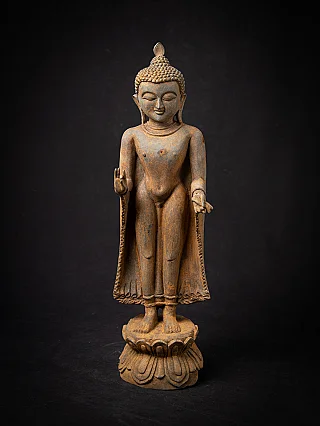
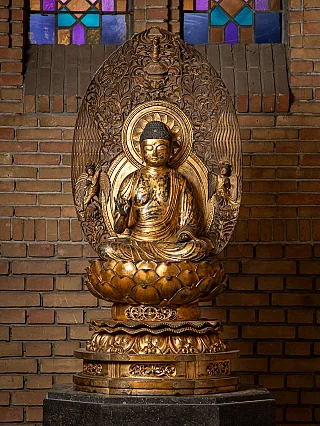
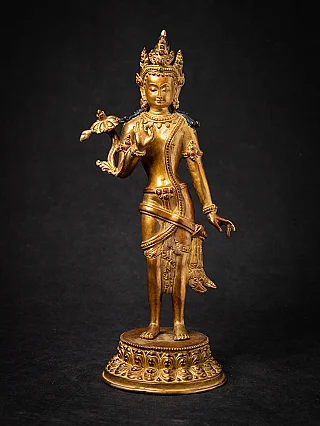
What Vitarka mudra means — and why it matters
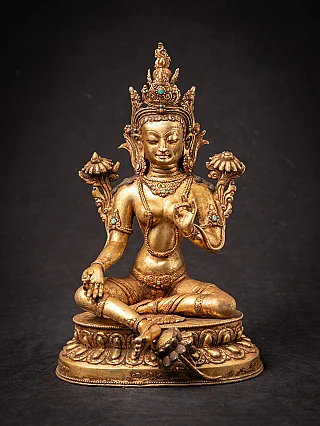
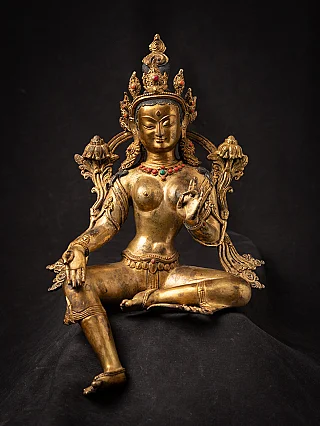
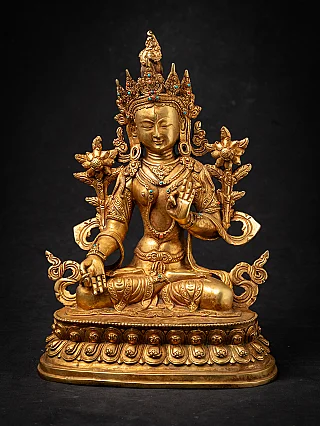
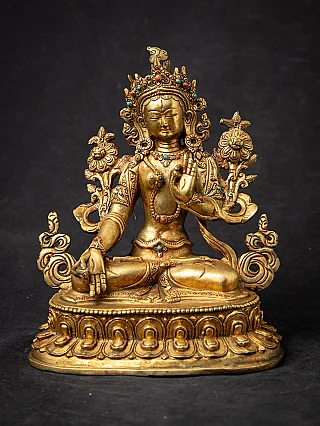
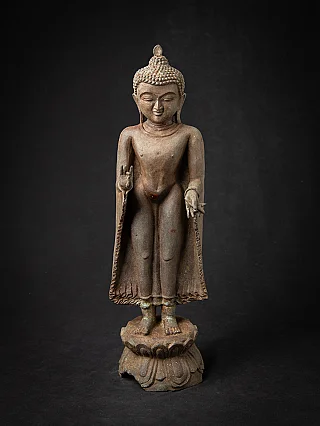
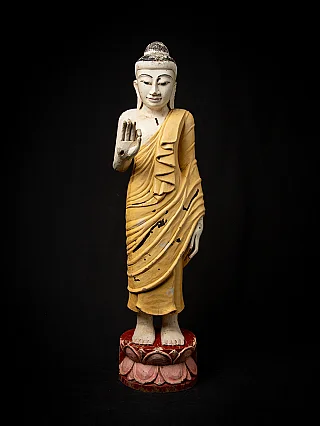
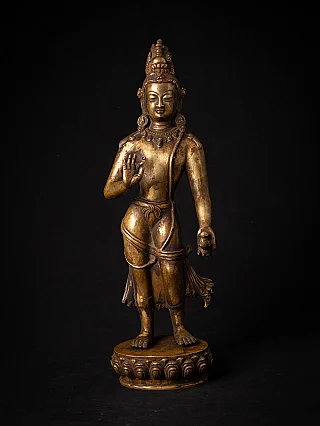
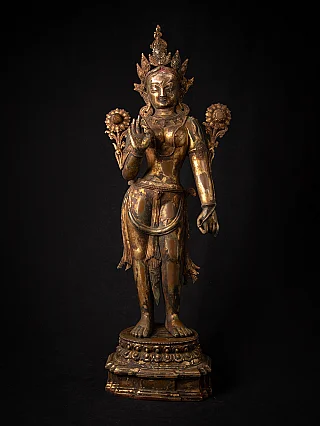
Vitarka mudra is formed by raising one hand to chest height, with the thumb and index finger touching to create a closed circle while the remaining fingers extend upward. This gesture appears across Buddhist art from India to Japan, and its meaning is consistent across traditions: the transmission of Dharma — the Buddha's teaching — from teacher to student.
The circle of thumb and index finger carries multiple layers of meaning. It represents the perfection of wisdom (prajnaparamita), the unbroken continuity of Buddhist teaching across generations, and the logical completeness of the Dharma as a path without gaps. The extended fingers are not decorative; they direct attention upward, toward clarity and understanding. The raised hand signals active communication rather than stillness, distinguishing Vitarka mudra from meditation gestures such as the Dhyana mudra (both hands resting in the lap) or the inward-turned gesture of Bhumisparsha mudra.
In the Pali Canon and Mahayana sutras, the Buddha is most often depicted not in silence but in the act of teaching — explaining dependent origination, the Four Noble Truths, the nature of impermanence. Vitarka mudra statues are the visual counterpart to that tradition: not the Buddha as an abstract symbol, but the Buddha as an active, engaged teacher whose words were considered capable of cutting through confusion and relieving suffering.
How to identify Vitarka mudra — and distinguish it from similar gestures
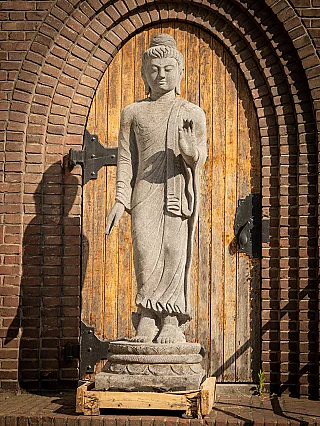
The key identifying feature of Vitarka mudra is the contact between the tip of the thumb and the tip of the index finger. In a well-cast or well-carved statue, this circle is clearly visible even from a distance. The hand is held at or near chest level, with the palm facing outward or slightly toward the viewer.
Vitarka mudra is most often confused with two other gestures. The Abhaya mudra (fearlessness and protection) raises the hand in a similar position, but the fingers extend fully without the thumb-and-forefinger circle — the palm is open and presented forward, offering protection rather than transmitting teaching. The Dharmachakra mudra (turning of the Wheel of Dharma) involves both hands at chest height, with both thumbs and index fingers touching — it is the specific gesture of the Buddha's first sermon at Deer Park, Sarnath. Vitarka mudra typically involves one hand only, and its context is broader: any act of teaching or reasoned explanation, not just the first sermon.
In some regional traditions — particularly certain Chinese and Japanese Buddhist art — the thumb may touch the middle finger rather than the index finger. In Esoteric Buddhism, variations of this gesture carry additional specific meanings. Always read a statue's full iconography: the combination of mudra, posture, crown or usnisha, and material together determine the complete identification.
Vitarka mudra across Asian traditions
The gesture appears in different forms across the major Buddhist art-producing regions, and the differences are significant for collectors and scholars alike.
Thai Vitarka mudra statues — particularly from the Sukhothai, Ayutthaya, and Rattanakosin periods — typically show the gesture with great elegance: slender fingers, a refined oval face with lowered gaze, and robe folds that fall in smooth, stylised lines. The standing Buddha with Vitarka mudra is particularly associated with the Sukhothai aesthetic, where the gesture communicates an almost walking movement — the Buddha teaching as he moves among people.
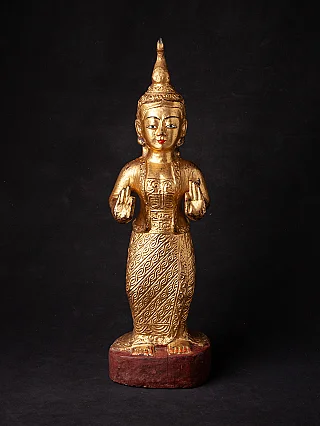
Burmese Vitarka mudra statues tend toward a stronger physical presence: broader face, more substantial body proportions, and often heavily gilded or lacquered surfaces. The Mandalay period produced particularly well-cast bronze Vitarka figures with high-relief robe borders and inlaid glass details. Shan-style versions often show longer, more attenuated proportions with a distinctive facial type.
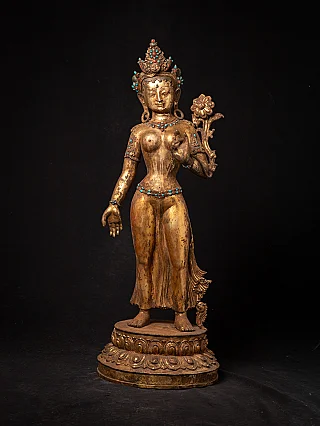
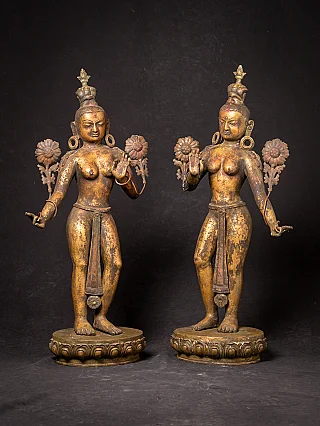
Nepalese and Tibetan Vitarka mudra statues appear most often in bronze, frequently gilt, and within complex multi-figure compositions. In the Vajrayana iconographic tradition, the teaching gesture is associated with specific bodhisattvas and tantric deities as well as with the historical Buddha. Nepalese bronzes from the 16th to 18th centuries are notable for their fine casting quality and precise rendering of jewelry, flame halos, and lotus bases.
Laotian and Cambodian Vitarka mudra statues are rarer in Western collections and carry the formal dignity of royal court traditions. Cambodian examples from the Bayon period sometimes show the teaching gesture combined with a serene, slightly archaic facial expression and elaborate jeweled costume — reflecting the conflation of Buddha and king in Khmer royal ideology.
Chinese and Japanese Vitarka mudra statues reflect distinct East Asian sculptural traditions: different robe styles (often showing more fabric volume), distinctive facial types, and in Japanese art, the highly refined lacquer and gilding techniques of the Heian and Kamakura periods. In Chinese art, the gesture appears frequently in Song and Ming dynasty ceramics and bronzes.
Materials: what they reveal about a statue's origin and age
The material of a Vitarka mudra statue is inseparable from its history. Bronze Vitarka mudra statues account for the largest part of surviving antique examples from Southeast Asia and the Himalayas. The casting quality of a bronze reveals the workshop: the precision of the finger circle, the sharpness of robe edges, the finish of the back and base. Patina — natural, variable, penetrating into recesses — is one of the primary indicators of genuine age in bronze.
Wooden Vitarka mudra statues are most commonly found from Burma and Thailand, where teak, padauk, and other hardwoods were the primary sculptural material for temple and monastery images. Wooden statues often carry traces of original gilding, lacquer, or pigment, and their surface reflects centuries of handling and ritual use. The carving of the mudra hand in wood requires particular skill — the open form of the gesture is structurally more vulnerable than closed gestures, making well-preserved examples rarer.
Stone and marble Vitarka mudra statues appear most commonly from Cambodia (sandstone), Burma (marble), and Thailand (limestone and sandstone). Stone statues often show more formal, monumental proportions suited to temple installation. Patina on stone takes the form of surface weathering, moss growth, and iron staining — signs that require careful reading to distinguish natural age from artificial treatment.
Lacquerware Vitarka mudra statues are a specialty of the Burmese tradition. Built over a core of bamboo or fabric, these figures are covered in multiple layers of thayo (lacquer mixed with ash) and often finished with gold leaf. The gesture in lacquerware pieces tends toward greater simplicity of form, since the material does not allow the same fine detail as cast bronze — but their warm gold surface and commanding presence make them among the most striking objects in the collection.
How to assess a Vitarka mudra statue
The mudra hand is the focal point of assessment. In a quality antique, the circle of thumb and index finger should be clearly formed — neither collapsed nor stiffly exaggerated. The remaining fingers should extend with natural spacing. The wrist should connect the gesture to the arm with appropriate anatomical logic. In bronze, look at the inside of the finger circle under strong light: the casting surface here reveals whether the piece was made from a master model or a worn secondary mould.
The face and the mudra should feel unified — the expression of inner calm and the gesture of outward communication belong together in a well-made statue. A fine Vitarka mudra statue does not give the impression that a generic body has had a gesture added to it; the teaching posture is integrated into the entire sculptural composition.
Condition details to examine: the tips of the extended fingers (most vulnerable to damage), the underside of the base (reveals authenticity markers), the back of the statue (a quality antique is finished on all sides), and any gilding or lacquer (which layers are original, which are later additions). At Original Buddhas, full condition reports accompany every listing, and high-resolution images of all significant details are provided.
Where to place a Vitarka mudra statue
Vitarka mudra statues carry the energy of intellectual clarity and the transmission of knowledge. They suit spaces associated with thought and learning — a study or home library, a meditation room, a gallery wall, or an entrance that sets the tone of a home. They also work quietly in living rooms where the gesture's refinement contributes to the room's character without demanding attention.
Position the statue at or above eye level on a dedicated surface — a cabinet, stone plinth, or wooden altar stand. The gesture should be visible from the main viewing angle; do not place the statue so that the mudra hand is obscured. Soft side lighting reveals patina and casting detail most effectively. Bronze statues pair well with aged wood and raw stone; wooden statues read best against neutral linen or plaster.
FAQ: Vitarka mudra statues
What exactly is Vitarka mudra?
Vitarka mudra is a Buddhist hand gesture representing teaching, reasoned explanation, and the transmission of the Dharma. The thumb and index finger touch to form a circle at chest height, with the remaining fingers extended upward. It appears across Buddhist traditions from India to Japan.
How does Vitarka mudra differ from Abhaya mudra?
Vitarka mudra (teaching) is identified by the thumb and index finger forming a circle. Abhaya mudra (protection and fearlessness) raises the hand with the palm forward and all fingers fully extended — no circle is formed. The context also differs: Abhaya mudra confers reassurance and protection, while Vitarka mudra communicates specific teaching content.
Is Vitarka mudra the same as Dharmachakra mudra?
No. Dharmachakra mudra (Wheel of Dharma) uses both hands at chest level, with both thumbs and index fingers touching. It specifically commemorates the Buddha's first sermon. Vitarka mudra uses one hand and represents a broader category of teaching and explanation.
Are Vitarka mudra statues antique?
The mudra describes the gesture, not the age. At Original Buddhas, the majority of our Vitarka mudra statues are antique (over 100 years old) or vintage (50–100 years old). Each listing specifies the estimated period and region. We do not sell newly manufactured reproductions.
What do Vitarka mudra statues cost?
Prices range from approximately €250–€500 for smaller vintage devotional bronzes to several thousand euros for rare antique pieces with strong provenance, fine casting, and historical significance. Wooden and lacquerware examples vary widely depending on size, period, and condition. Each piece is priced individually.
Which traditions produce the finest Vitarka mudra statues?
This depends on what you value. For elegant proportion and surface refinement, Thai Vitarka mudra bronzes from the Ayutthaya and Rattanakosin periods are outstanding. For iconographic precision and gilded surface quality, Nepalese bronzes from the 16th–18th centuries are unmatched. For powerful devotional presence, Burmese lacquer and bronze pieces from the Mandalay period carry exceptional character.
Can I place a Vitarka mudra statue outdoors?
Antique bronzes and lacquerware should not be placed outdoors — exposure to rain and frost accelerates deterioration. For outdoor placement, see the garden statues collection, which includes stone and bronze pieces suited to exterior conditions.
Do you ship internationally?
Yes. Original Buddhas ships worldwide. All pieces are professionally packed to museum shipping standards with insurance and tracking included. Shipping costs are calculated individually based on size, weight, and destination.
Vitarka mudra statues at Original Buddhas
Original Buddhas is a specialist gallery for authenticated antique and vintage Buddhist and Hindu sculpture, based in Deventer, Netherlands. Our Vitarka mudra collection brings together teaching-gesture statues from across Asia — bronze, wood, stone, and lacquerware — each assessed for authenticity, iconographic accuracy, condition, and individual quality. Browse the full Vitarka mudra collection, or contact us directly to discuss a specific piece.