

Tibetan Buddha statues
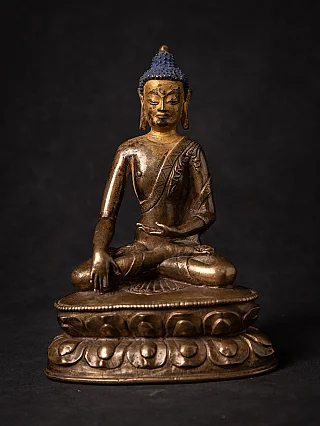
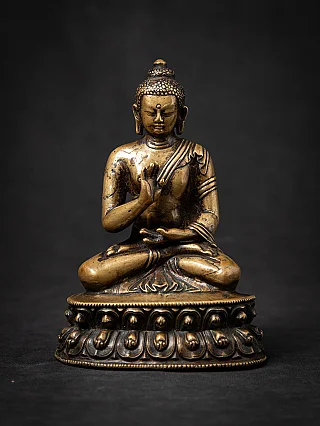
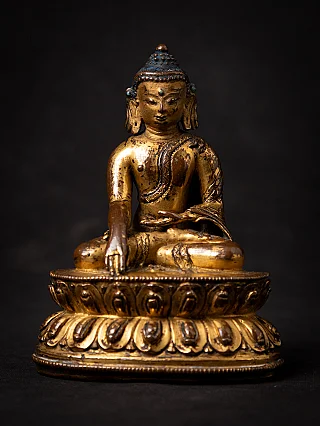
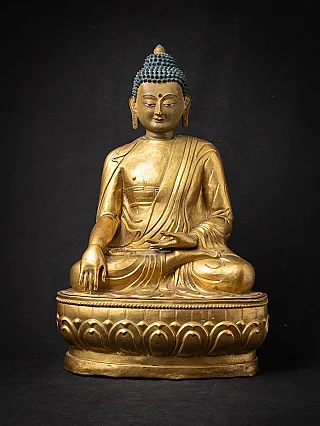
Vajrayana Buddhism took root in Tibet in the 7th and 8th centuries CE, carried across the Himalayas by Indian tantric masters and fused with the region's indigenous Bon traditions. Our Tibet collection reflects that fusion, from serene sitting Buddha statues cast in gilt copper to ritual singing bowls used in meditation and healing practices.
Many pieces still carry traces of turquoise or coral inlay and the fire-gilding technique perfected by generations of Himalayan metalworkers. Together with our antique Buddha heads, these statues reveal how Tibet turned an imported Indian religion into one of the most distinctive artistic traditions in the Buddhist world.


Tibet: Where Vajrayana Buddhism Found Its Most Sacred Art
Buddhism reached Tibet in the 7th and 8th centuries CE, when Indian tantric masters, most famously Padmasambhava, also known as Guru Rinpoche, travelled across the Himalayas and founded Samye, Tibet's first Buddhist monastery. Over the following centuries, this imported faith merged with the region's indigenous Bon shamanistic beliefs to form Vajrayana Buddhism, a tradition rich in ritual, symbolism, and visual complexity. Tibetan sculptors reinterpreted Indian Buddha statues through this new lens, producing figures that are at once meditative and intensely dramatic.
Newar Artisans and the Art of Lost-Wax Casting
Much of Tibet's bronze-casting tradition owes a direct debt to the Newar metalworkers of the Kathmandu Valley, who were invited into Tibetan monasteries for generations. The most celebrated, the 13th-century artist Araniko, travelled from Nepal to Tibet before being summoned to the Yuan court in China, carrying this distinctive casting style across Asia. His influence, and that of countless unnamed Newar craftsmen, still shows in the fine detailing of antique Tibetan Buddha heads and figures found today.
Materials and Craftsmanship: Gilt Copper, Repoussé, and Gemstone Inlay
Tibetan statues are traditionally worked in copper or bronze, finished with fire-gilding, a technique using mercury and gold that gives antique pieces their warm, glowing surface. Repoussé work, hammered from the reverse side to raise the design, is common on larger temple figures and on portable shrines meant for home altars and travel worship. Many statues are further adorned with inlaid turquoise, coral, and silver, materials tied to Himalayan ideas of protection and prosperity, and often accompanied by ritual bronze objects such as singing bowls used in meditation.
Peaceful and Wrathful: The Dual Nature of Tibetan Deities
Unlike the uniformly serene imagery found in much of Buddhist Asia, Tibetan art embraces both peaceful and wrathful forms. Alongside calm, meditative seated Buddha statues, Tibetan collections often include fierce protector deities with bulging eyes and flame-like hair, whose intensity is meant to destroy ignorance rather than intimidate the faithful. This duality, rarely seen elsewhere, reflects Vajrayana's belief that enlightenment can be reached through wrath as well as compassion.
Mudras in Tibetan Buddhist Iconography
Despite their distinctive style, Tibetan Buddha statues still rely on the same symbolic hand gestures used throughout the Buddhist world. The Bhumisparsha mudra marks the moment of enlightenment beneath the Bodhi tree, the Dhyana mudra represents deep meditative absorption, and the Varada mudra conveys compassion and the granting of wishes, each gesture carried into Tibet from Indian tradition and rendered with distinctly Himalayan craftsmanship.
Tibetan Art Compared with Neighboring Traditions
From Tibet, Vajrayana Buddhism spread onward into Mongolia and, during the Qing dynasty, into China, where it shaped temples still standing in Beijing today. Comparing Tibetan statues with Chinese Buddhist art, and with the Indian sculpture that started it all, shows how the same religion could produce such strikingly different visual languages as it crossed the Himalayas and beyond.
Frequently Asked Questions
Are these Tibetan Buddha statues genuinely antique?
Yes. Every piece in our Tibet collection is an original antique, personally inspected and authenticated for age, material, and craftsmanship before it is listed. We do not sell modern reproductions.
What materials are Tibetan Buddha statues made from?
Tibetan statues are typically worked in copper or bronze, finished with fire-gilding, and often inlaid with turquoise, coral, or silver, materials rarely combined in this way elsewhere in Buddhist Asia.
Why do some Tibetan statues look wrathful or fierce?
Wrathful deities represent the destruction of ignorance and obstacles rather than malice. In Vajrayana Buddhism, fierce and peaceful forms are both considered valid paths toward enlightenment.
What is the significance of turquoise and coral inlay?
In Himalayan culture, turquoise is associated with protection and good fortune, while coral is linked to vitality and prosperity, making both popular adornments on statues, jewelry, and ritual objects.
How does Tibetan Buddhist art differ from Nepalese or Chinese styles?
Tibetan statues favor fire-gilded copper, gemstone inlay, and a dual range of peaceful and wrathful forms, while Nepalese Newar work is prized for its fine repoussé detailing, and Chinese statues tend toward rounded, serene faces influenced by Daoist and Confucian aesthetics.
Do you ship Tibetan Buddha statues internationally?
Yes, we ship worldwide. Each antique is carefully packed, and we handle the export documentation required for shipping cultural items abroad.