

Sitting Buddha statues
The sitting Buddha statue is the most important posture in all of Buddhist iconography — not because it is the most common, but because it carries the most narrative weight. Within the seated form, five distinct hand gestures tell five different stories: the moment of enlightenment at Bodhgaya, the depth of perfect meditation, the turning of the Wheel of Dharma, the gesture of fearless protection, and the open hand of generosity. Every statue in this collection was personally selected during sourcing expeditions through Burma (Myanmar), Thailand, and Nepal — three traditions that have produced some of the most refined seated Buddha statues in the world across five centuries. Each piece is a singular, authenticated antique. If you are searching for a piece that carries real iconographic meaning and genuine history, this is where to begin.
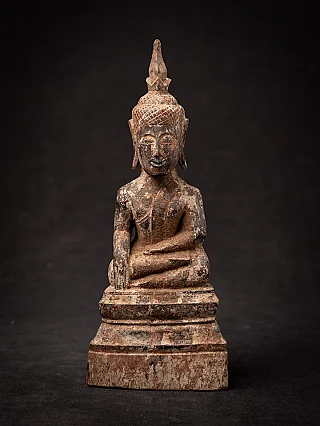
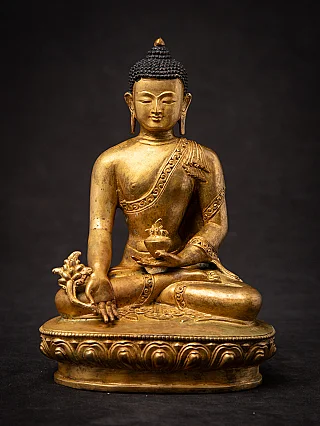
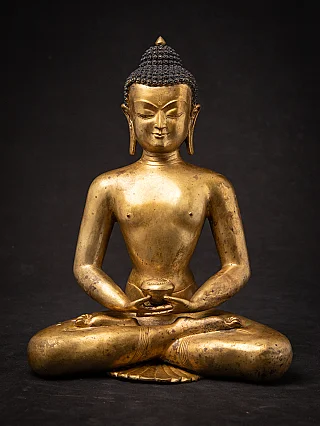
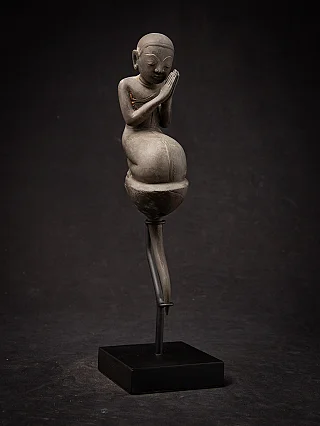
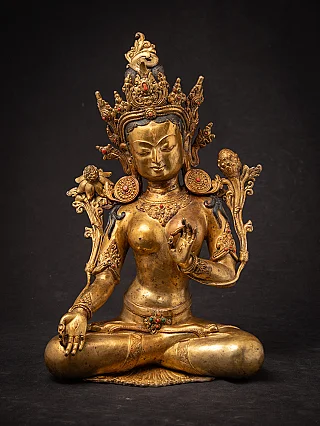
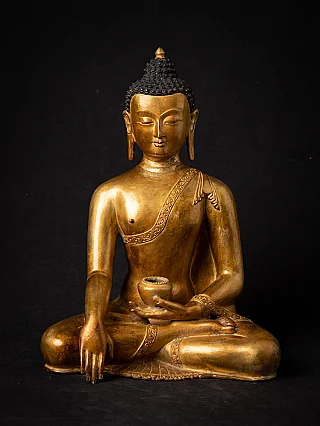
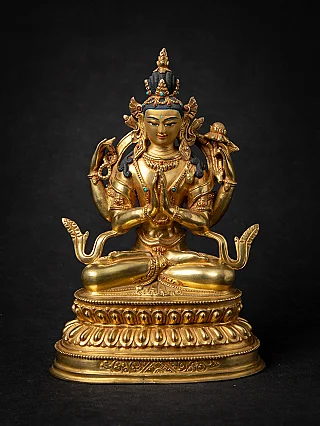
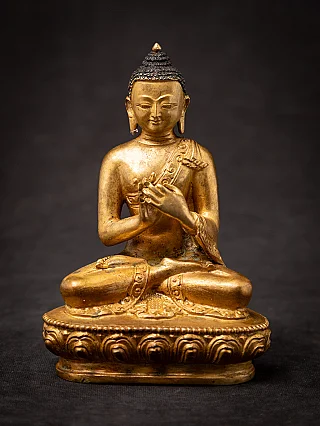
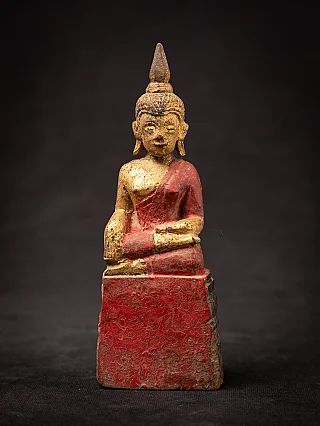
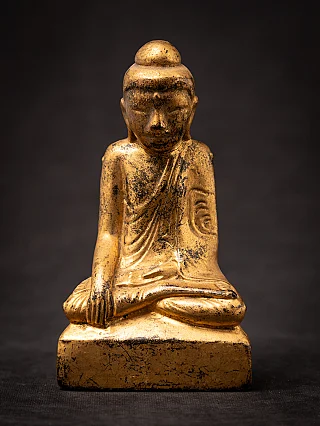
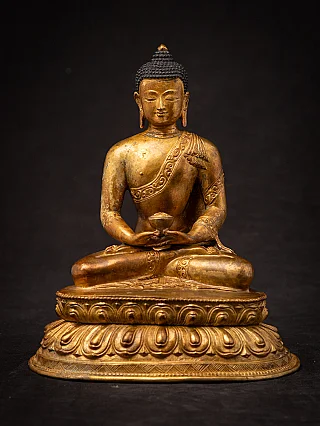
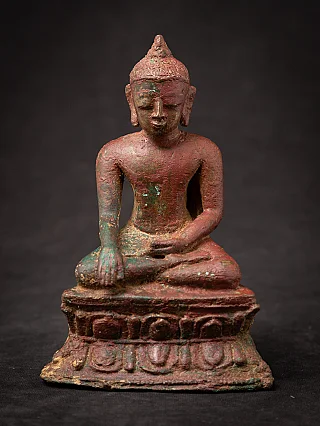
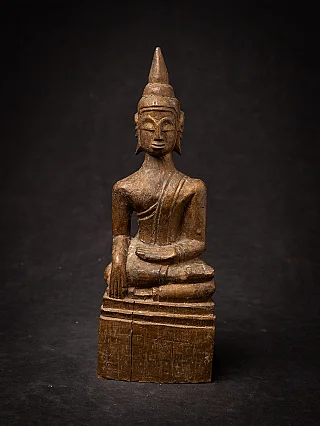
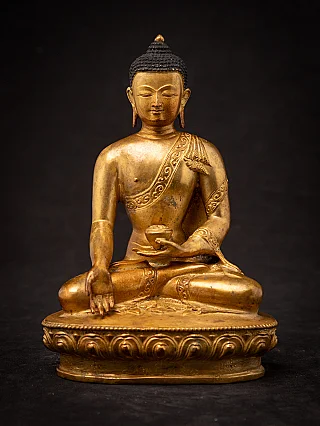
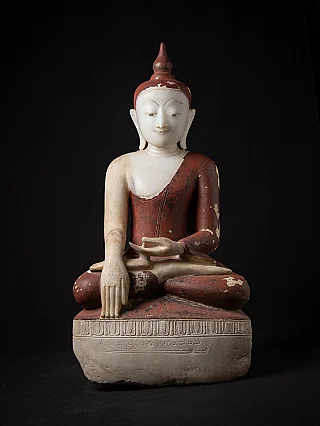
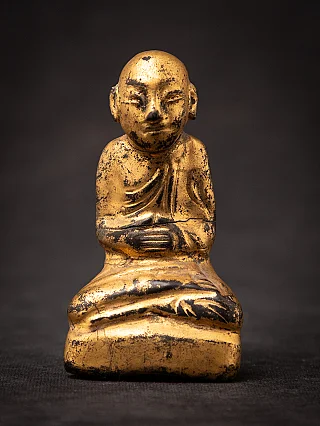
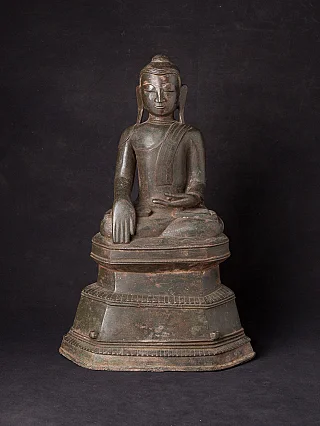
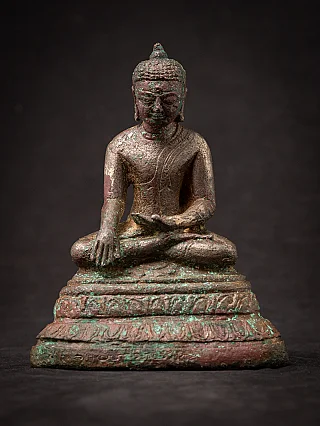
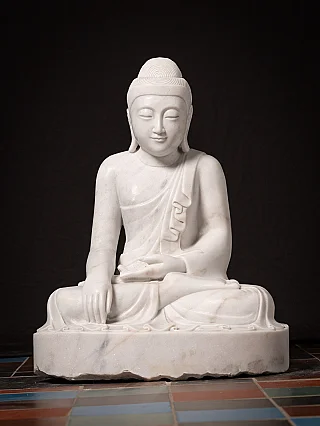
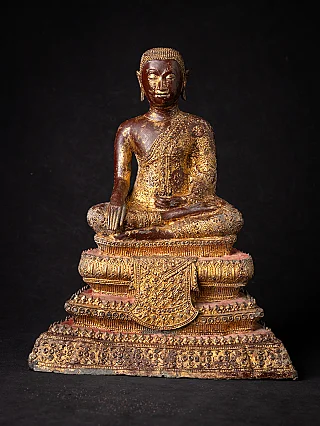
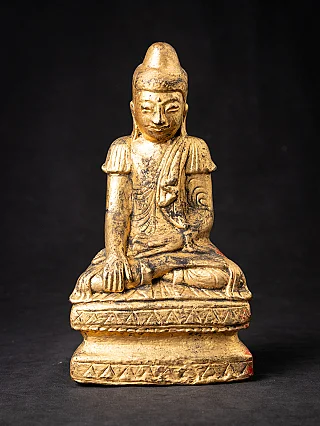
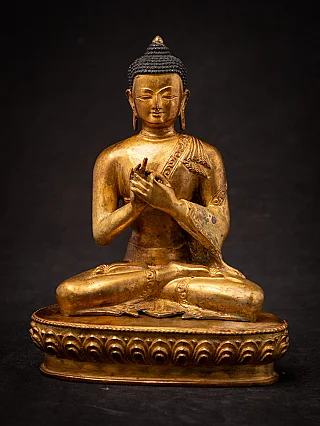
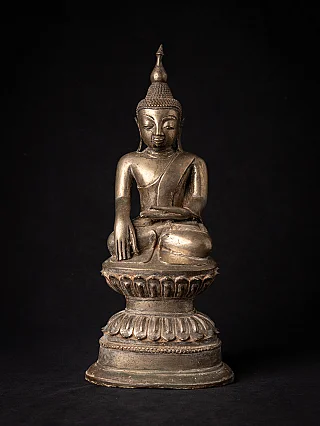
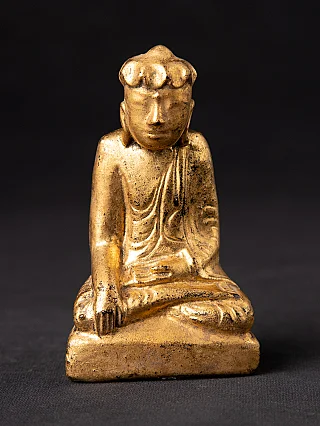
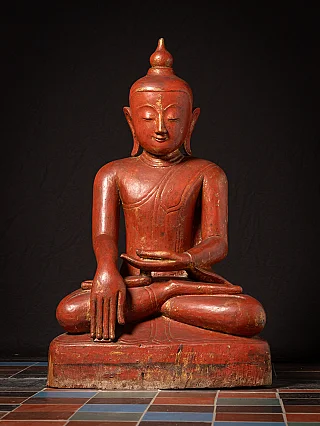
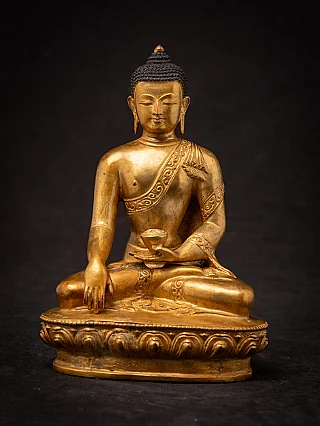
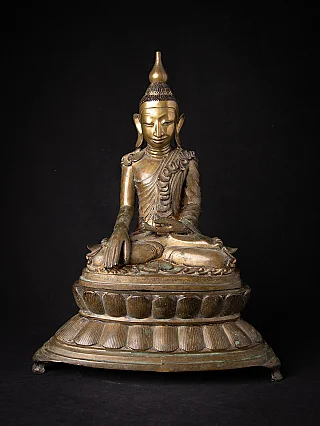
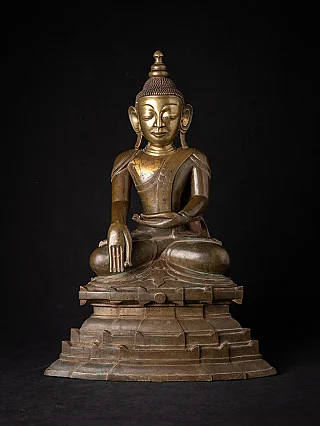
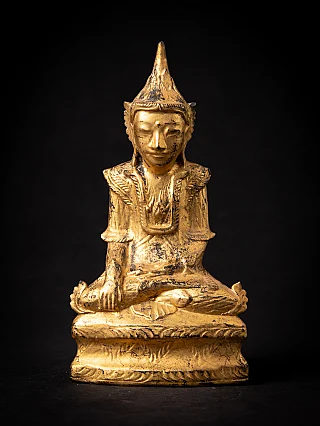
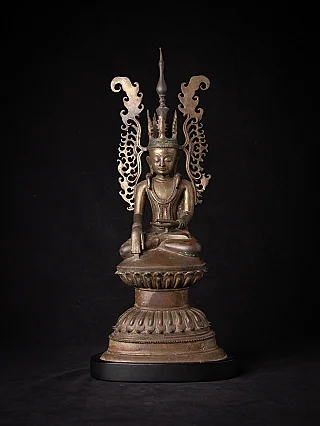
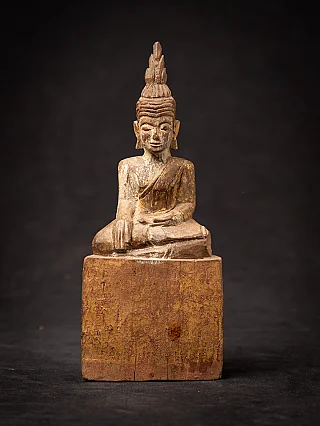
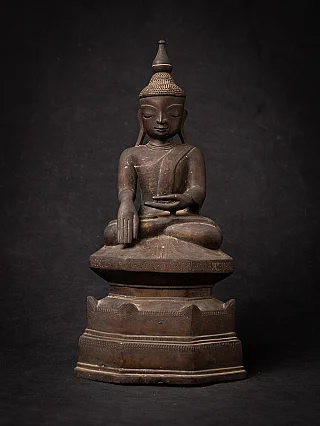
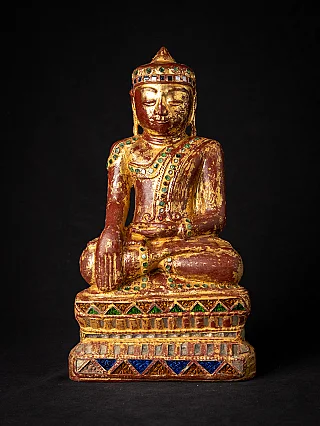
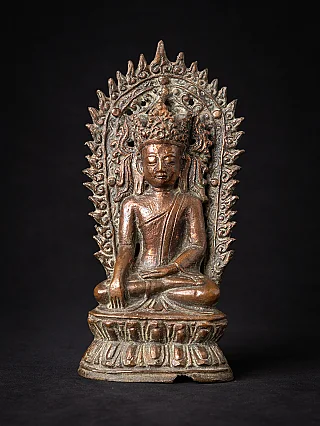
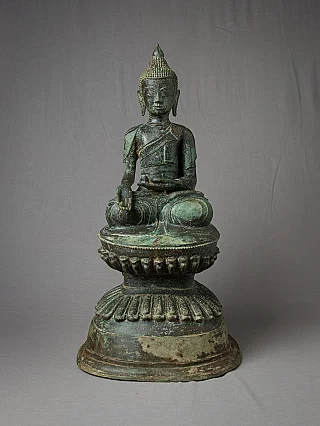
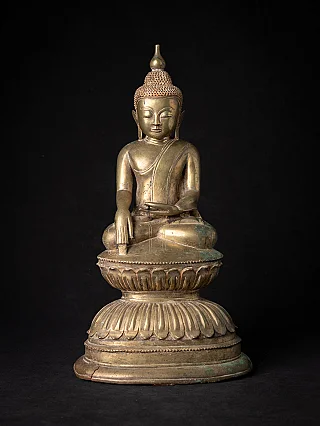
The Five Mudras of the Sitting Buddha
The most critical skill for any collector of Buddha statues is the ability to read mudras. A mudra (Sanskrit: mudrā — "seal" or "gesture") is the hand position that communicates the identity, spiritual state, or narrative moment of the figure depicted. Two sitting Buddhas of similar size and material can carry completely different meanings. The hand position is the key.
Our collection includes sitting Buddhas in all five core mudras. Here is what each means and how to recognize it:
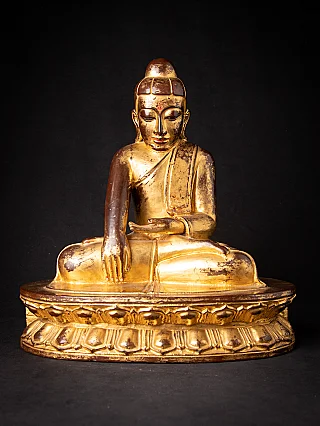
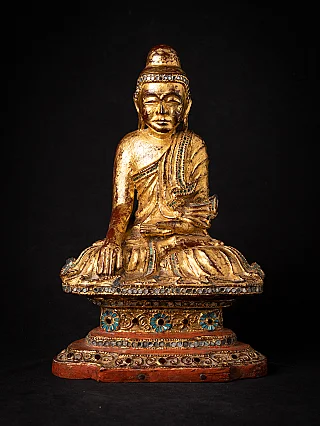
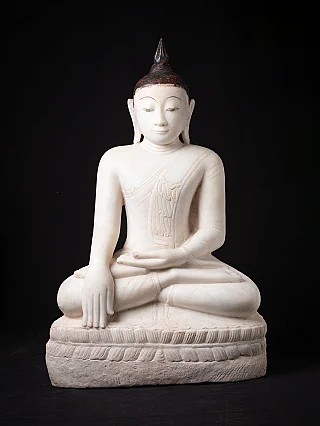
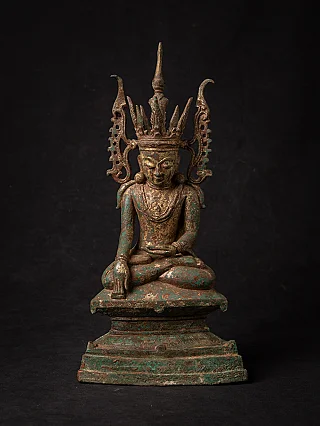
1. Bhumisparsha Mudra — The Earth-Touching Gesture (Enlightenment)
How to recognize it: The right hand reaches downward, fingers extended toward the earth. The left hand rests in the lap, palm upward.
What it means: This is the defining mudra of Shakyamuni Buddha's enlightenment — the single most important moment in the history of Buddhism. On the night of the full moon at Bodhgaya, India, the ascetic Siddhartha sat beneath the Bodhi tree and entered final meditation. As the demon Mara attacked with armies of temptation, Siddhartha reached down and touched the earth — calling the earth goddess (Vasundhara) to witness his resolve and his right to liberation. She responded, the earth shook, and Mara was defeated. In that moment, Siddhartha became the Buddha — the Awakened One.
The Bhumisparsha mudra statues commemorate this victory. It is the most commonly depicted gesture in Southeast Asian and Himalayan Buddhist art, and exclusively identifies Shakyamuni Buddha. No other Buddhist deity uses it.
Collector note: In Burmese tradition, sitting Bhumisparsha Buddhas are often depicted with an elongated right arm that reaches almost to the knee — a stylistic trait that distinguishes Mandalay-period pieces from Thai or Nepalese equivalents.
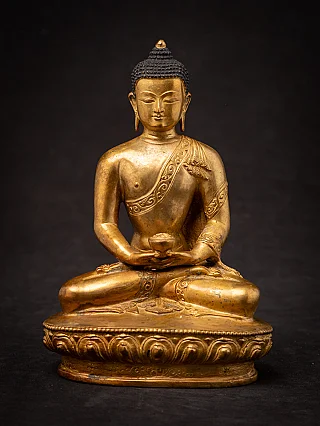
2. Dhyana Mudra — The Meditation Gesture
How to recognize it: Both hands rest in the lap, palms facing upward, right hand resting on left, thumbs lightly touching to form a triangle or oval.
What it means: Dhyana (Sanskrit: dhyāna — "meditation" or "absorption") is the gesture of complete meditative stillness. It depicts the Buddha in the state of deep concentration that preceded enlightenment, and is also associated with Amitabha Buddha (the Buddha of Infinite Light, revered in Pure Land Buddhism) and with Shakyamuni in the meditation that preceded his final teaching.
The Dhyana mudra statues represent the most appropriate form for meditation spaces: its visual symmetry and completeness communicate inward focus and the cessation of distraction. It is the gesture of equinimity — the middle path held perfectly still.
Collector note: In Nepalese and Tibetan traditions, the Dhyana mudra figure sometimes holds a ritual alms bowl (patra) in the cupped hands — a detail that signals the monastic vocation. This variant is sometimes called the "Amitabha mudra" by collectors.
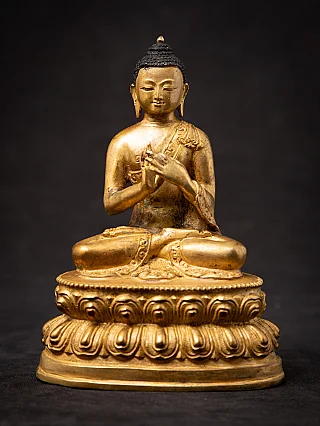
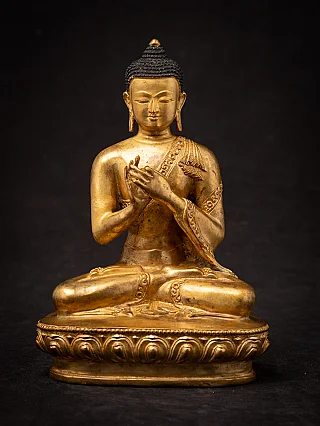
3. Dharmachakra Mudra — The Teaching Gesture (Wheel of Dharma)
How to recognize it: Both hands are raised to chest level. The thumbs and index fingers of each hand touch at their tips, forming circles. The right hand typically faces outward; the left faces inward. Together the hands evoke a spinning wheel.
What it means: Dharmachakra (Sanskrit: "turning the wheel of Dharma") commemorates the Buddha's first sermon at Deer Park in Sarnath, near Varanasi, India. After his enlightenment, the Buddha spent weeks in contemplation of whether to teach what he had understood — the Dharma was so subtle and the world so distracted. He chose to teach. At Sarnath, he delivered his first discourse on the Four Noble Truths and the Eightfold Path to five former companions. Buddhism, as a living tradition, begins in this moment.
Acquiring Dharmachakra mudra statues is highly sought after by collectors as it represents the inception of Buddhism in this world age.
Collector note: Thai sitting Buddha statues in Dharmachakra mudra are among the most sought-after by Western collectors for their rarity. Most Thai bronze Buddhas are in Bhumisparsha or Abhaya pose; Dharmachakra examples are far less common and command a premium.
4. Abhaya Mudra — The Fearlessness Gesture (Protection)
How to recognize it: The right hand is raised to shoulder height, arm slightly bent, palm facing outward, fingers upright and together. The left hand rests in the lap or hangs at the side.
What it means: Abhaya (Sanskrit: "fearlessness") is the universal gesture of protection and reassurance. Buddhist tradition records that the Buddha once encountered a charging elephant in a forest. He raised his right hand in this gesture. The elephant stopped. The gesture became the symbol of the Buddha's ability to dispel fear — for disciples, for followers, and for all beings who encounter it.
In home placement, Abhaya mudra statues are traditionally positioned near entrances and thresholds, where they offer protection to those entering and exiting the space.
Collector note: In Standing Buddha statues , Abhaya mudra is extremely common (particularly in Thai "walking Buddha" and Burmese blessing-pose figures). In seated form it is less frequent, making seated Abhaya mudra antiques particularly notable in a collection.
5. Varada Mudra — The Generosity Gesture
How to recognize it: The right hand (or both hands) extends downward at the side, palm facing outward and fingers pointing toward the earth — an open, giving gesture.
What it means: Varada (Sanskrit: "boon-giving") is the gesture of compassion, charity, and the granting of wishes. It depicts the Buddha as actively giving — offering liberation, merit, or blessings to those who seek them. Varada mudra statues are closely associated with Bodhisattvas (beings who delay their own liberation to assist others), particularly Avalokiteshvara (Guanyin). When displayed by the historical Buddha in seated form, it represents his boundless generosity toward all sentient beings.
Collector note: Varada mudra is often combined with Abhaya mudra — right hand raised in protection, left hand extended in giving. This combined gesture appears in Thai and Nepalese sitting Buddhas and is sometimes called the "double mudra" by collectors.
The Regional Traditions: Burma, Thailand, and Nepal
The Sitting Buddha statues posture has been refined across centuries in distinct Southeast Asian and Himalayan artistic traditions. Understanding the differences is both intellectually rewarding and practically essential for collectors.
Burmese Sitting Buddha Statues
Burmese sitting Buddhas are among the most serene objects produced in any artistic tradition. The characteristic features of the Burmese school — particularly from the Mandalay period (mid-19th century) — include:
-
Facial expression: Eyes half-closed in inward focus, heavy lids, the ghost of a smile — an expression that reads as complete contentment from any distance.
-
Ushnisha: The cranial protuberance (symbol of superworldly wisdom) is pronounced, often in a pointed flame shape ( ketumala ), distinguishing Burmese pieces from Thai or Nepalese equivalents.
-
Robe: Typically smooth and minimal, with a characteristic V-shaped neckline and clean hem edge; the simplicity of the robe concentrates all attention on the face.
-
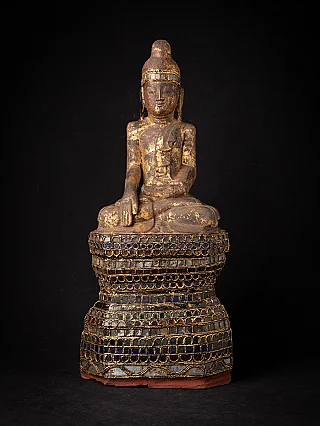
Surface treatment: Lacquerware statues using gilded teak with a lacquer undercoat, often with shwe-chi-doe mosaic glass inlay in the robe borders.
-
Materials: Primarily Wooden statues made of hardwood, cast bronze, alabaster, and Marble statues sitting Buddhas also appear in the Mandalay tradition.
Significant Burmese seated Buddha traditions extend from the Pagan period (9th–13th century CE) through to the Konbaung dynasty (18th–19th century) . Pagan-period bronze sitting Buddhas are among the oldest and most valuable pieces that enter the private market.
Collectors looking for specific stylistic regions can deep-dive into our specialized historical catalogs, including:
Explore the complete regional selection via our master Myanmar / Burma statues collection.
Thai Sitting Buddha Statues
Thai sitting Buddha statues are the most internationally recognized in the Buddhist world, due in large part to the global visibility of figures like the Sukhothai walking Buddha and the numerous seated Buddhas of Ayutthaya and Bangkok. Characteristics of authentic antique Thai sitting Buddhas include:
-
Facial features: Sharper, more angular than Burmese equivalents — aquiline nose, arched brows, clearly defined lips; the expression is majestic rather than inward.
-
Ushnisha: Flame-shaped (ash in Sukhothai style) or tiered and elongated (Ayutthaya style); the specific Ushnisha form is one of the most reliable period indicators.
-
Robe: More elaborate fold detail than Burmese pieces, often with a pronounced diagonal drape across one shoulder.
-
Material: Predominantly Bronze statues , with high-quality casting detail; gilt bronze and lacquered bronze also appear in royal-commission pieces.
-
Lotus base: Thai lotus bases are typically double-tier with tightly closed petals; Sukhothai-era pieces have particularly refined petal detail.
Antique Thai sitting Buddhas from the Sukhothai, Ayutthaya, and Bangkok periods are the primary collector categories. You can view our highly specialized inventory under our Thailand statues catalog or the specific Rattanakosin statues subsection.
Nepalese Sitting Buddha Statues
Nepal occupies a unique position in Buddhist art history: it is the birthplace of the historical Buddha (Lumbini) and home to the Newar craftsmen — arguably the most technically skilled Buddhist metal sculptors in Asia. Authentic Nepal statues are distinguished by:
-
Iconographic richness: More complex compositional programs than Southeast Asian pieces, often including aureoles (prabhavali), elaborate throne backs, and attendant figures.
-
Material: Gilt copper repoussé (hammered sheet copper over a clay core, then gilded) is the signature Newar technique; gilt bronze cast using lost-wax is also common.
-
Ornamentation: Semi-precious stone inlay (turquoise, coral, lapis lazuli) in the crown, jewelry, and throne — an Indian-derived tradition not commonly found in Burmese or Thai pieces.
-
Seated posture: Nepalese sitting Buddhas may appear in vajrasana (full lotus, soles of both feet visible) or dhyanasana (half lotus); the vajrasana is considered the more exalted position.
-
Facial type: Rounder and more Indian-influenced than Southeast Asian types; Newar faces have a characteristic warmth and composition derived from Pala-period Indian prototypes.
Beyond the core Buddhist selections, our broader regional catalogs features rare Tibet statues , Laos statue , Cambodia statues , Japan statues , China statues , and historical items from India statues-hindu-gods .
Materials & Craftsmanship: What to Look For
When assessing a potential piece for your home or altar, the material choice is central to its aesthetic and preservation requirements. We offer a highly curated cross-section sorted by primary material categories:
-
Wooden statues : Typically sourced from Burma, consisting of seasoned teak or hardwood. Look for natural lacquer crazing and gold leaf wear over time.
-
Bronze statues : Predominant across Thailand, Burma, and Nepal. Look for an authentic green-gray patina, lost-wax casting irregularities, and an appropriate bottom-heavy weight distribution.
-
Lacquerware statues : Unique Burmese dry lacquer techniques resulting in lighter, exceptionally detailed spiritual figures.
-
Stone statues : Carving details on sandstone, granite, or schist. Features organic, environmental granular erosion.
-
For pristine white and honey-toned mineral grains, see our selection of Marble statues . For rougher textures, check out our Lavastone statues .
-
Expanding Your Collection
If you wish to expand your gallery beyond traditional seating postures, we maintain premium, authenticated inventories across several complementary iconic categories:
-
Reclining Buddha statues : Depicting the final moments of historical parinirvana.
-
Standing Buddha statues : Symbolizing the active steps of protection, teaching, and blessing.
-
Crowned Buddha statues : Embodying the regal, celestial majesty of the supreme Buddha.
-
Buddha heads : Focused structural items celebrating the supreme, serene facial details of enlightened wisdom.
-
Laughing Buddha statues : Incorporating figures of prosperity, joy, and good luck (Hotei).
-
Monk statues : Celebrating historical disciples and reverent monastic lineages.
-
Buddha amulets : Highly portable, consecrated spiritual tokens of protection and merit.
For deep collectors pursuing sacred works beyond Buddhism, we also host an expansive collection of Hindu statues , including dedicated categories for Shiva statues , Krishna statues , Saraswati statues , Parvati statues , Lakshmi statues , Ganesha statues , Vishnu statues , and Hanuman statues . Additional esoteric objects include Guan Yin statues , Burmese Nats , Opium Weights , and artisan Singing Bowls.
Frequently Asked Questions About Sitting Buddha Statues
What is the most common sitting Buddha pose?
The Bhumisparsha mudra — right hand touching the earth, left hand in the lap — is the most prevalent sitting Buddha pose in Southeast Asian Buddhist art, particularly in Burma and Thailand. It commemorates the exact moment of Shakyamuni Buddha's enlightenment under the Bodhi tree at Bodhgaya, India.
What does a meditating Buddha statue look like?
A meditating Buddha (Dhyana mudra) is always seated, with both hands resting in the lap — right hand on left, palms upward — thumbs often lightly touching to form a closed oval. The eyes are half-closed or fully closed. The expression is one of absolute stillness. This is the most symmetrically composed of all Buddhist poses, and is associated with both Shakyamuni Buddha and Amitabha Buddha.
What is the difference between the Bhumisparsha and Dhyana mudra?
In Bhumisparsha, the right hand extends downward to touch the earth while the left rests in the lap. This is an asymmetric, active gesture — the Buddha calling the earth to witness. In Dhyana, both hands rest in the lap together in a perfectly symmetric, closed composition — the Buddha utterly withdrawn into meditation. Both are seated poses, but they tell completely different stories.
How do I know if my sitting Buddha statue is an authentic antique?
Key indicators include: consistent aging across all surfaces (including undersides and recessed areas); mudra accuracy matching the regional convention; Ushnisha form appropriate to the claimed tradition; lotus base aging consistent with the piece's overall condition; appropriate weight and material density for cast pieces; and a verifiable sourcing chain. At Original Buddhas, every significant piece is personally assessed during our sourcing expeditions and comes with authentication documentation.
What sitting Buddha is best for a meditation room?
The Dhyana mudra sitting Buddha (both hands in the lap) is the traditional choice for meditation spaces. Its symmetric, closed composition supports inward focus. A Bhumisparsha mudra figure (earth-touching) is also appropriate, particularly for those whose practice emphasizes grounding, resolve, and commitment to awakening.
Can I place a sitting Buddha statue outside?
Stone sitting Buddhas (sandstone, marble, granite) are suitable for sheltered outdoor placement in most temperate climates. Bronze sitting Buddhas can also be placed outdoors and will develop a natural weathered patina over time — this is acceptable for modern pieces, but authenticated antiques should generally be kept indoors to preserve their surface integrity and historical value. Gilded wood and Nepalese gilt copper pieces should always be kept indoors, away from moisture.
What is the most valuable type of antique sitting Buddha statue?
Value in antique sitting Buddhas is determined by period, region, material, mudra rarity, condition, and provenance. Among the most valuable categories are: Pagan-period (9th–13th century) Burmese bronze Buddhas; Sukhothai-period (13th–15th century) Thai bronze Buddhas; and high-quality Newar gilt copper repoussé Buddhas from Nepal with intact stone inlay and original patina. Mudra rarity — particularly seated Dharmachakra and seated Abhaya examples — adds an additional collector premium.
Do sitting Buddha statues have to face a specific direction?
In Theravāda Buddhist tradition (predominant in Burma, Thailand, and Laos), the Buddha conventionally faces east — toward the rising sun, associated with enlightenment and new beginnings. This is a traditional preference rather than a strict rule in domestic settings. The most important consideration is that the Buddha's face is visible from the main approach point in the room, allowing the expression to be encountered rather than overlooked.