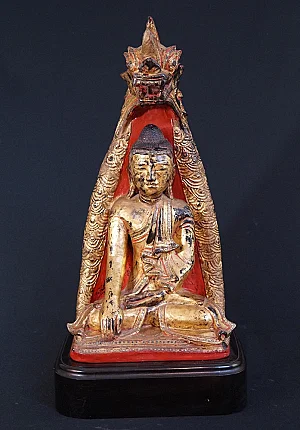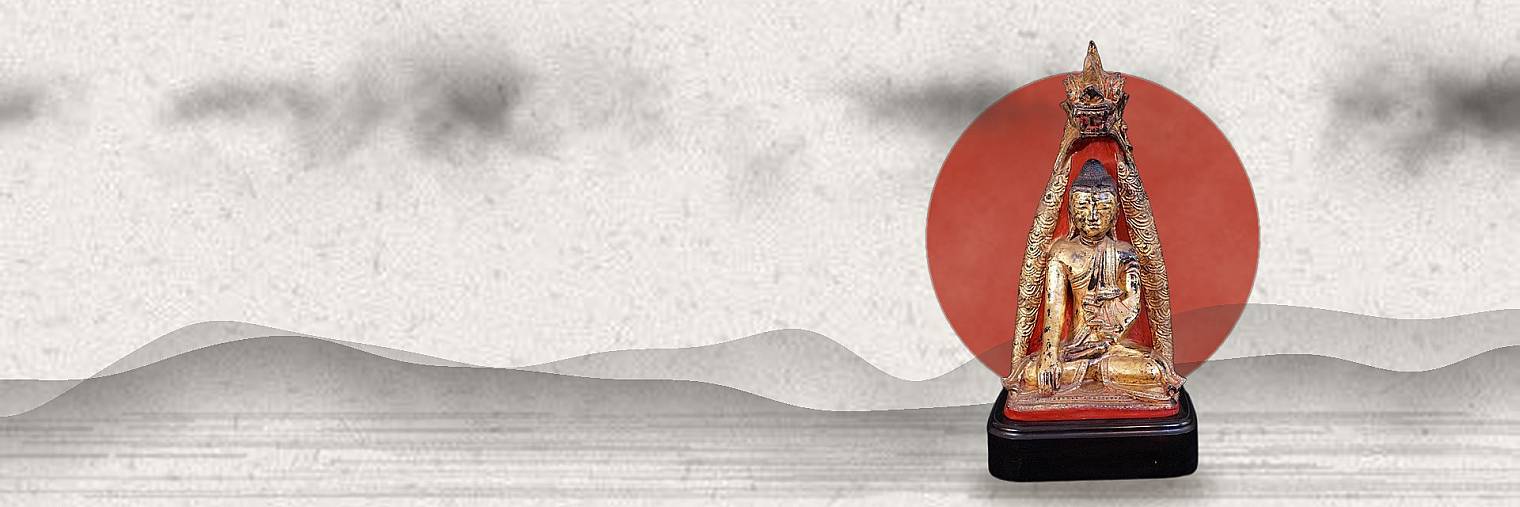
Naga Buddha statues

A Naga Buddha statue shows the Buddha seated in deep meditation, sheltered by a great serpent whose hood rises behind him like a canopy. It is one of the most striking images in Buddhist art, and behind it lies one of the best-loved stories from the life of the Buddha: the story of Mucalinda, the serpent king.
On this page
- What is a naga?
- The story of Mucalinda, the serpent king
- How a Naga Buddha statue is made up
- Where Naga Buddha statues come from
- Collecting Naga Buddha statues
- Frequently asked questions
Look at our Naga Buddha statues
What is a naga?
A naga is a serpent being found in both Hindu and Buddhist traditions, usually pictured as a great cobra, sometimes with one head and sometimes with many. Nagas live in rivers, lakes and the world beneath the earth, and they guard water, treasure and sacred knowledge. Across Buddhist Asia these beliefs blended with older local serpent traditions, which is why nagas appear on temple stairways, roof ends and doorways from Burma to Cambodia.
The story of Mucalinda, the serpent king
After his enlightenment at Bodh Gaya, the Buddha spent several weeks in meditation near the Bodhi tree. During one of those weeks he sat at the foot of a tree beside a lake, the home of the naga king Mucalinda (also written Mucilinda or Mucilanda).
Out of season, a great storm came up. For seven days it rained without pause, with cold winds and darkness all around. The Buddha did not move from his meditation.
Mucalinda rose from the lake and saw him sitting there, unprotected. The serpent king wrapped his body around the Buddha seven times and spread his great hood over his head, so that no rain, cold, wind or insects could disturb him.
When the sky cleared on the seventh day, Mucalinda unwound his coils. He took the form of a young man and stood before the Buddha with his palms joined in respect. The Buddha then spoke a few lines about the happiness of a mind that is at peace and harms no living being.
That is why a Naga Buddha is often seen as an image of protection: a powerful creature freely choosing to guard the awakened one.
"Happy is the mind at peace, which harms no living being."- After the Buddha's words to Mucalinda, Udana 2.1
How a Naga Buddha statue is made up
Most Naga Buddha statues follow the same composition:
- The coils: the naga's body is coiled in layers to form a seat for the Buddha.
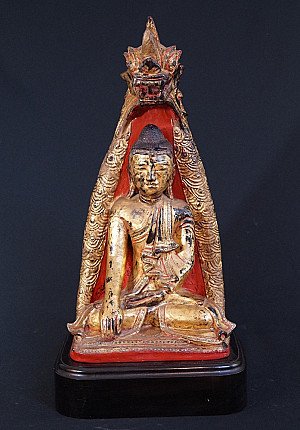
- The hood: most often seven heads, sometimes five or more, rising behind and above the Buddha's head. Some Burmese and Shan pieces show the naga as one great head arching over the Buddha.
- The Buddha: seated cross-legged, usually with his hands resting in his lap in the meditation gesture, completely still in the middle of the storm. Some versions show the earth-touching gesture instead.
- Crowned or plain: in Burma, Thailand and Cambodia the Buddha is often crowned and richly decorated, while other versions show him as a simple monk.
Where Naga Buddha statues come from
The image began in India, where some of the earliest carvings show a many-headed naga guarding an empty seat, a symbol of the Buddha from a time when he was not yet shown in human form. It later flourished in Southeast Asia, above all in Burma (Myanmar), Thailand, Laos and Cambodia.
- In Thailand the Naga Buddha is the Buddha image for people born on a Saturday, and many Thai homes and temples keep one for that reason.
- In the Khmer empire of Cambodia, the Buddha seated on a naga became one of the most important royal images of the 12th and 13th centuries.
- Shan and Burmese makers often made Naga Buddhas in lacquerware and gilded wood, with the hood fanned out like a crown.
Read more about Theravada Buddhism in Burma.
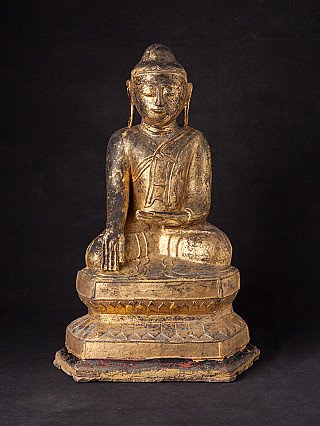
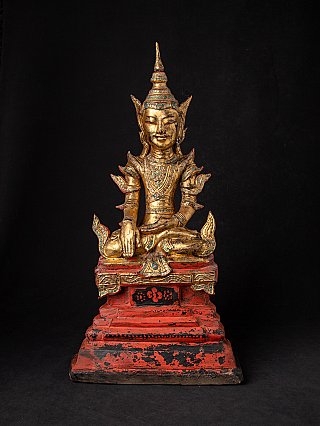
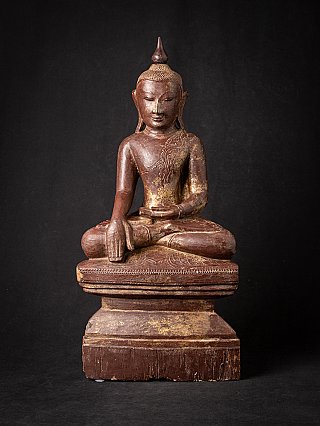
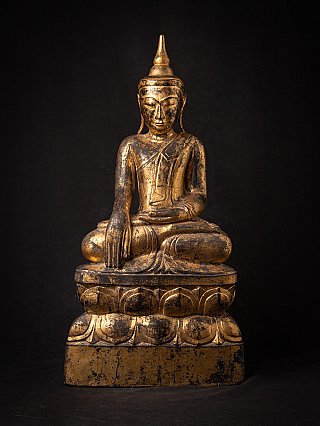
More antique Shan Buddhas from Burma
Collecting Naga Buddha statues
Naga Buddha statues are much rarer than statues of the seated Shakyamuni Buddha, and collectors value them highly. Old examples show the hand of the maker in the carving of each serpent head and in the layers of lacquer and gilding. Many collectors see a good antique Naga Buddha as one of the highlights of a collection, and for many Buddhists it is an important religious and spiritual object.
All our statues are bought in line with the laws of the countries they come from. See our Naga Buddha statues.
Ask us about a Naga Buddha statue
Frequently asked questions
Why does the Buddha sit on a snake?
The snake is Mucalinda, a naga king who sheltered the Buddha from a seven-day storm after his enlightenment by coiling around him and spreading his hood over his head.
Why does the naga often have seven heads?
Seven is the most common number in Buddhist art. It echoes the seven days of the storm and the seven times Mucalinda coiled around the Buddha.
What does a Naga Buddha statue symbolise?
Protection, calm in difficult times, and the respect that even powerful forces of nature show to wisdom.
Which day is the Naga Buddha for?
In Thailand it is the Buddha image for Saturday.
Where can I place a Naga Buddha statue at home?
Somewhere calm and slightly raised, such as a sideboard, shelf or meditation corner, where the hood can be seen clearly from the front.
Visit our gallery in a former church in Deventer
Share this page