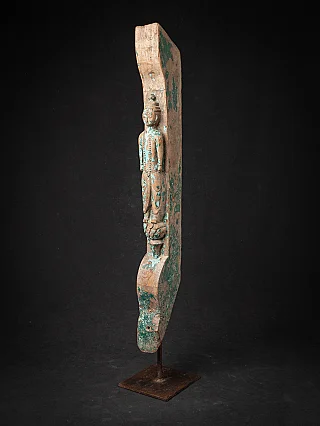
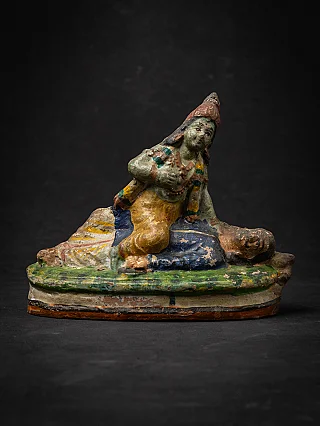
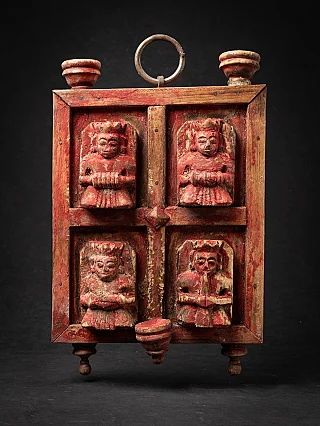
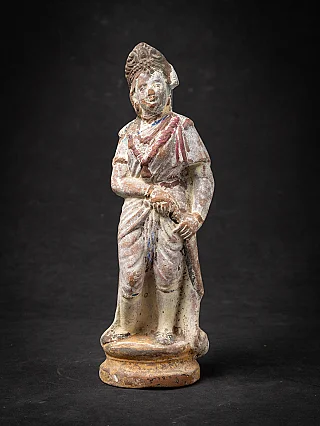
Shiva: The Hindu God of Transformation
View Our Shiva Statues Collection
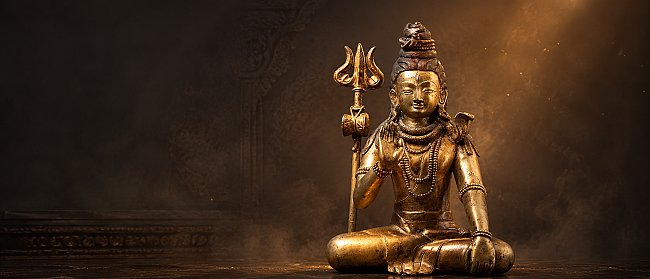
Shiva stands as one of Hinduism's most powerful and enigmatic deities. Known as the god of destruction, transformation, and meditation, Shiva represents far more than destructive force. In Hindu cosmology, Shiva embodies the eternal cycle of creation, preservation, and dissolution. From the meditating yogi on Mount Kailash to the cosmic dancer Nataraja, Shiva's forms teach profound truths about existence, consciousness, and the impermanence of all things. Every element of his appearance carries deep meaning: the third eye symbolizes inner vision, the serpent represents mastery over fear, and the trident embodies the balance of creation, maintenance, and destruction. Whether encountered in temples, philosophy, yoga practices, or art, Shiva remains one of the most revered and contemplated figures across thousands of years of Hindu tradition.
Who Is Shiva? The Core Principle
The Formless and the Formed
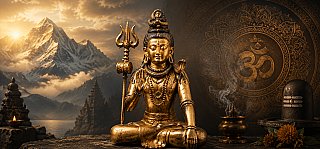
Shiva exists in a paradox that lies at the heart of Hindu philosophy. Shiva is not merely a deity with a fixed form, but a principle (tattva) from which all existence emerges, persists, and returns. In this sense, Shiva is consciousness itself, the space in which all things arise. Yet Hindu tradition also depicts Shiva as a being, often shown meditating in the Himalayas, adorned with specific symbols and attributes.
This duality is intentional. The formless aspect of Shiva represents the infinite, unknowable, and transcendent. To make this infinite comprehensible to the human mind, Hindu tradition gave Shiva a recognizable form. But this form is not a limitation; it is a teaching device. Every visual element in a Shiva statue or painting becomes a gateway to understanding deeper spiritual truths.
Shiva in the Hindu Trinity
Hindu cosmology organizes the divine into a trinity of three supreme functions:
Brahma, the creator, brings universes into being through his power of generation. Vishnu, the preserver, maintains balance and order, intervening when dharma (righteousness) faces threat. Shiva, the destroyer, dissolves what is old, worn out, or ignorant, making space for renewal and transformation.
This is not destruction for its own sake. In the Hindu understanding, destruction is not evil or chaotic. Instead, it is essential and compassionate. Just as dead leaves must fall for new growth, outdated thoughts must dissolve for wisdom to emerge. Shiva's role as destroyer is ultimately a role of liberation.
What Shiva Represents
Shiva is the god of ultimate consciousness and meditation. He teaches that through stillness, detachment from material desires, and deep introspection, one can touch the infinite. Shiva is the master of yoga, the original guru who transmitted spiritual wisdom to humanity. He is also the god of time and change, reminding us that all things are temporary, and that in accepting impermanence we find freedom.
In artistic representations, Shiva is often portrayed as serene, half-naked, covered in ash, with eyes closed in meditation. This image communicates a radical message: ultimate power does not come from conquest or accumulation, but from within.
Shiva's Symbolism – Reading the Form
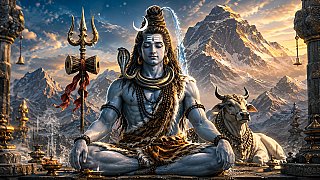
Every element of Shiva's appearance is intentional. In Hindu and Buddhist art, nothing is arbitrary. Each symbol represents a teaching about the nature of existence, consciousness, and spiritual practice. To understand Shiva is to learn to read this language of symbols.
The Third Eye (Triambaka)
The vertical eye on Shiva's forehead is perhaps his most iconic symbol. This is not a physical eye, but a symbol of transcendent vision and inner awakening. The third eye represents the ability to perceive beyond the visible world, to see truth directly without the distortions of desire, fear, or ego.
In spiritual practice, the third eye corresponds to the ajna chakra, the energy center associated with intuition and inner knowing. According to yogic philosophy, when this center awakens, one's perception shifts from seeing the world as separate objects competing for resources, to seeing all existence as an interconnected whole.
The stories about Shiva's third eye often depict it as a flame of infinite power. When opened in anger or focused intention, it burns away ignorance and falsehood. This teaches that true power lies not in physical force, but in clarity of vision and purity of intention.
The Crescent Moon (Chandrashekhara)
The crescent moon adorning Shiva's matted hair symbolizes time and the cycles of nature. Just as the moon waxes and wanes in a eternal rhythm, all existence moves through cycles of birth, growth, decline, and dissolution. The moon also represents the mind. While Shiva is often depicted with eyes closed, beyond thought and mental activity, the presence of the moon shows that thought and consciousness work together in the divine play.
In Hindu astronomy and philosophy, the moon governs the rhythm of tides, seasons, and the subtle cycles within the human body. Its presence on Shiva reminds us that cosmic order is not static but rhythmic, flowing, and ever-changing.
The Matted Hair (Jata) and the Ganges River
Shiva's distinctive matted locks are not a sign of asceticism through neglect, but a conscious rejection of conventional beauty and material concern. These locks are often depicted with the River Ganges flowing from them, representing one of the most important myths in Hindu cosmology.
According to the story, the river goddess Ganga descended from heaven with such force that she would have destroyed the earth. Shiva caught the river in his matted hair, breaking her descent and distributing her waters gradually across the land. This image teaches that even the most powerful forces of nature can be held in balance by consciousness and spiritual power. It also symbolizes the descent of grace and divine knowledge into human form.
For devotees and artists, Shiva's hair represents the sacred feminine principle (Shakti) held within consciousness. It shows that true power includes the ability to receive, nurture, and guide.
The Serpent (Vasuki)
The serpent coiled around Shiva's neck and body is Vasuki, a divine serpent king from Hindu mythology. This is not a sign of danger, but of mastery. Shiva wears the most dangerous creatures as ornaments, showing his transcendence over fear.
In spiritual terminology, the serpent represents kundalini, the dormant spiritual energy coiled at the base of the spine. When awakened through meditation and spiritual practice, this energy rises through the chakras, ultimately leading to enlightenment. Shiva's mastery of this force shows that he embodies ultimate spiritual transformation.
The serpent also symbolizes the cycle of death and rebirth. Just as a snake sheds its skin to be born anew, Shiva oversees the dissolution and renewal of existence. For artists and sculptors, the serpent adds visual dynamism to Shiva's form and communicates his mastery over the most primal forces of existence.
The Blue Complexion (Neelkanth)
In many depictions, Shiva's body glows with a deep blue hue. This comes from one of the most famous stories in Hindu mythology. During the Samudra Manthan (churning of the cosmic ocean), when gods and demons worked together to obtain divine nectar, a deadly poison called halahala was released. This poison threatened to destroy all creation.
To save the universe, Shiva voluntarily drank the poison. But rather than letting it enter his stomach, where it would have destroyed him, he held it in his throat. The poison turned his throat blue, earning him the name Neelkanth (blue-throated). This story demonstrates Shiva's ultimate compassion: he suffers to protect the world, and his own body becomes a symbol of sacrifice.
The blue also symbolizes the infinite sky and boundless space. Like the sky, Shiva contains all things and is untouched by them. The blue color reminds us that while Shiva acts in the world, he remains forever beyond the world.
The Ash-Covered Body (Vibhuti)
Shiva is often depicted covered in ash (vibhuti), particularly the ash from cremation grounds. This is a radical message. While other deities wear gold and jewels, Shiva adorns himself with the dust of death itself. This teaches the ultimate non-attachment: even death itself becomes a source of spiritual power when one has transcended ego and fear.
The ash symbolizes the transience of all material form. Everything, no matter how beautiful or powerful, eventually becomes dust. This is not a message of despair, but of freedom. When we truly accept the impermanence of all things, we are freed from the anxiety of trying to hold onto what cannot be held.
In practice, devotees mark their foreheads with ash during worship, reminding themselves of this truth and inviting Shiva's blessing of non-attachment into their consciousness.
The Trident (Trishula)
Shiva's weapon is the trident, a three-pointed spear. The three points represent several triadic principles:
Creation, preservation, and destruction. The three points work in harmony, showing that all three functions are necessary for cosmic order.
Waking, dreaming, and deep sleep. The three states of consciousness that define human experience.
Sattva, rajas, and tamas. The three qualities of existence: harmony and balance, activity and passion, and inertia and darkness.
The trident also represents wisdom, perseverance, and spiritual effort. It is not a weapon of conquest, but a tool for clearing away obstacles and establishing cosmic order. In Hindu philosophy, the most powerful "weapon" is truth spoken with compassion and right action taken with detachment from results.
The Serpent Covering (Tiger Skin)
In some depictions, Shiva wears the skin of a tiger or other wild animal. This symbolizes his mastery over primal, instinctive forces. Tigers represent power, sexuality, and the base survival instincts. By wearing them as a garment, Shiva shows that these forces do not control him; instead, he has integrated them into his spiritual power.
This teaching addresses a common misunderstanding about spiritual practice. Spirituality is not about suppressing nature or denying the body, but about integrating all aspects of existence into a higher wisdom. A master yogi can experience pleasure, encounter danger, and feel emotion without being controlled by these experiences.
The Drum (Damru)
The small hand-drum (damru) that Shiva carries is a symbol of rhythm, sound, and creation itself. In Hindu philosophy, sound is the vibration that underlies all existence. The Vedas themselves are understood as eternal sound patterns that structure reality.
The damru has two sides connected by a narrow middle, resembling the shape of the universe itself. When struck, it produces rhythm. This rhythm represents the pulsation of existence: expansion and contraction, creation and dissolution, systole and diastole. The drum shows that Shiva does not merely observe existence, but actively plays in it (lila).
The damru also symbolizes the sense of hearing, connecting Shiva to the realm of knowledge and truth. In the spiritual path, the guru's words transmitted through sound guide the student toward enlightenment.
The Deer
In some depictions, Shiva holds a deer or is attended by a deer. The deer represents gentleness, grace, and the ability to move swiftly and lightly. This adds a complementary dimension to Shiva's other symbols. While the trident and serpent represent power and mastery, the deer reminds us that true spirituality includes tenderness and grace.
The deer also symbolizes the human soul searching for truth. In Hindu philosophy, the individual soul (atman) is often depicted as a deer, and the guru (including Shiva) is the hunter who pursues it with the arrows of wisdom.
Nandi the Bull
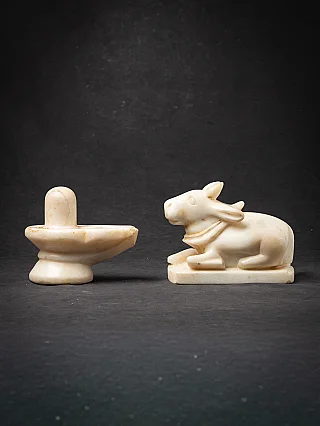
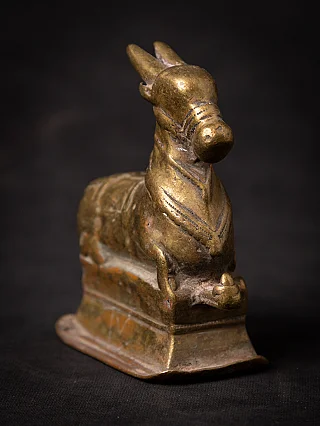
While not part of Shiva's body, Nandi the sacred bull is inseparable from Shiva's iconography. Nandi serves as Shiva's mount and companion, often positioned at the entrance to Shiva temples. The bull represents strength, fertility, and righteous action (dharma).
More profoundly, Nandi represents meditation itself. He sits eternally alert but relaxed, awake but without movement or desire. He is the eternal student, sitting at the feet of the guru, embodying the pose of perfect meditative awareness.
Shiva's Forms and Manifestations
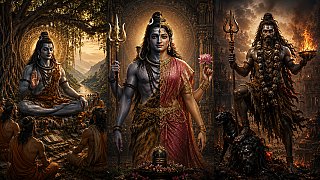
Hindu mythology is far more than entertainment or primitive science fiction. The myths encode spiritual teachings in narrative form, making abstract principles comprehensible and emotionally resonant. Several key stories about Shiva appear across the textual traditions and remain deeply meaningful to practitioners today.
The Marriage of Shiva and Parvati
One of the longest and most complex myths is the story of how Shiva, the detached yogi who has renounced the world, came to marry Parvati, the daughter of the mountain king. This story teaches about the union of transcendence and immanence, spirit and matter.
The myth begins with Parvati as a young woman undertaking severe austerities to win Shiva's heart. For years, she meditates and practices yoga, gradually purifying her consciousness and raising her spiritual vibration to match Shiva's. When she has become refined and spiritually powerful enough, Shiva recognizes in her a divine consciousness equal to his own, and they marry.
The marriage produces children, including Ganesh and Skanda, and brings Shiva into relationship with the world. This teaches that true spirituality is not about complete withdrawal from life, but about engaging with the world from a place of enlightenment and wholeness. Shiva remains a yogi and master of meditation even as he becomes a householder and father.
The Story of the Third Eye
The tale of how Shiva's third eye came to be demonstrates the power of his wrath and its righteous purpose. In one version, the god of desire (Kama) attempts to break Shiva's meditation by shooting his arrow of passion at the yogi. When Shiva opens his third eye in anger at this disturbance, Kama is immediately reduced to ashes.
This story illustrates that true spiritual power is not about suppressing desire and passion, but about mastering them. Shiva does not deny that desires exist; rather, his consciousness is so firmly established in itself that disturbances cannot sway him. The third eye represents the power of discriminating wisdom that sees through illusion.
In another telling of the myth, Shiva's third eye opens not in anger, but in compassion, and Kama is not destroyed but liberated. Different versions of the story teach different lessons, but all emphasize the supreme power of Shiva's consciousness.
The Churning of the Cosmic Ocean (Samudra Manthan)
In this epic myth, gods and demons join forces to churn the cosmic ocean in search of the nectar of immortality. During this great event, many things emerge, both blessings and dangers. The most famous is the emergence of halahala, the poison that threatens all existence.
Only Shiva can drink this poison and contain it, transforming it through his mastery into something that sustains rather than destroys. This myth teaches that even the most negative and destructive forces in the universe can be alchemized through consciousness and power. It also demonstrates that Shiva acts not for his own benefit, but for the welfare of all beings.
Shiva and the Pine Forest Sages
This story depicts Shiva wandering into the hermitage of Brahmin sages who have been practicing severe austerities. Shiva appears as a naked, ash-covered wanderer, and the sages, not recognizing his true nature, become angry and attempt to punish him. Their wives, however, immediately recognize Shiva's divine nature and begin to worship him.
The myth teaches that true spiritual power cannot be bound by appearances or social conventions. The ascetic practices of the Brahmin sages have made them rigid and closed-minded, while their wives' openness and devotion allow them to perceive truth directly.
Major Myths and Stories
Hindu mythology is far more than entertainment or primitive science fiction. The myths encode spiritual teachings in narrative form, making abstract principles comprehensible and emotionally resonant. Several key stories about Shiva appear across the textual traditions and remain deeply meaningful to practitioners today.
The Marriage of Shiva and Parvati
One of the longest and most complex myths is the story of how Shiva, the detached yogi who has renounced the world, came to marry Parvati, the daughter of the mountain king. This story teaches about the union of transcendence and immanence, spirit and matter.
The myth begins with Parvati as a young woman undertaking severe austerities to win Shiva's heart. For years, she meditates and practices yoga, gradually purifying her consciousness and raising her spiritual vibration to match Shiva's. When she has become refined and spiritually powerful enough, Shiva recognizes in her a divine consciousness equal to his own, and they marry.
The marriage produces children, including Ganesh and Skanda, and brings Shiva into relationship with the world. This teaches that true spirituality is not about complete withdrawal from life, but about engaging with the world from a place of enlightenment and wholeness. Shiva remains a yogi and master of meditation even as he becomes a householder and father.
The Story of the Third Eye
The tale of how Shiva's third eye came to be demonstrates the power of his wrath and its righteous purpose. In one version, the god of desire (Kama) attempts to break Shiva's meditation by shooting his arrow of passion at the yogi. When Shiva opens his third eye in anger at this disturbance, Kama is immediately reduced to ashes.
This story illustrates that true spiritual power is not about suppressing desire and passion, but about mastering them. Shiva does not deny that desires exist; rather, his consciousness is so firmly established in itself that disturbances cannot sway him. The third eye represents the power of discriminating wisdom that sees through illusion.
In another telling of the myth, Shiva's third eye opens not in anger, but in compassion, and Kama is not destroyed but liberated. Different versions of the story teach different lessons, but all emphasize the supreme power of Shiva's consciousness.
The Churning of the Cosmic Ocean (Samudra Manthan)
In this epic myth, gods and demons join forces to churn the cosmic ocean in search of the nectar of immortality. During this great event, many things emerge, both blessings and dangers. The most famous is the emergence of halahala, the poison that threatens all existence.
Only Shiva can drink this poison and contain it, transforming it through his mastery into something that sustains rather than destroys. This myth teaches that even the most negative and destructive forces in the universe can be alchemized through consciousness and power. It also demonstrates that Shiva acts not for his own benefit, but for the welfare of all beings.
Shiva and the Pine Forest Sages
This story depicts Shiva wandering into the hermitage of Brahmin sages who have been practicing severe austerities. Shiva appears as a naked, ash-covered wanderer, and the sages, not recognizing his true nature, become angry and attempt to punish him. Their wives, however, immediately recognize Shiva's divine nature and begin to worship him.
The myth teaches that true spiritual power cannot be bound by appearances or social conventions. The ascetic practices of the Brahmin sages have made them rigid and closed-minded, while their wives' openness and devotion allow them to perceive truth directly.
Shiva in Spiritual Practise
Beyond mythology and philosophy, Shiva is a living presence in Hindu spiritual practice. Millions of practitioners around the world turn to Shiva as the guide and master of meditation, as the source of protection, and as the embodiment of ultimate truth.
Shiva as the Master of Yoga
While yoga is often associated with physical postures in the Western world, in Hindu tradition, yoga means the union of the individual self with the universal consciousness. And Shiva is the supreme yogi and master of all yoga paths.
In the Shiva Sutras and other sacred texts, Shiva is depicted as the original guru who transmitted the science of yoga and meditation to the first great sages (rishis). He taught techniques for calming the mind, purifying the energy body, and awakening the dormant spiritual potential within every human being.
For practitioners today, Shiva represents the goal of yoga practice. The perfectly aligned spine of a meditating yogi, the steady yet relaxed posture, the inward focus of attention, the gradual dissolving of the sense of separate selfhood into universal consciousness: all these are captured in Shiva's image. To practice yoga is to gradually become more like Shiva: peaceful, powerful, and free.
Meditation on Shiva
In Hindu and Buddhist practice, meditation on the form of a deity (called saguna meditation) is a powerful technique for focusing the mind and invoking particular qualities. Meditation on Shiva typically involves visualizing his form in the third eye, feeling his presence, and allowing his qualities to pervade one's consciousness.
Different meditations invoke different aspects:
Meditating on Shiva as the meditating yogi cultivates inner peace, detachment, and deep concentration.
Meditating on Shiva as Nataraja awakens dynamism, creative energy, and the understanding that all of life is sacred play.
Meditating on Shiva with the poison in his throat invokes compassion and the willingness to bear suffering for the sake of others.
As the meditator's practice deepens, the sense of difference between the meditator and Shiva gradually dissolves. One realizes that Shiva's qualities are not separate from one's own true nature, but have been present all along, covered over by ignorance and conditioning.
The Mantra Om Namah Shivaya
One of the most widely practiced Shiva mantras is "Om Namah Shivaya," which translates roughly as "I bow to Shiva" or "I honor the divine within." The mantra has five syllables (Na-mah-Shi-va-ya), corresponding to the five elements and the five functions of consciousness.
Chanting this mantra is said to purify the energy body, calm the mind, and awaken the consciousness of Shiva within the practitioner. Unlike devotional prayer, which involves asking for something external, mantra practice is understood as a direct transmission of energy and consciousness. The vibration of the mantra itself, when practiced with focus and sincerity, gradually transforms the meditator's inner state.
Maha Shivaratri: The Great Night of Shiva
The most important annual celebration for Shiva devotees is Maha Shivaratri (the great night of Shiva), which typically falls in February or March. On this night, devotees fast, meditate through the night, and perform special rituals in Shiva temples.
According to tradition, Maha Shivaratri is the night when Shiva performed the cosmic dance of destruction and creation. By staying awake and meditating on this night, practitioners attempt to align themselves with these cosmic rhythms and invoke Shiva's blessings of spiritual transformation.
Shiva in Art and Sculpture
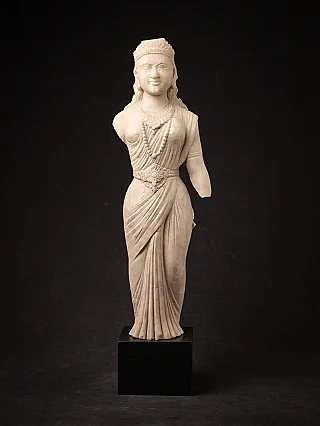
The principles of Shiva's symbolic representation have made him one of the most compelling subjects in Hindu art across thousands of years and diverse geographic regions. From the ancient temple sculptures of South India to contemporary bronze castings, artists continue to find new ways to capture Shiva's essence.
South Indian Bronze Sculpture
The classical Shiva bronzes from the Tamil region of South India, created during the Chola dynasty (9th-13th centuries), remain among the finest achievements in world sculpture. These works demonstrate extraordinary technical mastery combined with deep spiritual understanding.
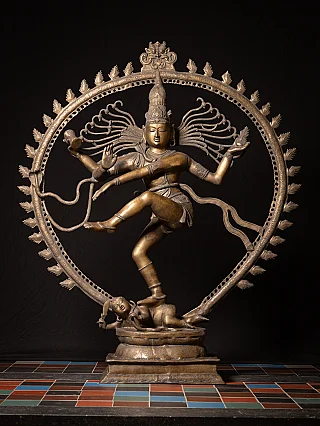
In Nataraja bronzes, for example, the sculptor must simultaneously convey:
The sense of movement, even though the figure is cast in metal. The positioning of the limbs, the tilt of the head, and the flow of the drapery all create the illusion of motion frozen in an instant.
The contrast between the fierce and the graceful. Shiva's expression and gestures balance intensity with serenity, suggesting that ultimate power is beyond the need to appear powerful.
The mythological narrative, with Shiva dancing on ignorance (represented by the demon or dwarf figure), and the cosmic elements (fire, drum, raised foot) all integrated into a single coherent image.
These bronzes are not merely decorative objects, but tools for meditation and worship. A devotee standing before a Nataraja bronze can contemplate the nature of creation and destruction, the eternal dance of existence, and the possibility of enlightenment. The sculpture becomes a gateway to spiritual understanding.
Regional Variations in Stone
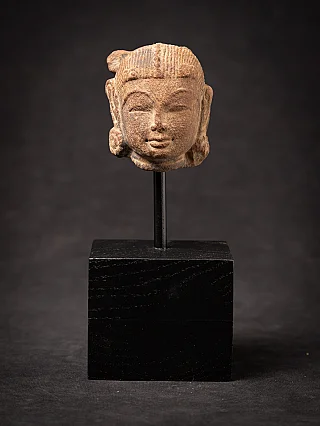
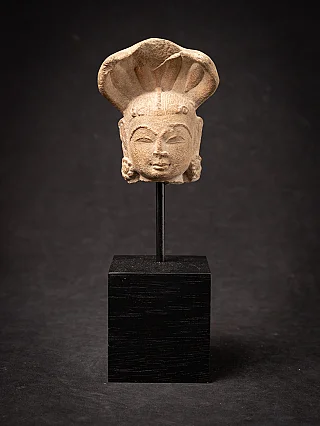
While bronze sculpture flourished in South India, artists throughout the Indian subcontinent created Shiva images in stone, marble, and other materials. The Kashmir Shaivism tradition produced subtle, refined Shiva sculptures emphasizing the meditative aspect. Himalayan regions developed their own iconographic traditions, often showing Shiva in his mountain dwelling or with snow-covered peaks surrounding him.
Stone sculptures are often larger and more permanent than bronzes, serving as the centerpiece of temples and sacred spaces. The weathering of stone over centuries becomes part of the sculpture's beauty, as lichen and patina gradually cover the surface, suggesting the passage of time and the dissolution of form.
Materials and Meanings
Different materials carry different spiritual significance in Hindu tradition:
Bronze represents the eternal and immutable, and bronzes are often used in temple worship where they are touched and bathed by devotees. The metal's resistance to corrosion symbolizes the eternal nature of consciousness.
Stone, particularly marble, suggests permanence and dignity. The lightness and whiteness of marble can evoke Shiva's form as pure consciousness.
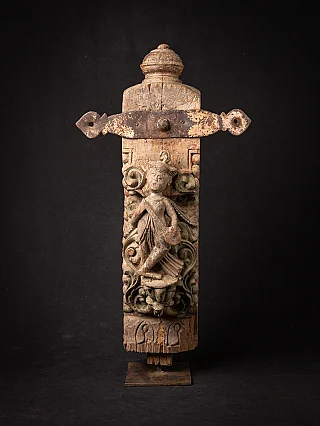
Wood, being impermanent and subject to decay, can represent the transience of material form. Wooden Shiva sculptures are particularly honored in certain Himalayan traditions.
Lavastone, formed from volcanic rock, carries the association with fire and cosmic destruction, making it particularly appropriate for representations of Shiva's destructive power.
Collectors of Shiva sculptures are often drawn to a particular material based on the aspect of Shiva they wish to invoke or contemplate. A bronze Nataraja invokes the eternal dance, while a stone Shiva in meditation posture brings the energy of timeless repose into a space.
The Language of Gesture
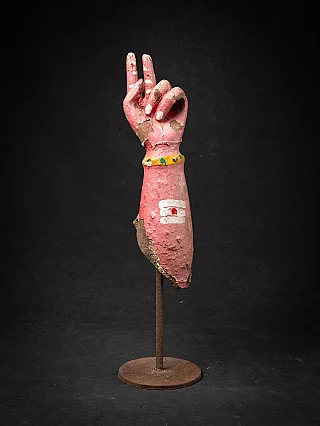
Hindu sculpture employs an elaborate system of hand gestures (mudras) and body postures (asanas) that communicate specific meanings. A knowledgeable viewer can "read" a Shiva sculpture much as one reads text.
The raised hand with palm forward (abhaya mudra) means "fear not" and offers protection.
The hand pointed downward (varada mudra) offers grace and blessing.
Hands held in specific positions with the fingers arranged in particular ways communicate meditation, teaching, or offering.
The tilt of the head, the position of the feet, the direction of the gaze, all convey meaning. A meditating Shiva with eyes closed suggests withdrawal from the external world, while a Shiva standing with open eyes engaged with the viewer suggests awakeness and presence.
Contemporary Sculpture
Artists continue to create Shiva sculptures today, finding ways to honor traditional iconography while expressing contemporary sensibilities. Some sculptures abstract the form, reducing Shiva to essential geometric shapes. Others combine traditional materials with modern techniques. Still others place Shiva's image in unexpected contexts, forcing viewers to reconsider what Shiva means in the contemporary world.
The best contemporary Shiva sculptures maintain the spiritual integrity of the form while making it fresh and alive for current practitioners. They acknowledge that Shiva is not frozen in the past, but remains a living force for those who seek to understand the nature of consciousness, transformation, and transcendence.
Frequently Asked Questions About Shiva
Is Shiva evil because he is the god of destruction?
Destruction in Hindu cosmology is not evil or chaotic. It is necessary and compassionate. Just as dead leaves must fall for new growth, outdated beliefs and worn-out forms must dissolve for renewal and transformation. Shiva destroys only what is false, impure, or no longer serves. His destruction creates space for truth and renewal.
Why is Shiva often shown half-naked, covered in ash?
This appearance communicates complete non-attachment to material concerns. While other deities wear gold and jewels, Shiva wears the ash of cremation and the skin of wild animals. He teaches that true power comes not from accumulation or conventional beauty, but from mastery of mind and consciousness.
What is the significance of the lingam form?
The lingam is the primary symbol through which Shiva is worshipped. While sometimes interpreted as phallic, modern Hindu understanding emphasizes the lingam as an abstract representation of the infinite, formless divine. It is the symbol of the unmanifest consciousness that underlies all existence. The yoni (feminine principle) supporting the lingam shows the union of consciousness and energy, Shiva and Shakti.
Why is Shiva blue?
According to Hindu mythology, Shiva drank the poison that emerged during the churning of the cosmic ocean, turning his throat blue. This story demonstrates Shiva's compassion and willingness to bear suffering to protect all beings. The blue color also symbolizes the infinite sky and boundless consciousness.
How is Shiva connected to yoga?
Shiva is the supreme yogi and master of all yoga paths. He is said to have transmitted the science of yoga to the first sages (rishis). In yogic philosophy, Shiva represents the goal of practice: perfect meditation, liberation, and union with universal consciousness.
What does the third eye symbolize?
The third eye represents transcendent vision and inner awakening. It symbolizes the ability to perceive truth directly, beyond the distortions of desire, fear, and ego. In yogic practice, it corresponds to the ajna chakra, the energy center associated with spiritual insight and intuition.
Why is the serpent associated with Shiva?
The serpent (Vasuki) around Shiva's neck symbolizes his mastery over the most primal and dangerous forces. It also represents kundalini, the dormant spiritual energy that awakens through meditation. The serpent's ability to shed its skin represents the cycle of death and rebirth that Shiva oversees.
What is the difference between Shiva and Brahma?
Brahma is the creator of universes, responsible for the initial generation of forms. Shiva is the destroyer and transformer, responsible for dissolving what is old and making space for renewal. Vishnu is the preserver who maintains order and balance. All three are necessary for the cosmic cycle.
How should one approach Shiva in worship?
Different approaches suit different temperaments. Some meditate on Shiva's form and qualities. Others chant mantras like "Om Namah Shivaya." Still others perform rituals or yoga practice. The underlying principle is to establish a relationship with the divine principles that Shiva represents: consciousness, transformation, and liberation.
Is Shiva worshipped only in Hinduism?
While primarily a Hindu deity, Shiva also appears in Buddhist and Jain traditions, where he is recognized as a powerful, enlightened being. His principles of transformation and liberation are universal and resonate across many spiritual paths.
Explore Authentic Shiva Statues
Share this page