

Lakshmi: The Hindu Goddess of Wealth, Fortune and Prosperity
View Our Lakshmi Statues Collection
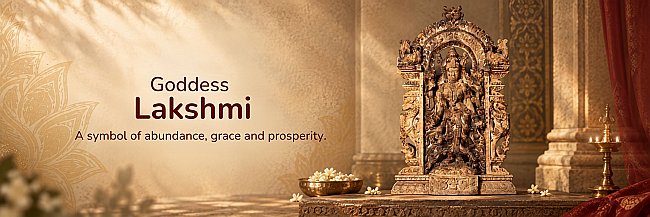
Goddess Lakshmi is Hinduism's most beloved deity of wealth, abundance, fortune and beauty — the divine consort of Lord Vishnu and one of the three great goddesses (Tridevi) of the Hindu pantheon, alongside Saraswati and Parvati. Worshipped in nearly every Hindu and many Buddhist-influenced households across India, Nepal, and the diaspora, Lakshmi statues are among the most sought-after murtis for home altars, business entrances, and Diwali celebrations. This guide explores her symbolism, mythology, forms, and everything you need to know before choosing an authentic Lakshmi statue for your home, temple, or collection.
Who Is Lakshmi? The Core Principle
Lakshmi (also spelled Laxmi) is the Hindu goddess of wealth, fortune, prosperity, beauty, fertility and generosity — both material and spiritual. Her name derives from the Sanskrit word lakshya, meaning "aim" or "goal," reflecting her role as the giver of purpose, prosperity, and auspiciousness (Shubh) in a devotee's life.
More Than Material Wealth
Lakshmi represents Dhana (riches), Dhanya (grain and sustenance), Santati (progeny), Dhairya (courage) and Vijaya (victory) — the full spectrum of abundance. She is eternally youthful and radiant, and is said to reside wherever there is cleanliness, truthfulness, hard work and generosity, and to depart from places marked by greed, laziness or deceit.
Consort of the Preserver
As the consort of Vishnu, the Preserver, Lakshmi accompanies him in each of his incarnations (avatars) — appearing as Sita alongside Rama, and as Rukmini and Radha alongside Krishna. Together, Lakshmi and Vishnu represent the balance of material prosperity and moral order (Dharma) that sustains the universe.
Lakshmi's Symbolism – Reading the Form
Every element of a traditional Lakshmi statue carries specific meaning, which is essential knowledge whether you are buying a murti for worship or simply want to understand the piece in your collection.
The Lotus Throne and Lotus Flowers
Lakshmi is almost always depicted standing or seated on a fully bloomed pink or red lotus (padma), often holding one or two additional lotuses in her hands. The lotus grows in muddy water yet rises untouched and pure — symbolizing spiritual growth, non-attachment to material wealth, and the flowering of consciousness above worldly circumstance.
Four Arms and Their Objects
Most Lakshmi statues show her with four arms, representing the four aims of human life (Purusharthas): Dharma (righteousness), Artha (wealth), Kama (desire) and Moksha (liberation).
- Two back hands holding lotuses: purity and spiritual liberation.
- One front hand in Abhaya or Varada mudra: a gesture of fearlessness or the granting of boons and blessings.
- One hand pouring gold coins: the endless flow of material prosperity to sincere devotees.
Golden Coins and the Overflowing Pot (Kalasha)
A continuous stream of gold coins flowing from her palm — or an overflowing pot (purna kalasha) beside her — signifies boundless wealth that never depletes for those who live righteously.
Elephants: Gaja Lakshmi
A widely collected form, Gaja Lakshmi, shows the goddess flanked by two elephants raising trunks of water above her in a purifying, coronation-like gesture. Elephants symbolize royal power, mental strength, and the clouds that bring life-giving rain — linking Lakshmi to both spiritual sovereignty and agricultural abundance.
Owl as Vahana (Vehicle)
Lakshmi's mount, the owl (uluka), represents the ability to see clearly in darkness and ignorance — a reminder that true prosperity requires wisdom and discernment, not blind accumulation.
Red and Gold Attire
She is typically depicted draped in red or pink garments embroidered with gold, colors associated with activity, fertility, and auspiciousness in Hindu tradition, and her skin is often rendered in luminous gold tones.
Lakshmi's Forms and Manifestations: Ashta Lakshmi
Lakshmi is worshipped in eight principal forms known collectively as Ashta Lakshmi, each governing a distinct dimension of abundance. Collectors and devotees often seek statues of a specific form depending on their intention:
- Adi Lakshmi — the primordial, original form of the goddess.
- Dhana Lakshmi — goddess of money and material wealth.
- Dhanya Lakshmi — goddess of grain, harvest and agricultural abundance.
- Gaja Lakshmi — goddess of royal power, animal wealth and strength, shown with elephants.
- Santana Lakshmi — bestower of offspring and family continuity.
- Veera/Dhairya Lakshmi — goddess of courage and valor.
- Vijaya Lakshmi — goddess of victory and success over obstacles.
- Aishwarya/Vidya Lakshmi — goddess of luxury, comfort and, in some traditions, knowledge.
Beyond the Ashta Lakshmi, two of the most commercially and devotionally popular statue types are:
Lakshmi-Narayan
Lakshmi seated beside or on the lap of Vishnu (Narayan), representing the union of prosperity and preservation, popular as a wedding and housewarming gift.
Lakshmi-Ganesh-Saraswati
A grouped murti combining Lakshmi (wealth), Ganesha (remover of obstacles) and Saraswati (wisdom), the single most popular statue set purchased for Diwali and new business openings.
Major Myths and Stories
Samudra Manthan – The Churning of the Cosmic Ocean
Lakshmi's most celebrated origin story appears in the Puranas: when the Devas (gods) and Asuras (demons) churned the cosmic ocean of milk (Samudra Manthan) in search of the nectar of immortality, Lakshmi emerged fully formed from the waters, seated on a lotus, radiant and holding a garland. She chose Vishnu as her eternal consort, and the two have remained inseparable across every cosmic cycle since.
Lakshmi and King Bali
In one well-known Puranic tale, Lakshmi was temporarily held in the underworld by the generous demon-king Bali after Vishnu (as the dwarf avatar Vamana) sent him there. Vishnu remained by Bali's side to protect Lakshmi's interests, illustrating the inseparability of prosperity (Lakshmi) and righteous protection (Vishnu).
Lakshmi as Sita and Radha
Hindu tradition holds that Lakshmi incarnates alongside each avatar of Vishnu — as Sita in the Ramayana and as Radha or Rukmini in the Krishna narratives — reinforcing her eternal role as the animating, sustaining feminine energy (Shakti) of the universe.
Lakshmi in Spiritual Practice
Diwali: The Festival of Lights
Lakshmi Puja is the central ritual of Diwali, the most widely celebrated Hindu festival worldwide. Homes and businesses are cleaned, decorated with oil lamps (diyas) and rangoli patterns, and a Lakshmi statue or Lakshmi-Ganesh-Saraswati set is ceremonially worshipped to invite prosperity into the new year. In 2026, Diwali falls on Sunday, November 8 — one of the most popular times of year to acquire a new Lakshmi murti for home worship.
Varalakshmi Vratam and Sharad Purnima
South Indian households observe Varalakshmi Vratam, a dedicated day of fasting and worship for married women seeking the boon-granting form of Lakshmi. Sharad Purnima (the autumn full moon) is also associated with Lakshmi's blessings of abundance and is marked by night-long worship in many regions.
Mantras and Chanting
The most widely recited mantra is "Om Shreem Mahalakshmiyei Namah", chanted to invoke wealth, harmony and grace. The Sri Suktam, an ancient Vedic hymn, is also recited during formal Lakshmi worship (puja) to invoke her presence in the home.
Vastu Shastra: Placement and Direction
According to Vastu Shastra (Hindu architectural science), a Lakshmi statue should ideally face east or north and be placed in the north-east (Ishan) corner of the home or puja room, on a clean, raised platform at chest-to-eye height. A seated Lakshmi on a lotus is considered especially auspicious for home worship, while a standing Gaja Lakshmi is often favored for entryways and business premises to welcome prosperity. South-facing placement is traditionally avoided.
Lakshmi in Art and Sculpture
Lakshmi statues have been crafted across the Indian subcontinent, Nepal and Southeast Asia for centuries, with regional styles reflecting distinct artistic lineages:
- South Indian bronze (Chola-style) Lakshmi: lost-wax cast bronze, elegant proportions, seated or standing on a lotus pedestal, often gilded.
- North Indian and Nepali brass/copper repoussé Lakshmi: hand-hammered detailing, frequently combined with Ganesha and Saraswati in a single household shrine piece.
- Terracotta and stone Lakshmi: rustic temple and village artifacts, popular with collectors of antique Indian folk art.
- Gaja Lakshmi relief panels: historically carved above temple doorways and thresholds as a symbol of protection and welcome, now popular as wall-mounted collector pieces.
How to Choose an Authentic Lakshmi Statue: Materials Guide
Understanding material is the first step to choosing the right statue for worship, décor or collecting purposes:
- Brass: the most traditional and widely used metal for home worship; durable, affordable, and considered auspicious in Vastu.
- Bronze: used for finer, often antique temple-quality statues; ages beautifully with a natural patina.
- Marble and stone: favored for larger statues, entryways, and gardens; conveys permanence and purity.
- Wood: carved wooden Lakshmi figures are common in Nepali and South Indian folk traditions, prized by collectors for their warmth and craftsmanship.
- Silver and gold-plated: reserved for finer ceremonial or gifting pieces, symbolizing purity and higher devotion.
Choosing the Right Size and Form
For a home altar, a seated Lakshmi between 6–18 inches is most common. For entryways, offices or business premises, a standing or Gaja Lakshmi form between 18–36 inches is traditionally preferred to "welcome" prosperity into the space. Larger statues (36 inches and above) are popular as temple donations, hotel and showroom centerpieces, or serious collector acquisitions.
Verifying Authenticity & Provenance
When purchasing an antique or handcrafted Lakshmi statue, look for:
- Natural, uneven patina and wear consistent with genuine age (rather than artificially distressed finishes).
- Hand-finished details in the face, jewelry and lotus petals — mass-produced pieces tend to show repetitive, mold-perfect uniformity.
- Documented provenance or a dealer who can speak to the statue's regional origin (India, Nepal, or Southeast Asia) and approximate period.
- Weight and material consistency — genuine bronze and brass pieces have a distinct heft compared to cheaper alloy reproductions.
Caring for Your Lakshmi Statue
- Dust regularly with a soft, dry cloth; avoid harsh chemical cleaners on bronze, brass or wood.
- For metal statues, occasional polishing with a mild brass/bronze cleaner preserves shine without damaging patina on antique pieces.
- Keep wooden and terracotta statues away from direct sunlight and excess humidity to prevent cracking.
- Many devotees perform a simple cleansing and re-consecration (using water, sandalwood paste, or incense) when placing a new murti on the altar for the first time.
Frequently Asked Questions About Goddess Lakshmi
Q: What does Goddess Lakshmi symbolize?
A: Lakshmi symbolizes wealth, prosperity, fortune, beauty, fertility and spiritual abundance. She represents both material riches and inner qualities such as generosity, courage and grace, and is considered the source of auspiciousness (Shubh) in Hindu life.
Q: Who is Lakshmi married to?
A: Lakshmi is the eternal consort of Lord Vishnu, the Preserver. Together they represent the balance of material prosperity and moral order (Dharma) that sustains the universe, and she is said to accompany him in each of his avatars.
Q: Which direction should a Lakshmi statue face at home?
A: According to Vastu Shastra, a Lakshmi statue should ideally face east or north and be placed in the north-east (Ishan) corner of the home or puja room, on a clean, raised platform. South-facing placement is traditionally avoided.
Q: What is the difference between Lakshmi and Gaja Lakshmi statues?
A: A standard Lakshmi statue typically shows the goddess seated or standing alone on a lotus. A Gaja Lakshmi statue depicts her flanked by two elephants raising trunks of water above her, symbolizing royal power and abundance — a popular choice for entryways and business premises.
Q: Is it auspicious to buy a Lakshmi statue before Diwali?
A: Yes. Diwali (November 8, 2026) is considered one of the most auspicious times of year to bring home a new Lakshmi murti, as Lakshmi Puja is the central ritual of the festival and welcomes prosperity into the new year.
Q: What materials are best for a Lakshmi statue for home worship?
A: Brass is the most traditional and widely used metal for home worship and is considered auspicious in Vastu. Bronze is favored for finer, temple-quality antique pieces, while marble and stone suit larger statues, and silver or gold-plated statues are reserved for ceremonial or gifting pieces.
Q: Can non-Hindus own or display a Lakshmi statue?
A: Yes. Many collectors and admirers of Indian art display Lakshmi statues purely for their artistic, cultural and symbolic value as representations of prosperity and abundance, regardless of religious background.
Q: How can I tell if an antique Lakshmi statue is genuine?
A: Look for natural, uneven patina consistent with genuine age, hand-finished details in the face and jewelry, documented provenance from a reputable dealer, and a weight and material consistency typical of genuine bronze or brass rather than modern alloy reproductions.
View Our Lakshmi Statues Collection
Share this page


