Diwali and Tihar: Why Lakshmi and Ganesha Are Worshipped Together
Author : Peter Vredeveld · Published
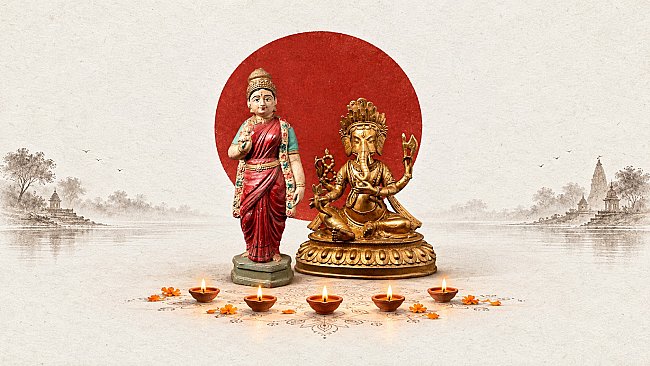
On the darkest night of the autumn, millions of small clay lamps are lit across India and Nepal. Doors stand open, floors are swept, coloured patterns are drawn at the threshold, and families sit down in front of two small figures: Lakshmi, the goddess of wealth and good fortune, and Ganesha, the elephant-headed remover of obstacles.
In India this is Diwali. In Nepal it is Tihar. The names and many of the customs differ, but at the heart of both festivals is the same evening: Lakshmi Puja, when the goddess is invited into the home. Here is what happens on those five days, why Lakshmi and Ganesha are almost always worshipped side by side, and how you can recognise them in old statues.
When are Diwali and Tihar in 2026?
Diwali follows the lunar calendar, so the date moves every year. In 2026 the main night of Lakshmi Puja falls on Sunday 8 November, the new moon (Amavasya) of the month of Kartik. The full festival runs for five days around that night.
In Nepal, Tihar runs from about 7 to 11 November 2026, ending with Bhai Tika. Calendars in India and Nepal sometimes place a festival day one day apart, so local temples and families may keep slightly different dates.
Why are Lakshmi and Ganesha worshipped together?
At first sight they are an unusual pair. Lakshmi is the wife of Vishnu. Ganesha is the son of Shiva and Parvati. They come from different divine families, yet on Diwali night they sit next to each other on almost every home altar.
The reason is practical as much as spiritual. In Hindu worship Ganesha is always honoured first. He is Vighnaharta, the one who removes obstacles, and no ritual, journey or new venture begins without him. Lakshmi brings wealth, abundance and good fortune. Together they express a simple wish for the year ahead: may the way be clear, and may prosperity come in.
There is a second, quieter meaning. Wealth without wisdom is easily lost, and many families say Lakshmi stays only where Ganesha's good sense is present. That is why shopkeepers and traders in India open new account books on Diwali with both gods before them, and why many households buy a new pair of Lakshmi and Ganesha figures each year.
"Vakratunda Mahakaya Suryakoti Samaprabha, Nirvighnam Kuru Me Deva Sarva-Karyeshu Sarvada. (O Lord with the curved trunk and mighty body, radiant as a million suns, remove the obstacles from all my work, always.)"- Traditional Ganesha prayer
What happens on the five days of Diwali?
- Dhanteras. The festival opens with a day for buying something new in metal: a pot, a coin, a piece of jewellery. It is considered a lucky day to bring wealth into the house.
- Naraka Chaturdashi (Choti Diwali). The day remembers Krishna's victory over the demon Narakasura. People bathe early, light the first lamps and finish cleaning the house.
- Lakshmi Puja. The main night. Lamps are placed on every windowsill and doorstep so Lakshmi can find her way in, and the family worships Lakshmi and Ganesha with flowers, sweets and coins. In northern India the night also celebrates Rama's return to Ayodhya after fourteen years of exile.
- Govardhan Puja. A day for Krishna, who lifted Mount Govardhan on one finger to shelter the cowherds of Braj from Indra's storms. Mountains of food are offered to him.
- Bhai Dooj. Sisters pray for their brothers and mark their foreheads with a tilak, and brothers give gifts in return.
How is Tihar celebrated in Nepal?
Tihar, also called Deepawali or Yamapanchak, honours not only gods but also the animals that live closest to people. Each of the five days has its own guest of honour.
- Kag Tihar: crows, seen as messengers, are fed on rooftops in the morning.
- Kukur Tihar: dogs receive garlands of marigolds, a red tika and a good meal, in thanks for their loyalty.
- Gai Tihar and Laxmi Puja: cows, regarded as a form of Lakshmi, are honoured in the morning. In the evening houses are lit with oil lamps and candles, and a path of red earth with small painted footprints leads from the door to the family shrine, so the goddess can walk in.
- Goru Tihar and Mha Puja: oxen are honoured, and the Newar community of the Kathmandu Valley performs Mha Puja, a ritual for one's own body and soul, on the first day of the Nepal Sambat new year.
- Bhai Tika: sisters place a seven-coloured tika on their brothers' foreheads and give them garlands of makhamali flowers, which keep their colour for a long time, as a wish for a long life.
In the evenings, groups of children and young people go from house to house singing Bhailo and Deusi songs, and are rewarded with sweets and money. Like Dashain, which comes a few weeks earlier, Tihar is a time when families come back together.
How are Lakshmi and Ganesha shown in art?
Because both gods are worshipped in so many homes, they are among the most often made figures in Hindu art, in every material from temple stone to painted clay.
Lakshmi usually sits or stands on a lotus, the symbol of purity that rises from muddy water. She has two or four hands, often holding lotus flowers, while one hand lets gold coins fall or is raised in blessing. In the form known as Gaja Lakshmi, two elephants pour water over her. Her vehicle is the owl. Read more about her symbols on our Lakshmi page.
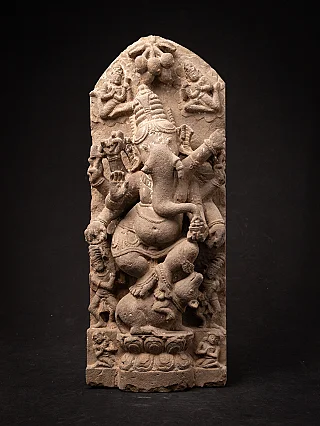
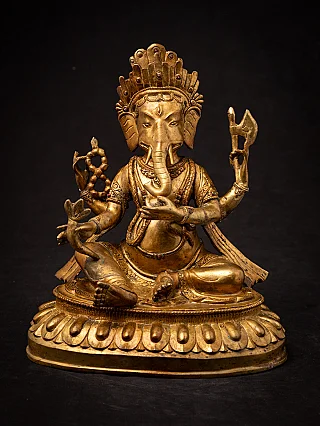
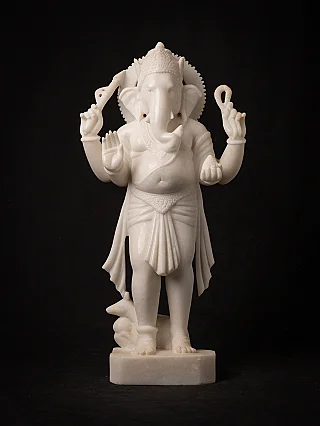
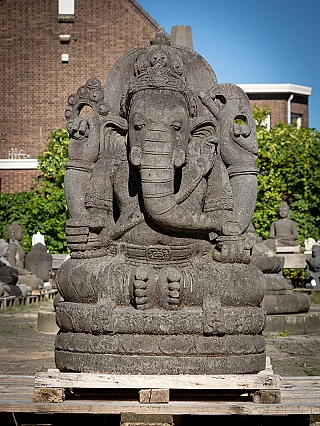
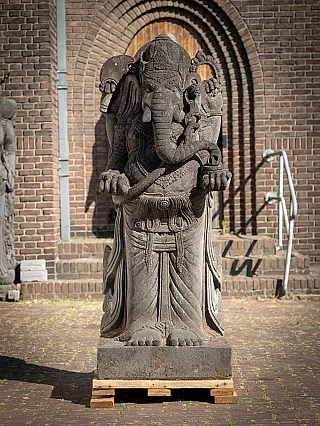
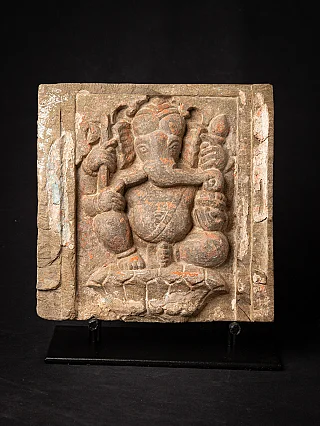
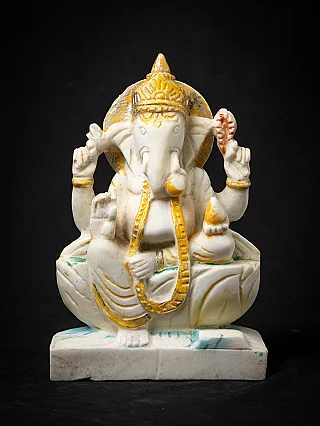
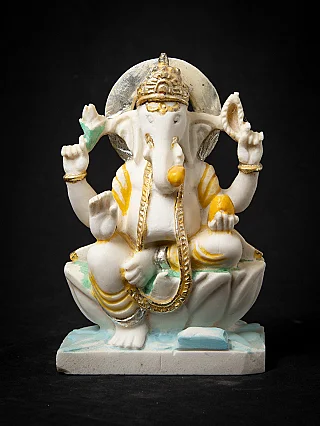
Ganesha is easy to recognise by his elephant head, broken tusk and round belly. He often holds an axe, a noose, a sweet modak and a rosary, and a small mouse, his vehicle, sits at his feet. In Nepal, Newar bronze casters made gilded Ganesha figures with a high crown and a flowing scarf, like the one on top of this page. His full iconography is explained on our Ganesha page.
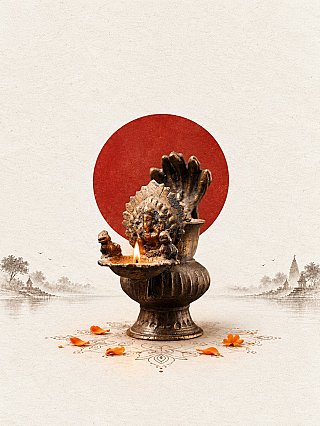
A beautiful Newar object links Ganesha directly to the lamps of Tihar: the sukunda, a bronze oil lamp with a small Ganesha on its back. It is lit at the start of every important ritual, because Ganesha must be honoured first.
Choosing a Lakshmi or Ganesha statue for your home
Many people who celebrate Diwali buy new clay figures each year. Others prefer a single older statue that stays on the altar for a lifetime. If you are looking for an antique Lakshmi or Ganesha, a few points are worth knowing.
- Material. Bronze and brass figures from Nepal and India last for generations and develop a soft patina. Marble and sandstone pieces come mostly from temples and larger shrines. Painted terracotta and wood are more fragile and often show charming traces of home worship.
- Gilding. Fire-gilded bronzes from Nepal were made for important shrines. Worn gold on the highest points, such as the face and hands, is a sign of real handling over many years. We explain this in Why are Buddha statues gilded?
- The trunk. Most Ganesha figures for the home have a trunk turning to his left, which is considered calm and gentle. A trunk turning to the right is linked to stricter temple worship.
- Placement. Traditionally Ganesha sits to the left of Lakshmi, on a clean, raised place, facing into the room rather than the floor.
Lakshmi is not the only giver of wealth in Hindu art. Kuber, the treasurer of the gods, is also worshipped on Dhanteras and is a popular figure for collectors.
Frequently Asked Questions
- When is Diwali in 2026? The main night of Diwali, Lakshmi Puja, is on Sunday 8 November 2026. The five-day festival runs around that date.
- When is Tihar in 2026? Tihar in Nepal runs from about 7 to 11 November 2026, with Laxmi Puja on the evening of 8 November and Bhai Tika on 11 November.
- Why are Lakshmi and Ganesha worshipped together at Diwali? Ganesha removes obstacles and is always honoured first, and Lakshmi brings wealth and good fortune. Together they stand for prosperity that arrives without obstacles and is kept with wisdom.
- What is the difference between Diwali and Tihar? Both are five-day festivals of light centred on Lakshmi Puja. Diwali in India also celebrates Rama's return and Krishna's victory over Narakasura, while Tihar in Nepal honours crows, dogs, cows and oxen, and ends with Bhai Tika for brothers and sisters.
- Which way should Ganesha's trunk turn for a home altar? Most home figures have a trunk turning to Ganesha's left, which is seen as gentle and suited to a household. Right-turning trunks are associated with stricter temple worship.
- Is an antique Lakshmi or Ganesha statue suitable for Diwali worship? Yes. Many families keep the same metal or stone figure on their altar for generations, and an older statue that has been worshipped before is often valued for exactly that reason.
Whether you light a single lamp or a hundred, Diwali and Tihar carry the same quiet invitation: clean the house, open the door and make room for good fortune. If you would like a Lakshmi or Ganesha who has already seen many festivals of light, take a look at our collection, or visit us in our gallery in Deventer.
Share this page