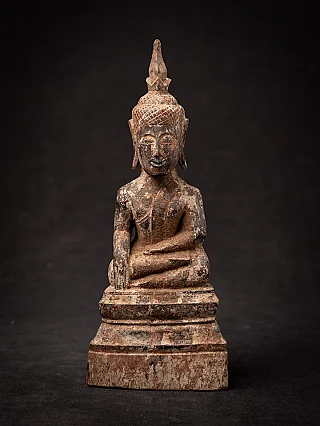
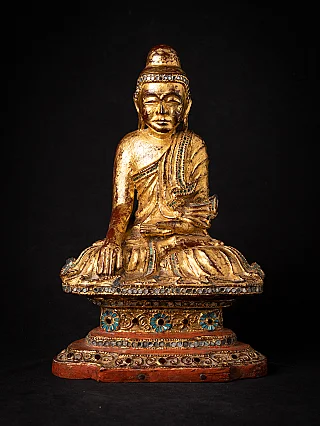
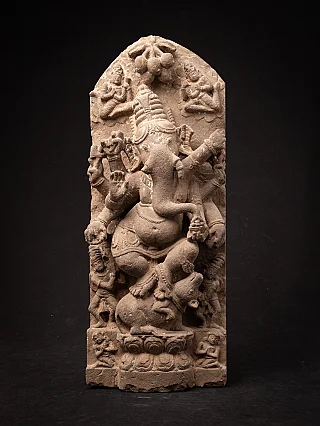
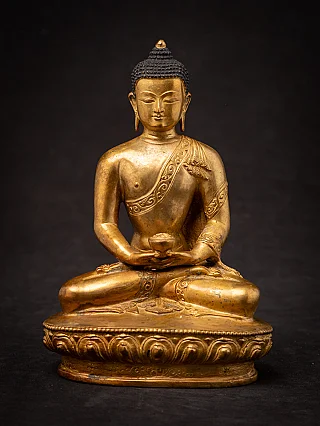
How to Read a Buddha Statue Like a Collector
Author : Peter Vredeveld · Published
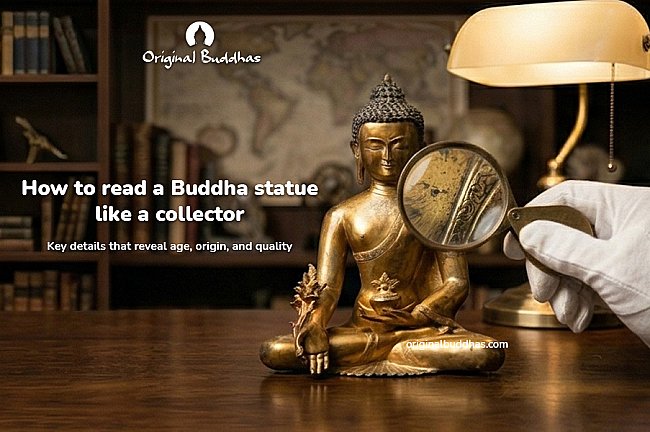
Most people see a Buddha statue and think: beautiful.
A collector sees something else entirely.
Not because the collector is less emotional, but because they have trained themselves to look beyond beauty. They do not stop at the expression, the posture, or the surface. They read the statue. They look for evidence: the mudra, the proportions, the material, the casting method, the wear, the back, the base, and the many small details that reveal whether the piece is coherent, old, well-made, regionally correct, and historically believable.
That is the real difference between admiring a Buddha statue and understanding one.
If you want to buy with confidence, recognize quality quickly, or simply learn how experienced collectors assess a piece, this guide will show you how to read a Buddha statue the way a collector does.
What does it mean to “read” a Buddha statue?
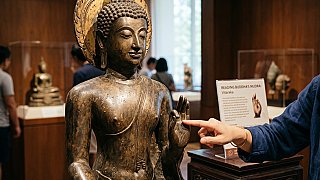
To read a Buddha statue is to treat it as more than a decorative object.
A serious collector does not ask only, “Do I like it?” They ask:
- What is this figure doing?
- Is it really a Buddha?
- Does the mudra match the posture?
- Does the style fit the claimed region?
- Does the material make sense for that style?
- Does the surface age look natural?
- Is the workmanship strong enough for the period and origin being claimed?
- Do all parts of the statue tell the same story?
A collector reads the statue the way an expert reads a manuscript: every line, every interruption, every inconsistency matters.
That is why two statues may appear similar to a casual buyer, while to a collector, they are worlds apart in authenticity, quality, age, and value.
The collector’s mindset: beauty is not enough
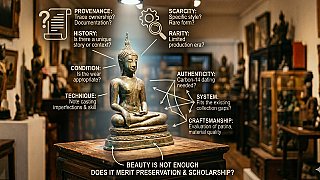
Collectors rarely judge a statue as one complete image at first glance. They break it apart mentally.
They isolate the hands. Then the face. Then the shoulders. Then the robe lines. Then the base. Then the back. Then the material. Then the wear.
Only after that do they bring the whole piece back together.
This is one of the biggest differences between decorative buying and collector-level looking. A decorative buyer is led by atmosphere. A collector is led by consistency.
A convincing surface means little if the iconography is wrong. A beautiful face means little if the casting is poor. A dark patina means little if the underside reveals a modern mold. A prestigious provenance means little if the physical evidence does not support it.
Collectors begin with skepticism. They assume the piece must prove itself.
That mindset protects both judgment and money. It also leads to deeper appreciation, because when a statue is right, it is right in many ways at once.
View our special Buddha statues' collection
Start with identity: is it actually a Buddha?
Before style, age, or quality, you must first confirm what you are looking at.
Many buyers confuse Buddhas, bodhisattvas, Hindu deities, and later devotional figures because they focus only on a serene face or seated posture. But collectors begin with identity.
A Buddha is usually recognized through a combination of:
- mudra
- monastic robe
- ushnisha
- elongated earlobes
- simplified spiritual presence rather than royal ornament
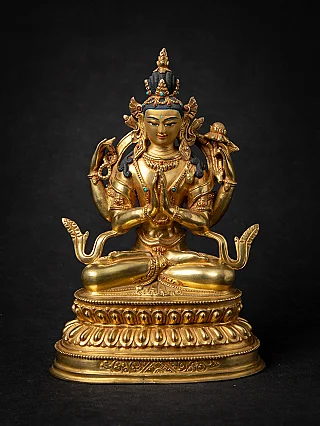
A bodhisattva often appears more richly adorned, wearing jewelry, crowns, scarves, and princely ornaments. Hindu deities are typically identified by attributes such as weapons, lotuses, conch shells, discs, tridents, animals, or multiple arms.
This first distinction matters. If the figure is misidentified at the start, every conclusion after that will be wrong.
Step 1: Read the posture and mudra first

If there is one place every collector starts, it is the hands.
The mudra is not a decorative gesture. It is an essential identifying language. It tells you what the figure is doing, what moment or quality is being expressed, and often gives your first clue to whether the statue is iconographically correct.
The main mudras collectors look for
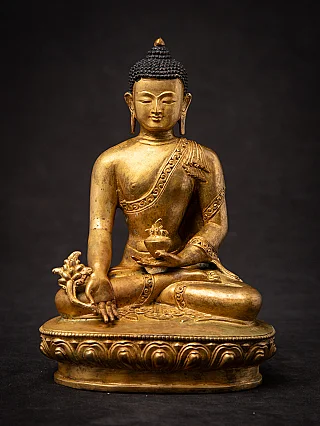
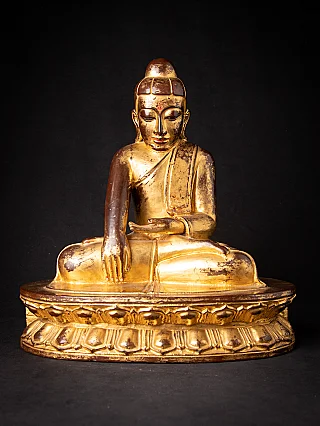
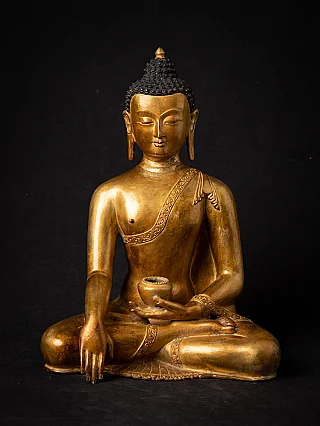
Bhumisparsha mudra – earth-touching
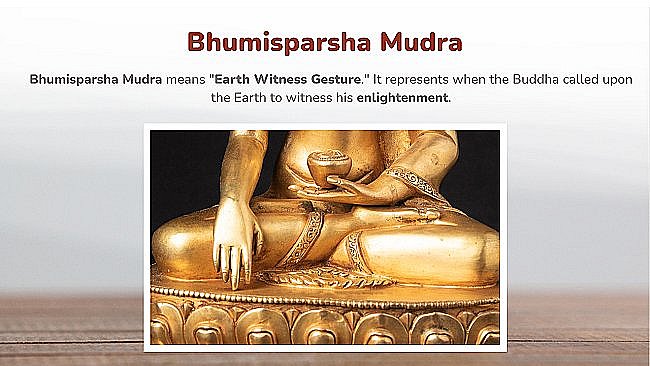
The right hand reaches down toward the earth, usually over the knee. The left hand rests in the lap.
This is one of the best-known Buddha gestures and refers to the moment of awakening, when the Buddha calls the earth to witness.
Collectors do not only check whether the hand points downward. They check whether the movement feels natural, balanced, and structurally convincing.
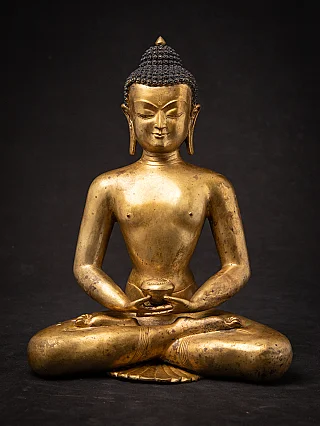
Dhyana mudra – meditation
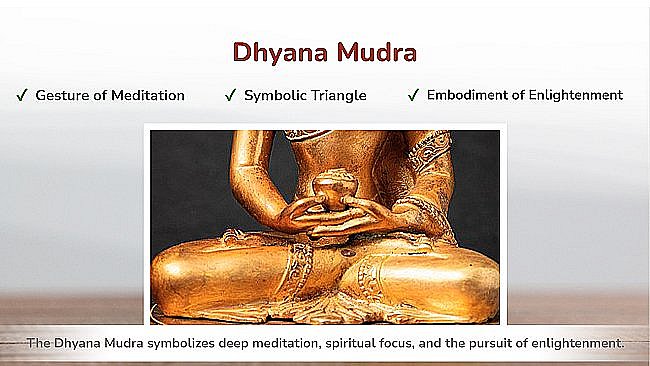
Both hands rest in the lap, palms upward, often one over the other.
This indicates meditation, concentration, and inner stillness.
A collector looks at the stillness of the overall composition here. If the posture is restless or the hands are awkward, something is off.
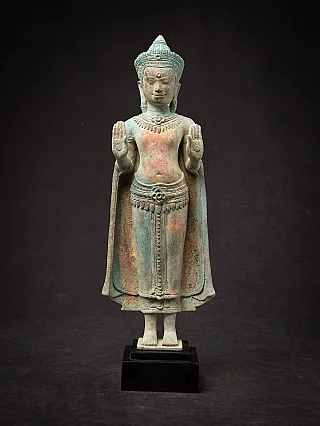
Abhaya mudra – fearlessness
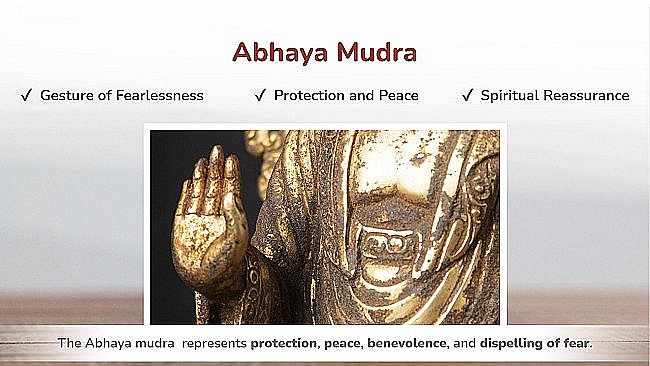
The hand is raised, palm outward.
This gesture expresses protection, reassurance, and the absence of fear.
Collectors look closely at finger articulation. Weak, blunt, webbed, or fused fingers often indicate poor casting or later mass production.
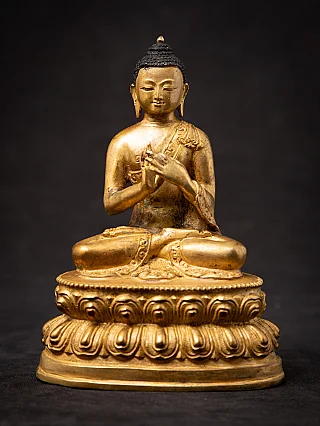
Dharmachakra mudra – teaching
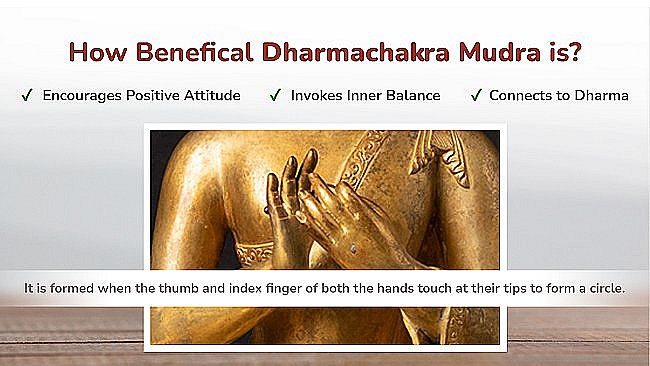
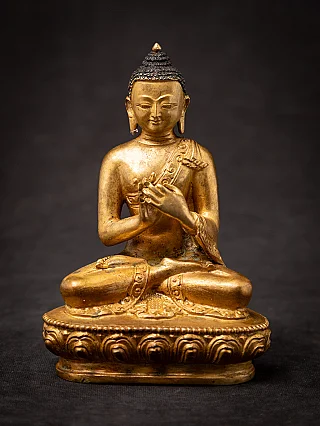
The hands are held near the chest in a teaching gesture.
This mudra is often more complex and therefore more revealing. The more complicated the hand arrangement, the harder it is to execute well, and the more quickly poor workmanship becomes visible.
Varada mudra – bestowing
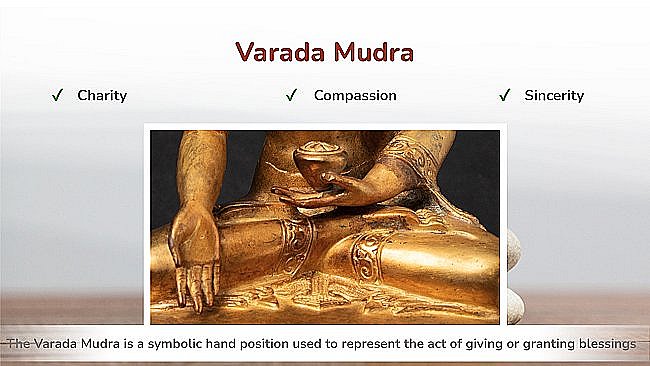
The hand is lowered with an open gesture of giving or blessing.
Again, the question is not only whether the hand is “down.” The question is whether the anatomy, gesture, and expression are coherent.
What collectors are really checking in the hands
Collectors do not stop at naming the mudra. They study execution.
They ask:
- Are the fingers individually shaped?
- Is there anatomical tension?
- Does the gesture feel intentional?
- Are the hands too soft, too thick, or too simplified?
- Do both hands belong stylistically to the same figure?
Hands are among the hardest parts to carve or cast well. That is why they reveal so much.
Step 2: Read the silhouette before the details
Experienced collectors often understand a piece from its silhouette before they move to smaller features.
Why? Because regional style often appears first in the overall shape.
Ask:
- Is the body compact or elongated?
- Is the torso broad or narrow?
- Is the head large or refined?
- Is the figure heavy and grounded, or light and flowing?
- Does the statue rise vertically, or does it have a rhythmic, living movement?
Before you zoom in on fingers or facial features, the overall silhouette already tells you whether the piece belongs more naturally to a Thai, Burmese, Indian, Khmer, Nepalese, or Tibetan visual world.
Collectors often recognise a style from ten feet away, not because they are guessing, but because the silhouette carries the logic of a tradition.
Step 3: Place the statue in a regional style
Once the mudra and silhouette are understood, the collector asks: Where does this statue belong?
This is where many casual buyers struggle. They notice “Asian style,” but collectors narrow it down much further. They compare face type, robe treatment, ushnisha shape, body proportion, and ornamental vocabulary against known regional traditions.
Indian styles
Gandhara

Often carved in grey schist, with strong Greco-Roman influence, wavy hair, and deep robe folds.
Collectors look for weight, realism, and drapery that behaves almost like a classical toga. A Gandharan piece should not feel delicate or overly ornamental.
Mathura
Usually more directly Indian in spirit, often in red sandstone, with stronger body presence and more native proportions.
The robe may cling rather than fall in heavy folds. The chest and torso remain visually important.
Gupta
Refinement, balance, serenity, idealized facial calm, and controlled elegance.
Gupta influence is one of the great turning points in Buddhist sculpture. Many later traditions inherit some form of its softness, harmony, and spiritual idealization.
Thai styles
Dvaravati
Early, often broad and relatively simple in form, with strong Indian inheritance.
Lopburi
Khmer-related in feeling, often firmer and more structured, sometimes with stronger geometry in the face.
Sukhothai
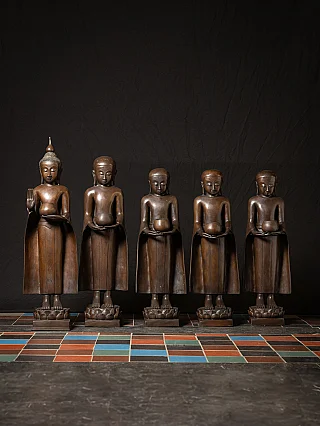
One of the most refined and elegant styles in Thai Buddhist art: fluid contour, graceful elongation, arched brows, refined expression, and often a flame-like ushnisha.
Collectors love Sukhothai because the style has rhythm. It breathes. But that also means fake or confused versions are common. If the refinement is missing, the claim becomes weaker.
Ayutthaya and later Thai traditions
Often broader, more formal, sometimes more elaborate, with changing levels of ornament and royal presence depending on period and type.
Burmese styles
Often inward, solemn, and structurally strong.
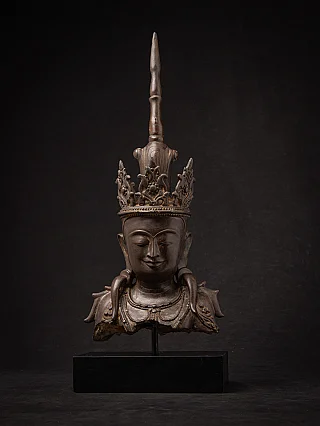
Usually gentler and more stylized, with refined robe treatment and elegant flame-like head forms.
Often more slender, with a distinct facial form that can show cross-regional influence.
Frequently recognizable by rich surface treatment, deeper robe layering, and a polished devotional presence.
Nepalese and Tibetan traditions
View our Nepali Buddha statues
These are especially important for collectors because the craftsmanship can be extraordinary.
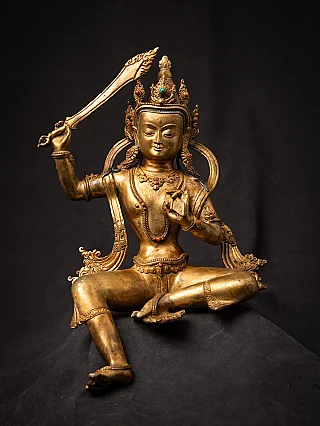
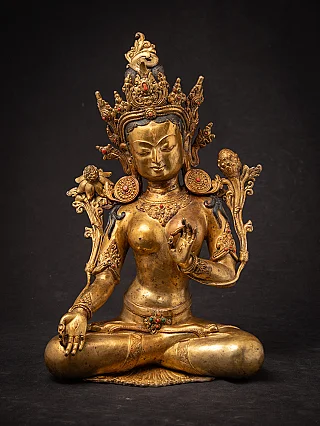
Nepalese Newar bronzes are admired for their metallurgical quality, fine detail, confident casting, and sophisticated finish. Tibetan Buddhist sculpture often shares visual and technical relationships with Newar craftsmanship due to deep historical connections.
Collectors in this area pay special attention to:
- alloy quality
- casting sharpness
- inlay work
- crown type
- lotus base form
- ritual correctness
- proportional discipline
Step 4: Check if the style, iconography, and material agree
This is where collectors separate themselves from ordinary buyers.
A statue should not merely look old. It should make sense.
This is the principle of consistency.
A collector asks:
- Does this mudra fit the region?
- Does this face belong to this body?
- Does this robe treatment make sense for the claimed period?
- Does this base fit the figure above it?
- Does the material belong to this type of object?
- Does the finish support the claimed origin?
If a statue combines features from unrelated times or regions, collectors become cautious immediately.
A fake does not need to look obviously fake. It only needs to be historically incoherent.
Step 5: Read the material like evidence
Material is never random.
Collectors know that wood, bronze, stone, lacquer, gilding, and surface treatment all belong to traditions.
Bronze is one of the most revealing materials because it records process.
Collectors examine:
- wall thickness
- casting sharpness
- seams
- underside openings
- core remnants
- alloy feel
- weight balance
- wear on high points
- gilding behavior
An old lost-wax bronze should feel individual. It should not feel mechanically repetitive.
The underside matters enormously. Collectors often turn a statue over first because the base reveals what the front may try to hide.
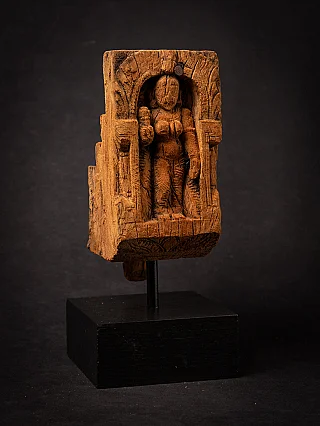
Wood tells a different story.
Collectors look for:
- grain behavior
- shrinkage patterns
- joinery
- age-related cracking
- old lacquer build-up
- insect traces
- realistic wear on projecting areas
Real age in wood follows structure. Cracks usually move with the grain, not randomly across it. Modern imitation often gets this wrong.
With stone, collectors read both the carving and the geology.
They ask:
- Is the stone right for the supposed region?
- Does the weathering suit the material?
- Are the tool marks hand-worked or machine-like?
- Are recessed areas still alive with carving energy?
- Has the surface been artificially stained?
Stone should not be judged by color alone. Its fracture, texture, softness, and carving behavior all matter.
Gilding and lacquer
These surface finishes can be highly informative.
Old gilding usually wears gradually. It thins on high points and stays stronger in protected areas. Modern surface treatment often sits on top too evenly or flakes in ways that do not feel historically convincing.
Old lacquer tends to build depth through many layers. New imitation can feel flat, plastic, or too immediate.
Step 6: Study craftsmanship, not just age
This is one of the most important points collectors understand, and many buyers do not:
Old does not automatically mean good.
A poor old statue is still a poor statue.
A later but masterfully executed piece may be far better than an earlier but weak example.
Collectors always assess quality of execution.
Where craftsmanship reveals itself fastest
Hands and feet
These are among the hardest parts to execute. Look for clarity, articulation, anatomy, and grace.
Face
Not just expression, but control. Is the mouth well-shaped? Are the eyelids intelligent? Does the nose belong to the style? Are the ears convincing?
Robe lines
Do they respond to the body? Do they fall logically? Are they deep, fluid, and meaningful, or scratchy and decorative?
Lotus base
Are the petals sharp, proportional, and structurally convincing? Or are they repetitive and dull?
Back and sides
Is the statue finished all around? Or is only the front treated seriously?
A collector’s rule: always ask where the artist was most in control, and where weakness may have been hidden.
A great statue remains strong even in secondary zones.
Step 7: Learn to read age without being fooled by “old-looking”
This is where many buyers make expensive mistakes.
Artificial aging is common. Dirt is easy. Staining is easy. Chemical patina is easy. Real age is harder.
Collectors read wear logically.
They ask:
- Where would hands naturally touch this figure?
- Where would rubbing occur?
- Where would moisture settle?
- Where would dust accumulate?
- Where would gilding survive longer?
- Would this part realistically stay sharp if that other part is worn?
Natural age tends to look like this
- softer on exposed high points
- stronger deposits in recesses
- gradual transition, not sudden effect
- wear that matches use, handling, and gravity
- internal consistency across the whole statue
Artificial age often looks like this
- evenly distributed green or dark surface
- dramatic crust where no real accumulation would occur
- fake scratches with no logic
- chemical color sitting on top rather than becoming part of the surface
- old-looking body with suspiciously fresh details elsewhere
Age must make sense physically.
That is the key.
Step 8: Turn the statue around
This deserves its own section because collectors do it instinctively.
Never judge only from the front.
The front is where sellers, makers, and restorers know the eye will land first. The truth is often elsewhere.
Always inspect:
- underside of the base
- back of the head
- rear robe edge
- back of the lotus base
- joins and attachments
- inside hollow sections, if visible
The base may reveal:
- modern machine finishing
- plaster filling
- recent closing plates
- artificial dirt
- casting logic
- true age-related oxidation
- whether the statue was made to be viewed seriously or only sold quickly
Many low-quality objects collapse under base inspection.
Step 9: Ask whether the statue has one voice
Here is a principle that generic online guides often miss:
A good statue has one voice.
Everything belongs together.
The face, the hands, the body, the lotus, the material, the age, the finish, the wear, the base, and the mood all support one another.
A weak or assembled piece often has multiple voices.
The head says one region. The body says another. The base says something later. The patina says something else again.
Collectors do not only identify parts. They listen for unity.
This ability is one of the great differences between memorising features and truly learning to read.
Common mistakes people make when trying to identify a Buddha statue
Judging by face alone
A beautiful face can distract from a bad statue.
Trusting patina too quickly
Dark or green surfaces do not prove age.
Ignoring the back
Many weak pieces are designed for frontal effect only.
Believing paperwork over physical evidence
Documentation can help, but the object itself matters more.
Confusing ornament with quality
More detail does not always mean better craftsmanship.
Assuming old equals valuable
Age without quality, integrity, or coherence does not create major value.
Missing mixed-style problems
A piece can look impressive and still be historically impossible.
Share this page