Krishna and Sudama: The Story of True Friendship
Author : Peter Vredeveld · Published
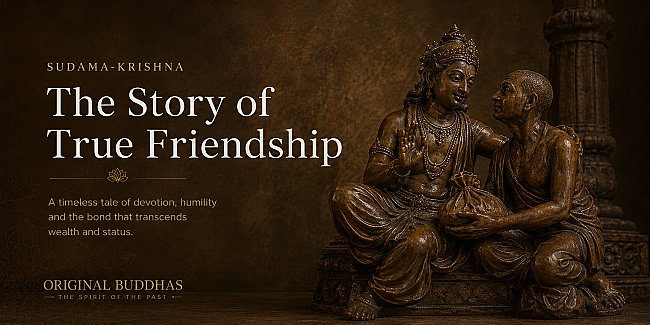
Picture two boys huddled by a dying fire in a forest storm, sharing the last of their food — one of them will grow up to be worshipped as God, and neither of them knows it yet. That is where this story starts. Krishna and Sudama were childhood friends and classmates under the sage Sandipani. Years later, when Sudama — now a poor Brahmin — visited his prosperous friend Krishna, King of Dwarka, he brought only a handful of flattened rice (poha) as a gift, all he could afford. Krishna received his old friend with overwhelming love and, without being asked, transformed Sudama's life. The story, recounted in the Bhagavata Purana, is Hinduism's most enduring parable of friendship that transcends wealth and status.
Krishna, the eighth avatar of Lord Vishnu, is one of the most beloved deities in Hinduism — revered as a teacher, king, and divine friend. Sudama (also known in some regional traditions as Kuchela) was a Brahmin of humble means who, as a boy, studied alongside Krishna at the ashram of the sage Sandipani in Ujjain. Though their paths diverged dramatically — Krishna rose to rule the golden city of Dwarka, while Sudama lived in quiet poverty with his wife and children — the bond they formed as students never faded.
Childhood at Sandipani's Ashram
In the gurukula tradition, students of every background lived, studied, and served together under one teacher, regardless of birth or wealth. Krishna, a prince, and Sudama, a poor Brahmin boy, shared meals, chores, and lessons as equals. One well-known episode from this period tells of the two boys being sent to gather firewood in a storm; when they lost their way, they huddled together until morning — a memory Krishna would later recall with visible emotion. This early period matters because it sets up the story's central idea: their friendship was never built on what either could offer the other. It was built before either of them had anything to give.
The Story of Sudama's Journey to Dwarka
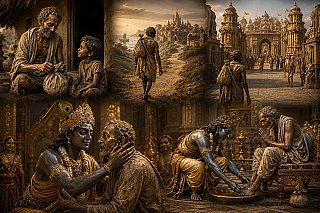
A family in need. Years later, Sudama had become a scholar and householder, but poverty pressed hard on his family. His wife, seeing their children go hungry, gently reminded him of his old friend — now Krishna, King of Dwarka — and urged him to seek his help. Sudama was reluctant; he had no interest in using friendship for material gain. But he agreed to visit, if only to see Krishna again.
A handful of poha. Knowing one should not arrive at a friend's home empty-handed, Sudama's wife gathered what little they had: a small bundle of poha (flattened rice), Krishna's favorite food since childhood. Sudama set out for Dwarka, embarrassed by how meager his offering was compared to the grandeur he expected to find.
Krishna's welcome. When Sudama reached the palace, Krishna — ruler of a kingdom — is said to have run out barefoot to embrace his old friend, seated him on his own throne, and personally washed his feet, moved to tears at the reunion. It was a striking reversal: the king honoring the beggar as an equal, purely out of love. Overcome with humility, Sudama could barely bring himself to offer his small bundle of rice. When Krishna finally noticed it, he took it eagerly, calling it the finest gift he had ever received. Throughout the visit, Sudama said nothing of his family's hardship — he had come, in the end, simply to see his friend.
The transformation. Sudama returned home expecting nothing — and found everything changed. In place of his crumbling hut stood a magnificent house; his family was dressed in fine clothes; prosperity had quietly replaced want. Krishna had given generously without being asked, without conditions, and without ever making Sudama feel indebted.
"Whoever offers to me with devotion a leaf, a flower, fruit, or water — that offering of love I accept."- Bhagavad Gita, 9.26
Did you know? Krishna is traditionally said to have eaten only two handfuls of Sudama's rice before Sudama's wife (in some versions, Krishna's own wife Rukmini) gently stopped him from eating the third — because that third handful, tradition says, would have given Sudama more prosperity than a humble man's heart could comfortably hold. Two handfuls of rice were enough to make him one of the wealthiest men in Dwarka.
The Meaning and Lessons of the Story
The Krishna-Sudama episode is read on several levels in Hindu thought. It shows friendship beyond social hierarchy — a king and a beggar meeting as equals, a reminder that true bonds are not determined by wealth, caste, or worldly position. It illustrates bhakti (devotion) without expectation — Sudama never asked Krishna for help; his humility and sincerity were the real offering, not the poha itself. It teaches that divine grace responds to sincerity, not grandeur — Krishna valued Sudama's small, sincere gift over any lavish offering. And it presents Krishna as Sakha, the divine friend — alongside his roles as king, teacher, and avatar, approachable, loyal, and loving without condition.
From this, a few lessons endure: true friendship survives distance and inequality; it is better to give without being asked; humility carries its own dignity; old friendships deserve tending, no matter how far apart your paths have taken you; and status is a poor measure of worth — Krishna, a king, chose humility in welcoming his friend, a lesson in how true greatness expresses itself.
Sudama and Krishna in Hindu Art and Devotion
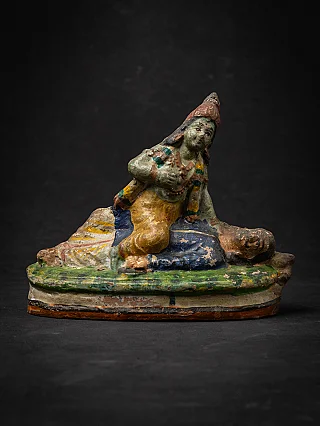
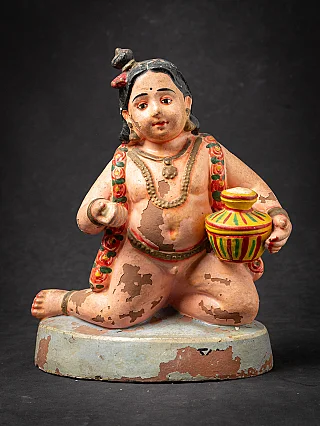
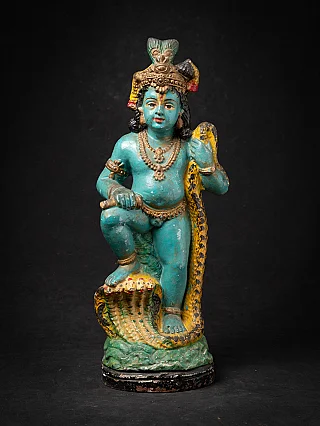
The Krishna-Sudama story is a favorite subject in Indian painting, temple relief, and devotional art, typically depicting the moment of embrace at the palace gates or Sudama offering his bundle of rice. It also appears widely within Krishna iconography more broadly — Krishna with his flute, Krishna as the playful child (Bal Krishna), and Krishna in his many forms are among the most collected and worshipped images in Hindu art.
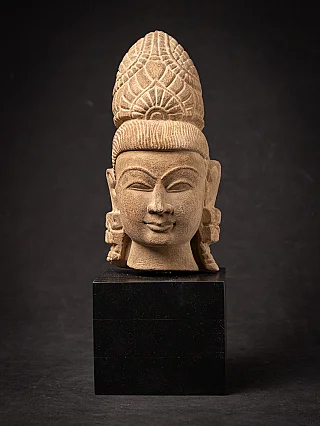
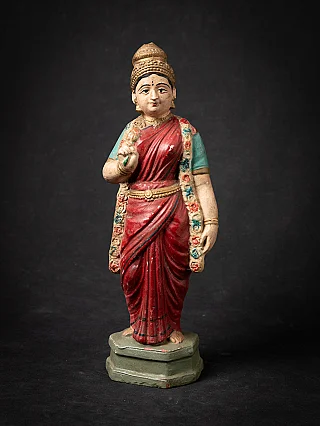
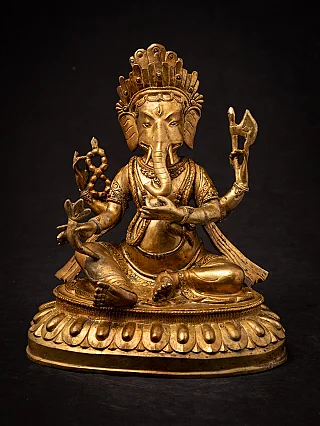
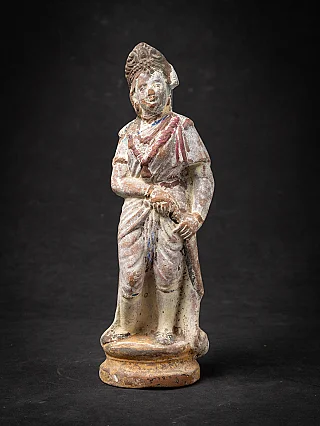
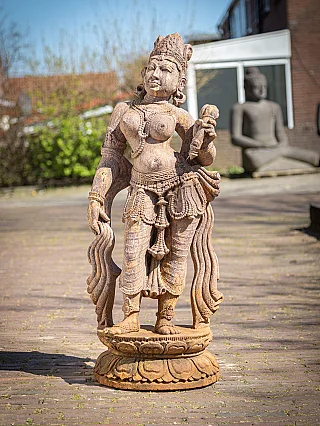
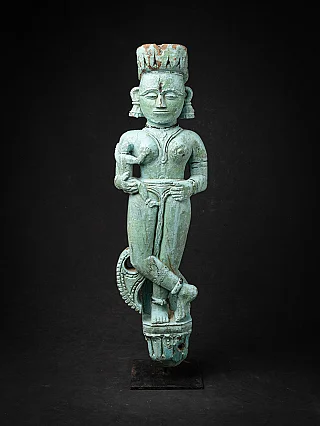
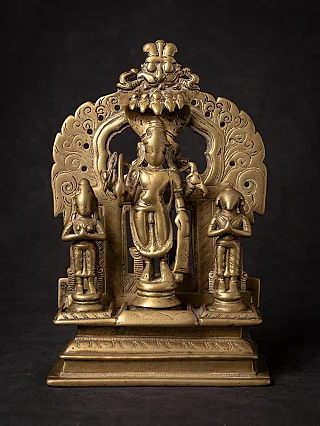
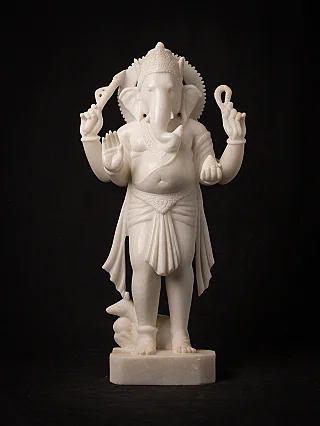
Collectors and devotees drawn to this story often seek out antique Krishna statues for their home shrines or collections — from figures of Bal Krishna to Krishna with his flute — as a way of keeping the spirit of devotion and friendship close at hand. You can browse our wider collection of Hindu God statues, including pieces connected to Krishna's life and the broader Vaishnavite tradition, such as statues of Lord Vishnu, of whom Krishna is the most beloved avatar.
For readers interested in other legendary Hindu relationships, our article on the love story of Lord Shiva and Goddess Parvati explores a different but equally profound bond in Hindu mythology, and our guide to avatars in Hindu mythology places Krishna's life within the wider story of Vishnu's ten incarnations.
Frequently Asked Questions
- Who was Sudama in Hindu mythology? Sudama was a Brahmin and childhood friend of Krishna, both having studied together under the sage Sandipani. He later lived in poverty as a householder before reuniting with Krishna, who was by then King of Dwarka.
- What did Sudama give Krishna as a gift? Sudama brought a small bundle of poha (flattened rice), gathered by his wife, as he could not afford anything grander. Krishna cherished it as the greatest gift he had received.
- What is the moral of the Krishna and Sudama story? The story teaches that true friendship is unaffected by differences in wealth or status, and that sincere devotion and humility matter more than material offerings. It also shows the ideal of giving generously without being asked.
- Where does the Krishna-Sudama story appear in Hindu scripture? The story is recounted in the Bhagavata Purana (Canto 10, Chapters 80-81), one of the central texts describing Krishna's life.
- Is Sudama the same as Kuchela? Yes — in some regional traditions, particularly in parts of Gujarat, Sudama is also known as Kuchela, and the story is sometimes called the “Krishna-Kuchela” episode.
- Why is Krishna considered the ideal of divine friendship? Beyond his roles as king, teacher, and avatar, Krishna is worshipped as Sakha — the divine friend — because of stories like this one, where he treats a devotee with complete equality, warmth, and loyalty regardless of what they can offer him.
Somewhere, you probably have your own Sudama — a childhood friend you haven't called in years, not because anything went wrong, just because life did what life does. Krishna and Sudama's story has survived a few thousand years because it asks a simple, slightly uncomfortable question: would you show up for that friend with nothing but a handful of rice, and mean it?
View our Krishna Statues Collection
Share this page