What Does a Buddha Statue Stand On?
Author : Peter Vredeveld · Published
View our statues with lotus bases
Most people look at a Buddha statue and go straight to the face. The expression, the eyes, the slight smile. Then maybe the hands; what gesture is that? What does it mean?
Almost nobody looks down.
That's a shame, because the base of a Buddha statue — or any sacred figure from South or Southeast Asia — is often where the real story is. It tells you what kind of being this is, what world it belongs to, what power it holds, and sometimes even whether it's been prayed over for centuries. Once you know how to read it, you'll never look at a statue the same way again.
Why the base was never just a stand
In Western art, a pedestal is furniture. It holds the object up so you can see it better. That's it.
In Buddhist and Hindu religious art, the base is part of the meaning. It was designed that way from the very beginning.
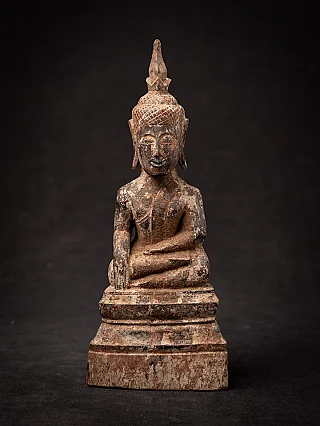
Some of the earliest Buddhist art didn't even show the Buddha as a human figure. Instead, artists represented his presence through symbols: a throne, a footprint, a tree, a parasol. The throne alone was enough to say: "An awakened being sat here." That tradition never really went away. Even after the Buddha began to be shown in human form, what he sat or stood on continued to carry deep theological weight.
So when you look at a traditional Buddha statue or a Hindu deity figure and see a carefully carved base — a flower, a throne, an animal — that's not decoration. That's a sentence in a visual language that took centuries to develop.
The lotus: the most common base, and what it really means
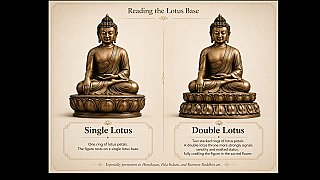
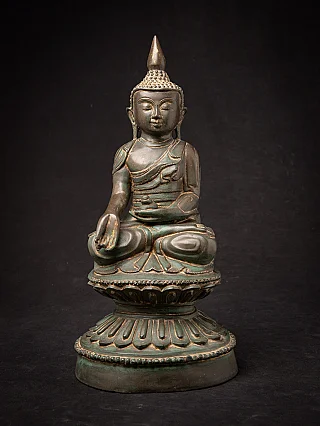
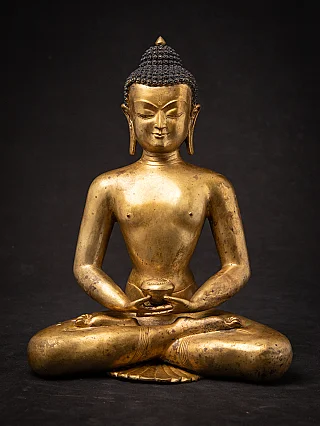
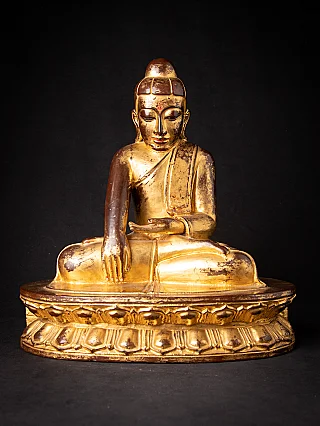
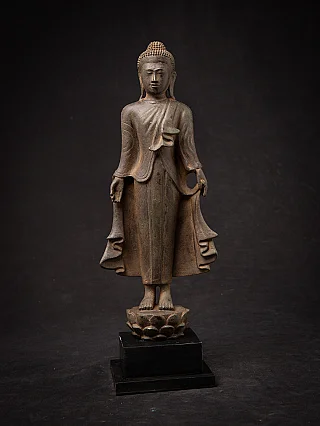
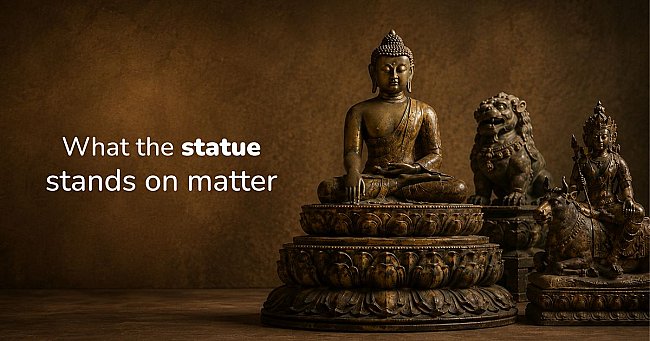
If you've seen more than a few Buddha statues, you've seen the lotus pedestal. It's everywhere — a flower with upward-pointing petals, sometimes simple, sometimes elaborate. But why a flower?
The lotus grows in muddy ponds and rivers. Its roots sit in the mud at the bottom. Its stem pushes up through dark water. And then the flower opens at the surface, clean and perfect, completely untouched by the muck it came from.
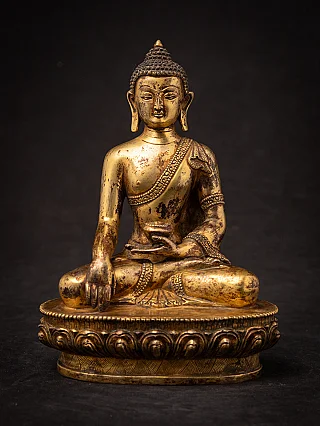
That image is the entire point. The lotus is a symbol of spiritual awakening — the idea that a being can rise out of the ordinary suffering world (what Buddhists call samsara) and reach enlightenment without being stained by it. When a Buddha sits on a lotus, the flower is saying: this being is no longer bound by the world below.
Single lotus vs. double lotus
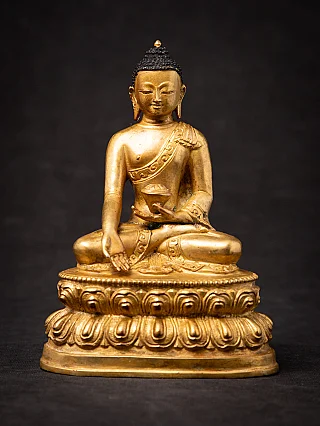
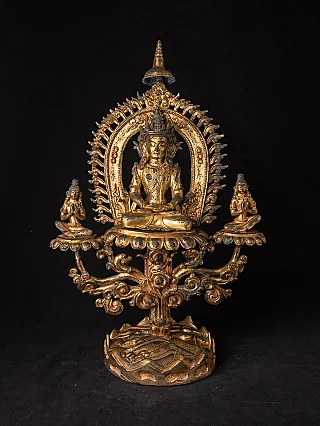
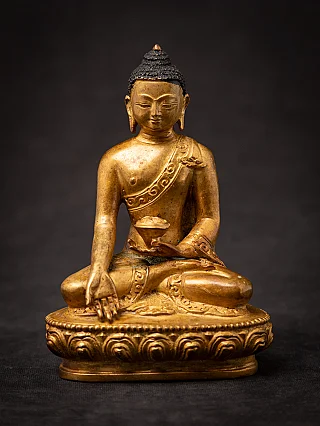
You'll notice some statues sit on one ring of petals, others on two stacked rings. This isn't just a stylistic choice. A double-lotus throne — two petal registers one above the other — is a more emphatic declaration of sanctity. The figure is fully cradled in the sacred flower rather than simply placed on top of it. In Himalayan, Pala Indian, and Burmese Buddhist art especially, the double lotus became a way of saying: this is a fully realized, exalted being.
How the lotus looks changes by region
This is where it gets genuinely interesting for collectors. The same symbolic flower looks completely different depending on where and when it was made.
In Chola bronzes from South India (roughly 9th–13th century), the lotus base tends to be clean, geometric, restrained. The sculptor didn't want the throne competing with the figure — all the energy goes into the body, the sway, the pose.
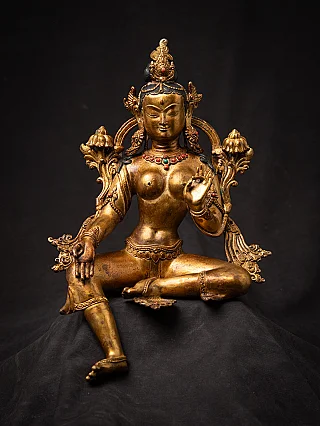
In Pala sculpture from northeastern India (8th–12th century), the lotus is sharper, more elaborate— with beaded borders, crisply defined petals, and sometimes lion heads below the seat. These forms were hugely influential because Pala art traveled to Nepal and Tibet and shaped Buddhist sculpture across the Himalayas for centuries.
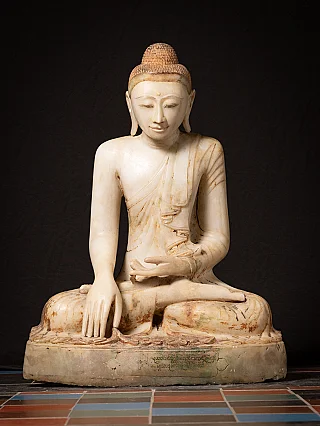
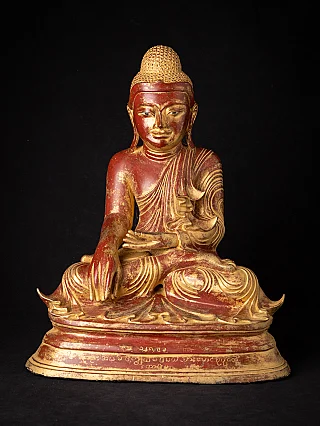
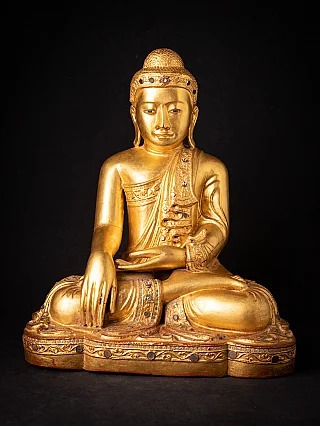
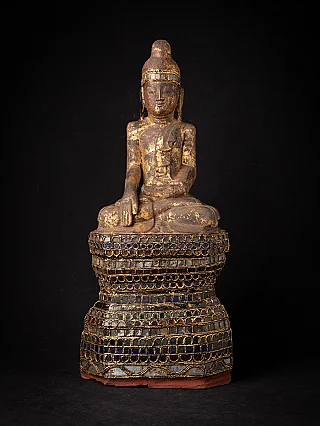
In Burma, the lotus base changed with each major artistic period. Pagan-era Buddhas (11th–13th century) favored the double lotus. Mandalay-style figures sometimes have petals that seem to be opening. Shan-style images tend to be quieter, with simpler bases.
Once you start noticing these regional differences, a lotus pedestal stops being background noise and becomes one of the first things you use to date and place an object.
What it means when a Buddha stands on lions
Not every sacred throne is a flower. Some figures sit on a lion throne: in Sanskrit, a *simhasana*.
This goes back to one of the oldest titles for the historical Buddha: Shakyasimha, the Lion of the Shakya clan. The lion in Indian culture carried meanings of royalty, power, and authority. When early Buddhist art started depicting the Buddha's throne supported by lions, it was making a specific claim: this is not a worldly king. This is a spiritual sovereign whose "roar" — the teaching of the Dharma — echoes across the universe.
If you see a Buddha seated on a throne with lions beneath it, you're often looking at an image of Shakyamuni Buddha or Vairocana, one of the five cosmic Buddhas in Vajrayana tradition. The throne is making a theological statement about the nature of this being's authority.
Wrathful protectors and what they stand on
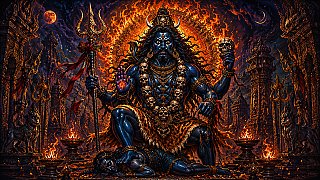
Here's something that surprises many people when they first encounter Himalayan Buddhist art: some sacred figures stand on corpses.
Mahakala, one of the most important protector deities in Tibetan Buddhism, is often depicted as a terrifying dark blue or black figure standing on a prone human body. This looks disturbing until you understand what it means.
Mahakala is not evil. He is a protector — a wrathful form of compassion. The corpse (or sometimes multiple prone figures) beneath his feet represents the ego, ignorance, and the obstacles that prevent beings from reaching enlightenment. Mahakala tramples them. He destroys what needs to be destroyed so that liberation becomes possible.
The contrast with the lotus throne is intentional and instructive. The lotus *elevates* — it lifts the figure above the ordinary world into purity. The wrathful base *subdues* — it pins down everything that blocks awakening. Both are sacred. They speak different theological verbs.
In Hindu art, the base is often the deity's animal
Hindu sculpture introduces a distinct logic to the base: the *vahana*, or divine vehicle.
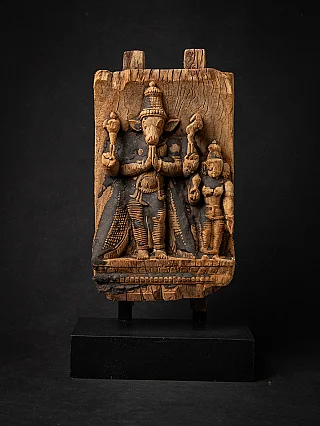
In Hindu iconography, major deities are inseparable from their animal companions. Shiva's vehicle is the bull Nandi. Ganesha's is the mouse. Durga rides a lion or tiger. Vishnu is carried by the eagle Garuda. These animals are not pets or decorations — they are extensions of the deity's identity, embodying specific qualities and cosmic principles.
Sometimes the vahana appears directly beneath the deity as part of the base. Sometimes it's attached to the plinth. Sometimes it kneels or stands beside the throne. But wherever it appears, it completes the iconographic statement. You cannot fully "read" an image of Ganesha without knowing about the mouse, or Shiva without Nandi.
This is why, when you're looking at a Hindu bronze, and something seems to be missing from the base or surrounding platform, it's worth asking: where is the vahana? Its absence changes the theological meaning of the whole object.
What's inside a Buddha statue — and why it matters
This is the part most collectors never hear about, and it might be the most remarkable thing in this entire article.
Many Tibetan and Nepalese Buddha statues — particularly bronze figures made in the Himalayan tradition — are not solid. They are hollow. And before they were sealed, someone placed sacred objects inside: handwritten mantras on rolled paper, prayers, relics, medicinal herbs, precious stones, powders, and sometimes earth from holy sites.
Once filled, the base was sealed with a copper plate. Often, a double vajra (the thunderbolt symbol, representing indestructibility) was engraved at the center of that plate. The statue was then consecrated in a religious ceremony that, in the eyes of practitioners, transformed it from a beautiful object into an actual embodiment of enlightened presence.
This is why a sealed base plate on a Himalayan bronze is not a minor detail. It is evidence that the object was once — and in the traditional view, still is — a living sacred presence, not just a representation of one.
What a missing base plate means
Many antique Himalayan statues are found without their base plates. This doesn't automatically mean the statue is fake or of lesser quality. It does mean that at some point the object was opened — perhaps for re-consecration, perhaps during a difficult period of history when sacred objects were confiscated or sold. The contents were likely removed along with the plate.
For collectors, this matters both practically and ethically. Practically, a sealed base plate with intact contents is strong evidence of age and authenticity. Ethically, many Buddhist practitioners consider opening a consecrated statue without ritual reason to be a form of desecration. The serious collector treats the base of a Himalayan bronze with genuine respect — not just as a surface to examine, but as something that may carry centuries of devotional history inside it.
How to look at a base like a collector
Once you start paying attention to bases, a few things become your first points of reference:
Petal sharpness: On genuinely old lotus bases, the petal tips are often softened by handling and time. Artificially aged pieces sometimes have petals that are too crisp, or abrasion patterns that don't match how an object would naturally wear.
Seam finishing: In cast bronzes, look at where the base meets the figure. Old hand-chasing — the finishing work done after casting — has a particular quality that's difficult to replicate mechanically.
Residues: Old pieces sometimes show traces of wax, ritual compounds, or incense residue near the base or plate line. These don't prove authenticity on their own, but they're part of the picture.
The plate itself: On Himalayan pieces, is there a plate? Is it sealed with red wax? Does it show a double vajra? Is the plate old, with its own patina, or does it look newer than the statue? All of these are questions worth asking.
No single detail gives you a verdict. Bronzes were repaired, re-consecrated, and sometimes opened and resealed across centuries. What you're building is a picture, not a checklist.
The face of a statue will always draw you in first. The mudra — the hand gesture — will help you identify who you're looking at. But the base is where the object's full meaning, its history, its theological purpose, and its life as a devotional object all converge.
A great sculptor didn't place a sacred figure on a convenient stand. Every choice about what a figure stands on — flower or lion, lotus or corpse, single register or double — was a deliberate act of meaning-making. The base was the first thing the sculptor decided, because it determined what kind of being was about to exist in the world.
The next time you're in front of a Buddha statue, or browsing a collection, or holding a piece you're considering — look down first. You'll find a story there that most people never think to read.
Share this page