What Does Gold Symbolize on a Buddha Statue?
Author : Peter Vredeveld · Published
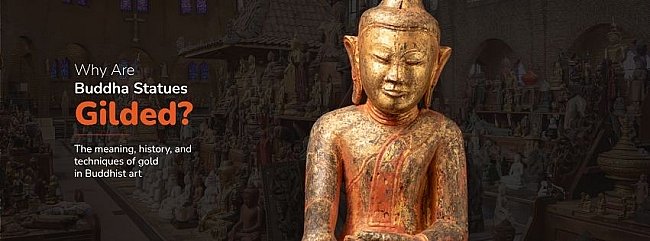
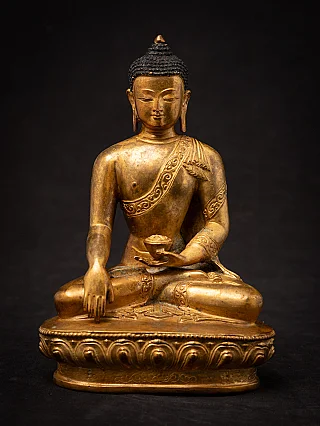
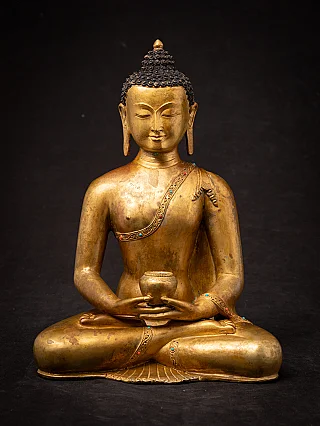
Gold on a Buddha image points to the Buddha's own body. Buddhist tradition lists thirty-two physical marks of a Buddha, and one of them is skin that shines like gold. The Smithsonian's National Museum of Asian Art explains that this is why Buddha images are usually gilded. Chinese Buddhists read the golden colour as an expression of the Buddha's spiritual radiance, inner purity and the immeasurable worth of his teaching.
The gold was never meant to suggest that the historical Buddha literally wore gold. It makes visible qualities that are otherwise hard to show in bronze or wood: purity, perfection and enlightenment. The Metropolitan Museum of Art describes the gilding on a 17th–18th-century Mongolian gilt bronze Amitayus as conveying the light that radiates from his body as an expression of his enlightenment.
Light also matters in practice. In a shrine lit by daylight, candles or butter lamps, a gilded surface catches and returns the light, so the figure seems to glow from within.
Gilding as an Act of Devotion
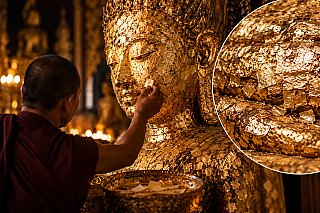
In much of Buddhist Asia, gilding is not only something a workshop does once. Devotees press small squares of gold leaf onto Buddha images as an offering, and the act itself is a way of making merit.
The best-known example is the Mahamuni Buddha in Mandalay, one of the most revered images in Myanmar. Male devotees apply gold leaf to it every day. Generations of offerings have built up a layer commonly estimated at around 15 centimetres, enough to soften and change the original shape of the body.
The same practice is common in Thailand, where temple visitors buy gold leaf with their incense and flowers. A Thai saying, pid thong lang phra, means "applying gold to the back of the Buddha". It describes doing good quietly, where no one will see it.
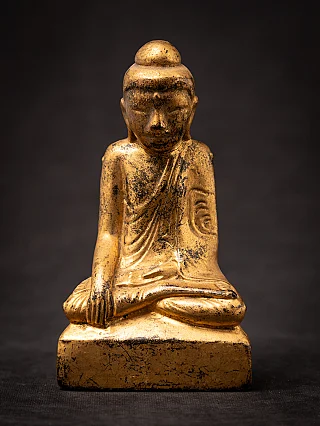
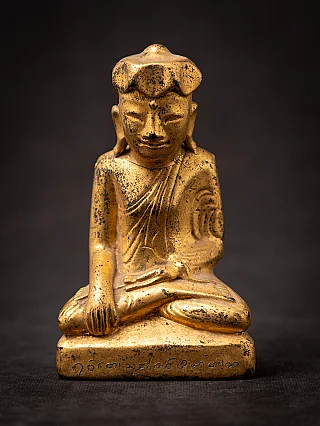
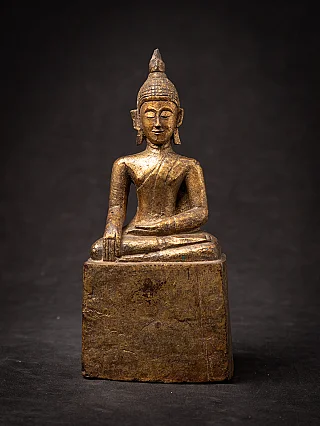
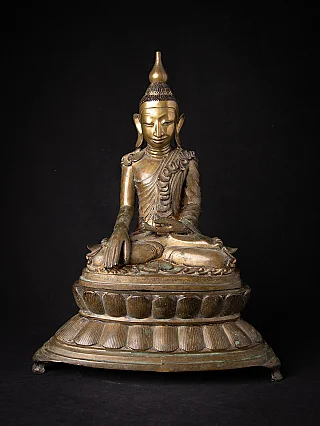
This matters for collectors. Gold on a Southeast Asian Buddha can come from the original workshop, from later devotional offerings, or from both. Patchy, layered or uneven gold is often a record of an image's life in worship rather than a flaw.
Is a Gilded Buddha Made of Solid Gold?
Usually not. A Buddha described as gilded, gilt or gold-leafed is made of another material, with a thin layer of gold on its surface. Underneath, it is typically bronze, brass or another copper alloy, carved wood, or wood built up with lacquer.
The Smithsonian gives a good example: a Sui-dynasty Chinese altarpiece that looks like solid gold is actually bronze with a thin mercury-gilded surface. Part of the gold has worn away, probably because the piece was buried for around a thousand years.
"Gilt bronze" therefore means a bronze sculpture with a gilded surface, not a gold one. The value of an antique gilt Buddha lies in its age, quality and history, not in the weight of its gold.
How Were Buddha Statues Gilded?
There was no single method. The technique depended on the region, the period, the workshop and, above all, the material underneath. Four approaches account for most antique gilded Buddhas.
Gold leaf over a prepared surface
Gold can be beaten into sheets so thin they are almost translucent. On wooden sculpture, the carver first built up a smooth ground of gesso or lacquer, then laid the leaf over it. A 12th–13th-century Pagan-period standing Buddha in The Met is catalogued as wood with traces of red lacquer, gesso and gold leaf, showing the full layered construction beneath the visible gold.
Lacquer and gilding
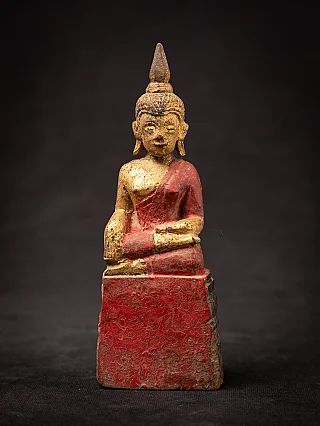
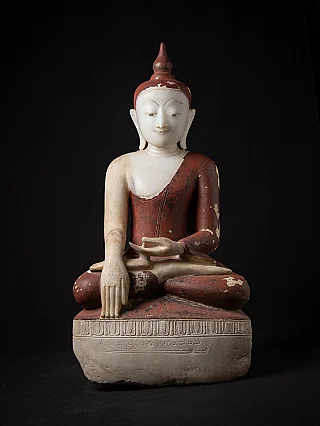
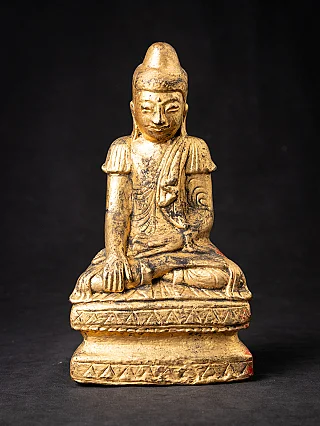
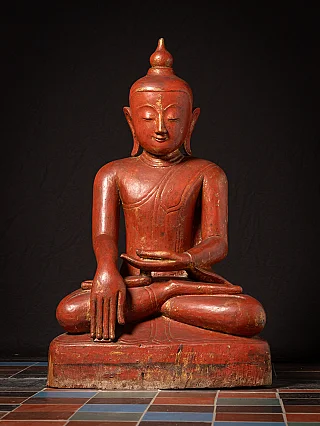
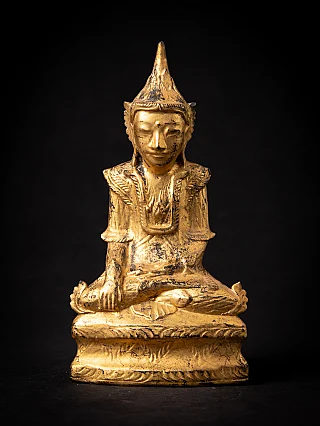
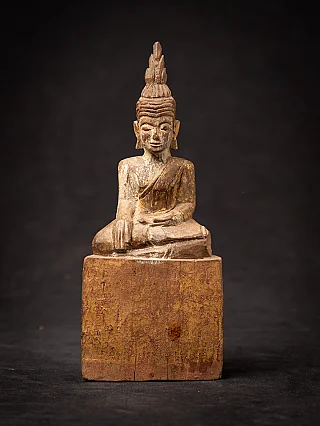
In Myanmar and neighbouring regions, lacquer was central to the finish. It sealed the wood, gave a smooth base for the leaf, and was often modelled into raised ornament before gilding. When the gold wears thin, red, brown or black lacquer shows through. On an antique sculpture, these exposed layers may belong to an earlier lacquer and gilding scheme rather than simply being later decorative paint.
Fire or mercury gilding
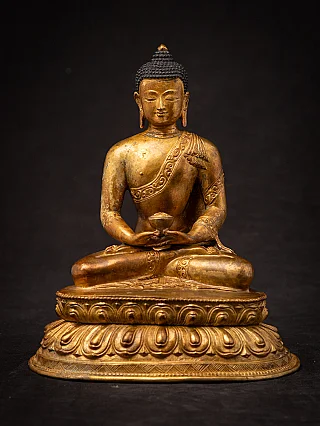
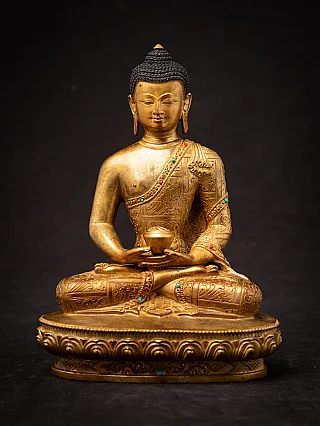
Metal sculpture was often fire-gilded. A paste of powdered gold and mercury was painted onto the bronze or copper, then heated until most of the mercury evaporated, leaving the gold bonded to the metal. The Smithsonian describes this as the method that followed earlier foil and leaf gilding. It gives a durable, even surface, but the mercury fumes made it very dangerous for the craftsmen.
Cold gold
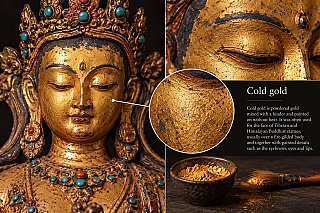
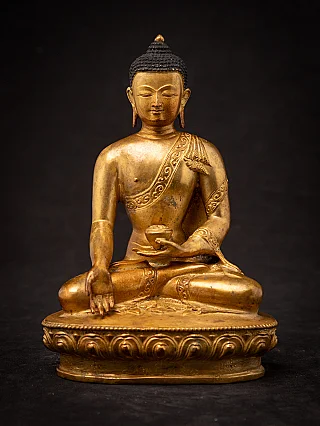
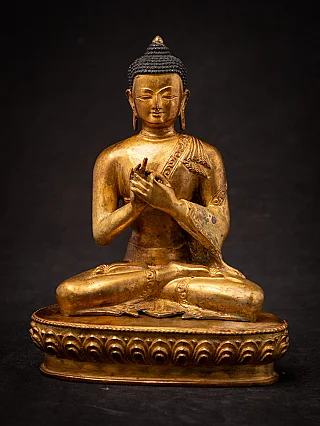
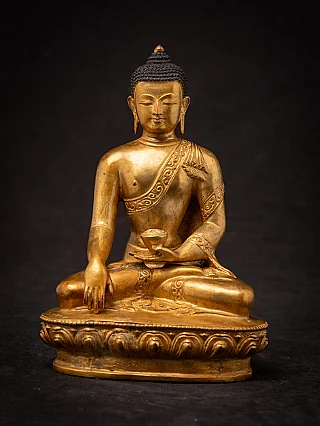
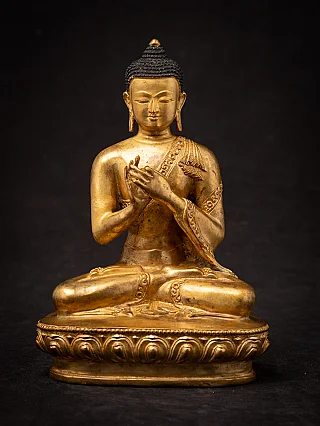
In Tibet and the wider Himalayas, faces were often finished with cold gold: powdered gold mixed with a binder and painted on without heat. It was usually applied over a fire-gilded body, often alongside painted features and blue pigment for the hair. The Met's 11th–12th-century Nepalese Vairochana is catalogued as gilt copper alloy with gold paint and blue pigment, combining both kinds of gold.
Cold gold was often renewed during worship, so a face can carry several layers of different ages. Surviving old cold gold can be an important part of the historic surface, although it must be assessed together with the rest of the sculpture.
How Gilding Differs Across Buddhist Asia
There is no single "Buddha style", and gold was used differently in each tradition. This article focuses on the regions most collectors encounter: Myanmar, Thailand, Nepal and Tibet, with a short note on East Asia.
Burma (Myanmar)
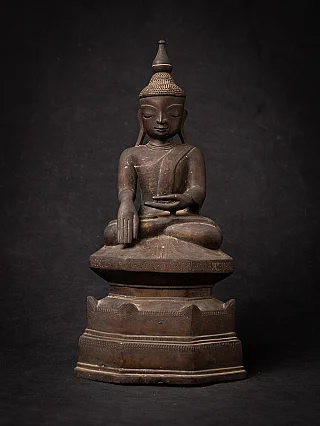
Burmese wooden Buddhas are typically lacquered and gilded, and many were also decorated with raised lacquer ornament and glass inlay. Antique examples often show gold, red or black lacquer and bare wood side by side. The Met's Pagan-period Buddha shows this layered tradition reaches back at least eight centuries. Devotional gold leaf, added by worshippers over time, is also common.
View our Burmese Buddha statues
Thailand
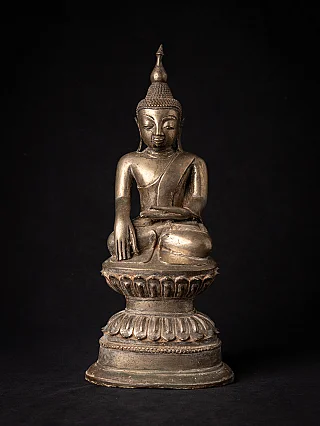
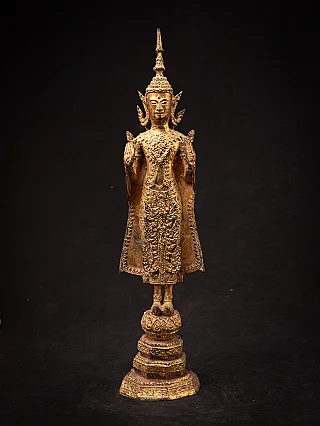
Thai Buddhas were most often cast in bronze, and many were gilded, such as a 15th-century gilt bronze standing Buddha in The Met. Others were lacquered and gilded over the bronze. Because applying gold leaf is a living temple practice, Thai images frequently carry devotional gold on top of, or in place of, the original finish.
Nepal
The Newar craftsmen of the Kathmandu Valley became famous for gilt copper sculpture, cast or hammered in repoussé and then fire-gilded. Their work was prized well beyond Nepal and shaped Tibetan sculpture for centuries. In the Met's Vairochana, the gilding works together with precise casting, painted gold and blue pigment.
View our Nepalese Buddha statues
Tibet
Tibetan workshops gilded copper and brass images, often with cold gold on the face and blue-painted hair. Not every Tibetan image was fully gilded, and many early pieces keep only traces. A rare 12th-century Buddha Shakyamuni from Central Tibet in The Met, cast in brass, retains traces of gilding on the face and neck.
View our Tibetan Buddha statues
China, Korea and Japan
East Asia has its own long traditions: gilt bronze in China and Korea, and lacquered, gold-leafed wood in Japan, such as a 14th-century Eleven-Headed Kannon in The Met. These follow different conventions and deserve their own article.
Why Does the Gold Wear Away on Antique Buddhas?
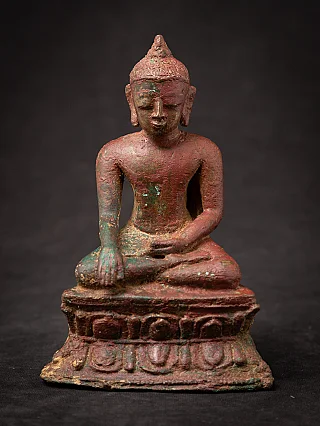
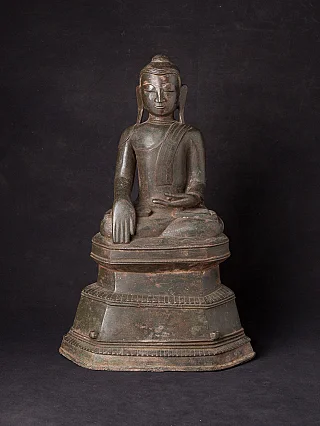
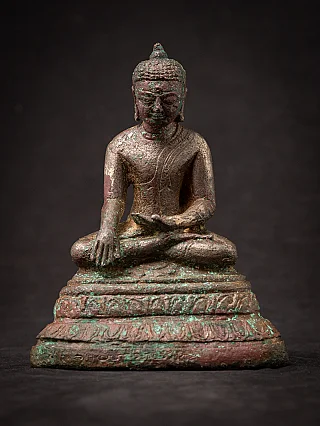
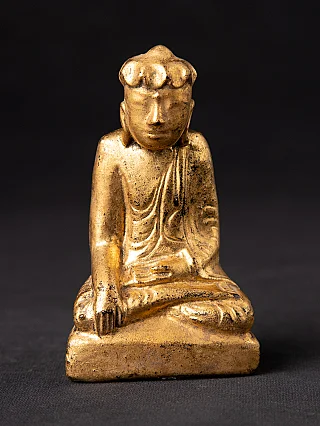
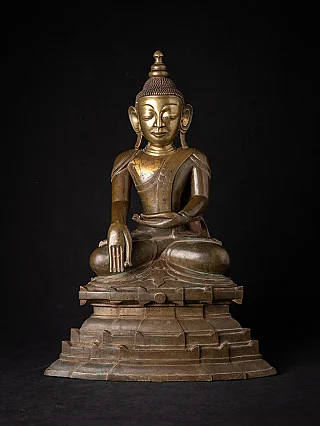
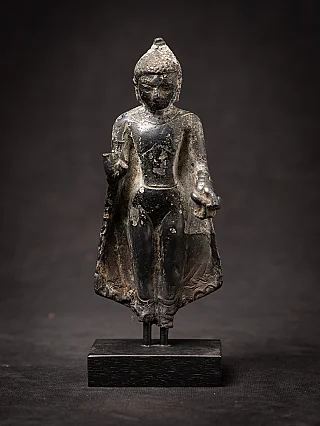
Gold leaf and fire gilding are only microns thick, so they wear first where a statue is touched, cleaned or rubbed. The knees, hands, nose and other high points lose their gold early, while recesses in the robe and crown keep it longest. Humidity, temple smoke, burial and the slow movement of wood beneath lacquer all add their own marks.
The result is a surface of many layers: gold, lacquer, pigment, preparation, exposed metal or wood, and patina. On a genuine antique, that surface is not damage to be hidden. It is one of the most informative parts of the object.
Why Original Gilding Matters
When we examine an antique Buddha, we look less at how much gold remains than at how it remains. Wear that follows the logic of handling and worship, with gold surviving in protected areas and thinning on high points, is what time naturally produces. A perfectly even, bright surface on a statue said to be centuries old raises questions.
Gilding alone cannot authenticate or date a Buddha. We read it together with the material, casting or carving technique, iconography, proportions and style, construction, lacquer and pigment layers, patina, provenance where it exists, and comparison with securely dated examples. Old-looking gold does not by itself make a statue old. Read more in our guides on how to identify an antique Buddha statue and how to read a Buddha statue like a collector.
What Can Indicate Later Regilding?
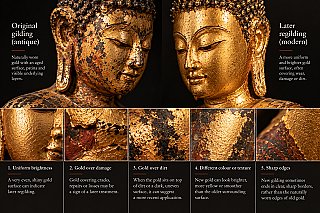
Many antique Buddhas were regilded at some point, either in a temple or for the market. Regilding is not always a problem, but you should know when you are looking at it. These signs often point to later gold:
- Uniform brightness everywhere. The high points are as golden as the recesses, with no sign of natural wear.
- Gold over damage. Gold that runs over chips, cracks, old repairs or losses was applied after the damage happened.
- Gold over dirt. Fresh gold sitting on top of grime, wax or patina, rather than beneath it.
- The wrong colour or texture. A brassy or greenish tone from gold paint or imitation leaf, or a flat, painted look instead of the depth of leaf or fire gilding.
- Sharp, even edges. Gold that stops along a neat line instead of fading irregularly into the surface below.
None of these is proof on its own, and devotional gold leaf can be centuries old. If you are unsure, ask the seller what is original. At Original Buddhas, we describe any regilding or restoration we can identify.
Should Antique Buddha Gilding Be Restored?
View our special Buddha statues' collection
Not automatically. Regilding an antique replaces the historic surface, and with it the evidence of how the piece was made, used and aged. Once that surface is gone, it cannot be recovered.
Conservation and restoration are different things. Conservation stabilizes an object, for example by securing flaking lacquer or loose gold. Restoration recreates what has been lost. For an important antique Buddha, cleaning, consolidation or regilding should be decided with a qualified conservator. For most collectors, a well-aged original surface is far more compelling than new, uniform gold. For everyday care, see our guide to caring for your Buddha statue.
The Beauty of Traces
A newly gilded Buddha shows radiance. An antique one shows something more: time. Red lacquer glows through worn gold, high points shine bare from centuries of touch, and fragments of the first surface survive in the folds of the robe.
At Original Buddhas, we value these traces as part of each statue's history. The remaining gold shows how a Buddha was meant to appear, and also something of the life it has lived.
Frequently Asked Questions About Gilded Buddha Statues
Why are Buddha statues covered in gold?
Gold represents the Buddha's radiant, perfected nature. Buddhist tradition describes him as having skin that shone like gold, one of the thirty-two marks of a Buddha. Applying gold leaf to an image is also a devotional act that earns merit, especially in Myanmar and Thailand.
Are gold Buddha statues made of real gold?
Gilded Buddhas use real gold, but only as a thin surface layer. The statue underneath is usually bronze, brass, copper alloy, wood or lacquered wood. Solid gold Buddha images are rare.
What is a gilt Buddha?
A gilt Buddha is a Buddha image with a layer of gold applied to its surface. "Gilt" describes the finish, not the material of the whole statue. A gilt bronze Buddha, for example, is a bronze sculpture with a gold surface.
How was gold applied to antique Buddha statues?
The main methods were gold leaf over a gesso or lacquer ground, fire (mercury) gilding on metal, and cold gold, a gold paint used especially on Tibetan and Himalayan faces. The method depended on the region, period and material.
Why is there red underneath the gold on some Buddhas?
On many Burmese and other Southeast Asian wooden Buddhas, red lacquer was applied before the gold. As the gold wears away, the lacquer shows through. On an antique, it may belong to an earlier lacquer and gilding scheme, although some pieces were later relacquered or repainted.
Why do some Buddhas have lumpy or uneven gold?
Devotees in Myanmar and Thailand press gold leaf onto Buddha images as offerings. Over years, these layers build up unevenly. The Mahamuni Buddha in Mandalay has a layer of devotional gold commonly estimated at around 15 centimetres.
Does worn gilding reduce the value of an antique Buddha?
Not necessarily. An original, naturally worn surface is often valued more than fresh regilding. Value depends on the whole object: age, rarity, quality, condition, iconography, provenance and authenticity.
Should an antique Buddha be regilded?
Generally no, not just to make it look new. Regilding replaces the historic surface and the evidence it holds. If an antique needs treatment, ask a qualified conservator first.
Can gilding help date a Buddha statue?
It helps, but it cannot date a statue on its own. Specialists read gilding together with style, material, technique, construction, iconography, patina, wear, provenance and comparison with dated examples.
Share this page