Buddha and Hindu Statues from India: How to Recognise Them
By Peter Vredeveld, collector of Buddhist art
India is where the story of the Buddha image begins. The Buddha reached enlightenment at Bodh Gaya and taught his first sermon at Sarnath, and the first statues of him were carved here around two thousand years ago. India is also home to one of the richest Hindu and Jain sculptural traditions in the world, and most of the Indian pieces in our gallery in Deventer are gods, goddesses and temple carvings rather than Buddhas.
Indian statues are usually easy to tell apart from those of Southeast Asia once you know what to look for: warm sandstone or white marble, full and rounded bodies, rich jewellery and, on Hindu figures, extra arms holding the attributes of the god. Below we look at the stone, the body, the ornament and the iconography, and at how Indian sculpture changed from Gandhara and Mathura to the medieval temple builders.
What makes a statue Indian?
No single detail proves that a statue comes from India, so it pays to look at several things together. These are the six we check first.
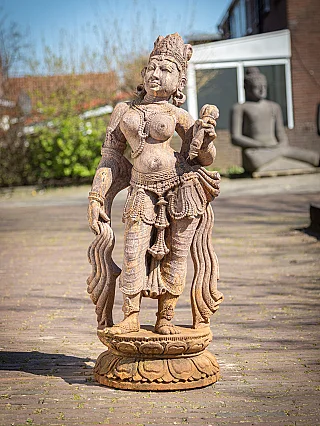
1. The material. Most older Indian sculpture is stone. Buff, pink and red sandstone from Rajasthan and central India, grey schist in the far northwest, dark basalt in the east and white marble in Rajasthan and Gujarat. Stone figures are far more common in India than in Nepal or Tibet, where metal dominates.
2. The body. Indian figures are full, rounded and sensual, with broad shoulders, a narrow waist and soft, fleshy forms. Hindu gods and goddesses often stand in tribhanga, the triple bend, with the body swaying at the neck, waist and knee. A stiff, slender figure points away from India.
3. Jewellery and dress. Gods, goddesses and Bodhisattvas wear heavy necklaces, armlets, earrings, a jewelled belt and a tall crown or piled-up hair. The cloth is often so thin that it is shown only by a few lines at the hem. The Buddha himself wears a plain monastic robe.
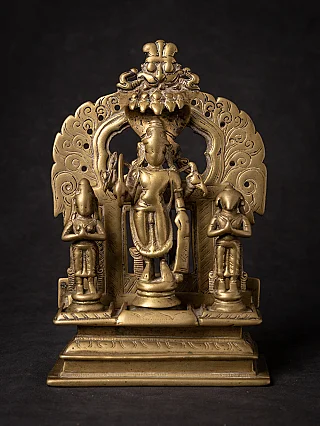
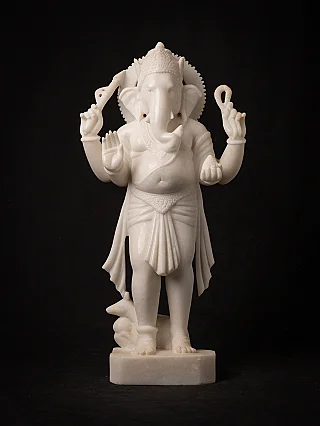
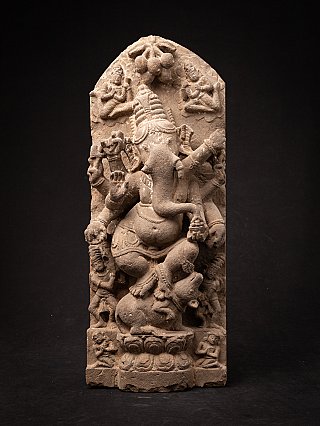
4. Arms and attributes. Many Hindu deities have four or more arms, each holding an object that tells you who they are: the trident and drum of Shiva, the conch and discus of Vishnu, the axe and bowl of sweets of Ganesha. Count the arms and look at what the hands hold before anything else. Our page on Hindu gods explains the most common ones.
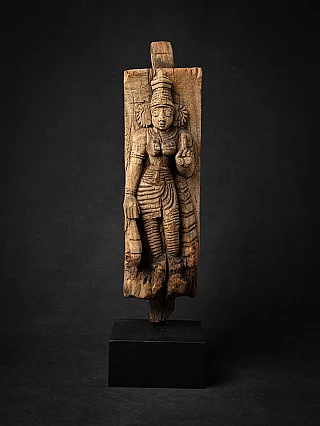
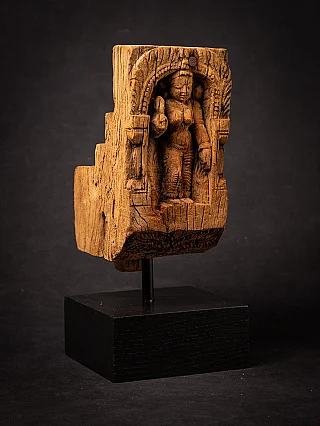
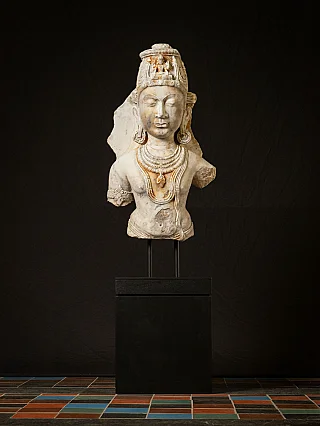
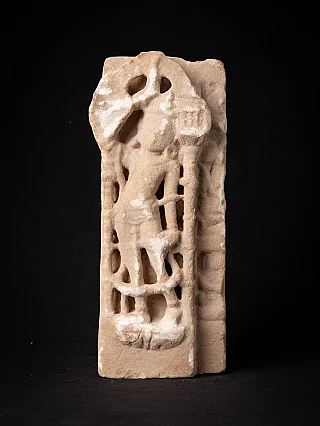
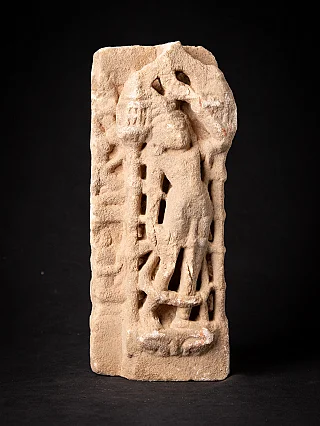
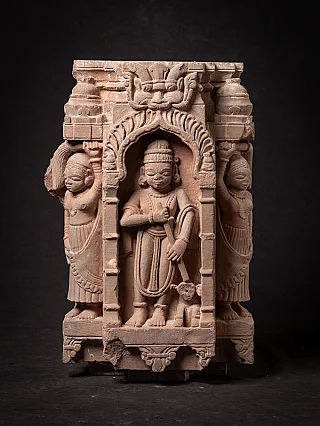
5. The back slab. Temple figures were often carved in relief against a stone slab, the stele, with smaller attendants, flying celestials, lions or elephants around the main figure. Many pieces on the market are fragments of temple walls, so you may see a broken edge or the start of a neighbouring figure.
6. The surface. Sandstone that stood outdoors for centuries is softened by weather, with rounded edges and worn faces. Stone that was worshipped inside a shrine often shows a smooth, darkened patina from oil and offerings. Old bronzes show wear on the high points from handling and ritual bathing.
Indian sculpture through the ages
Indian sculpture is usually described by the dynasty or the region it comes from. Styles overlapped, and workshops kept older styles alive long after a kingdom had ended, so the style of a statue does not always tell you its age. You will find an overview of all regions under Buddha statue styles and periods.
Gandhara (1st to 5th century)
Gandhara, in present-day Pakistan and Afghanistan, was where Indian and Greco-Roman art met. Gandhara Buddhas are carved in grey schist, with wavy hair, a straight nose and a heavy robe in deep, toga-like folds. Bodhisattvas often wear a moustache, sandals and rich jewellery. Gandhara is no longer part of India, but its art is the starting point for the Buddha image across Asia.
Mathura (1st to 3rd century)
At the same time, sculptors in Mathura, south of Delhi, made Buddhas in a fully Indian style. They used a red sandstone flecked with cream spots, which is still the easiest way to recognise them. The figures are broad and strong, with a smiling face, a thin robe that leaves the right shoulder bare and the right hand raised in the abhaya mudra, the gesture of fearlessness.
Gupta period (4th to 6th century)
Often called the classical age of Indian art. Gupta Buddhas from Sarnath and Mathura have downcast eyes, a calm inward expression, tight snail-shell curls and a robe so fine that it seems to disappear against the body. The seated Buddha teaching in the dharmachakra mudra at Sarnath became a model for Buddhist art across Asia.
Pala period (8th to 12th century)
Under the Pala kings of Bihar and Bengal, great monasteries such as Nalanda drew monks from all over Asia. Pala sculpture is carved in dark grey or black stone or cast in bronze, often with a pointed stele behind the figure. Crowned Buddhas and the Bodhisattvas and goddesses of Vajrayana Buddhism are typical. The Pala style travelled with monks and pilgrims to Nepal, Tibet, Burma and beyond.
Medieval temple sculpture (9th to 13th century)
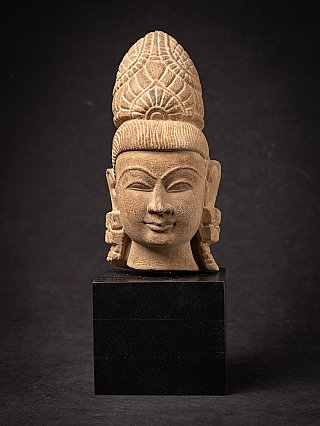
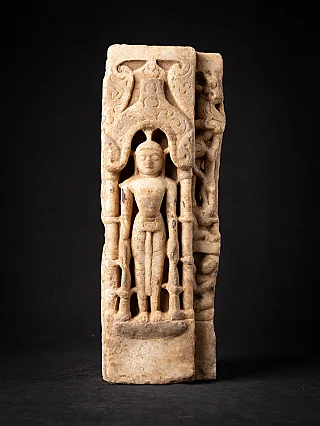
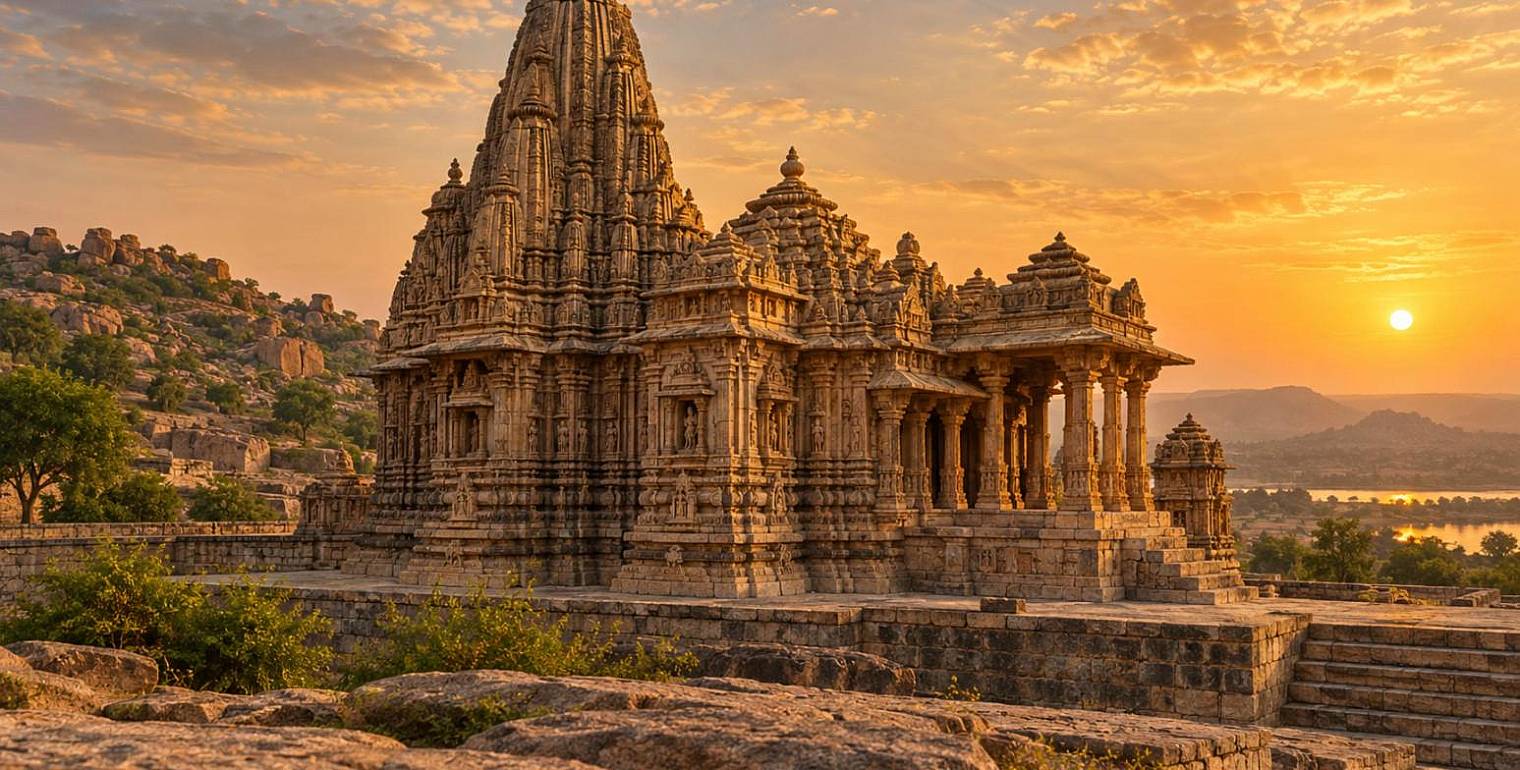
In these centuries regional dynasties covered northern and central India with stone temples, from Khajuraho in central India to the temples of Rajasthan and Gujarat. Their walls carried hundreds of gods, guardians, apsaras and naginis carved in sandstone, and the Jain temples of Rajasthan and Gujarat were built in white marble. Many of the older stone heads and panels in our collection come from this tradition.
Chola bronzes (9th to 13th century)
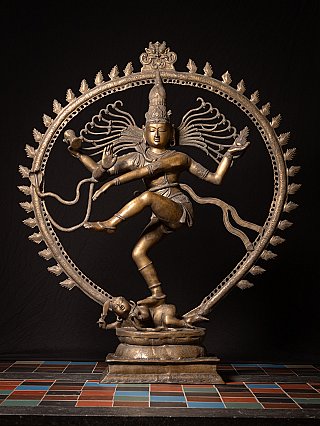
In Tamil Nadu in the south, the Chola kings commissioned temple bronzes cast with the lost-wax method. They are slender and graceful, with crisp detail, and were made to be carried in procession. The best-known image is Shiva as Nataraja, the lord of the dance, inside a ring of flames. Read more about Nataraja, the dancing Shiva.
Later Indian sculpture (17th to 20th century)
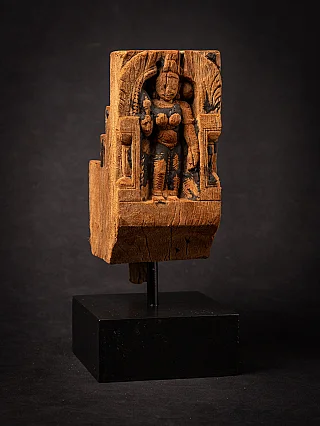
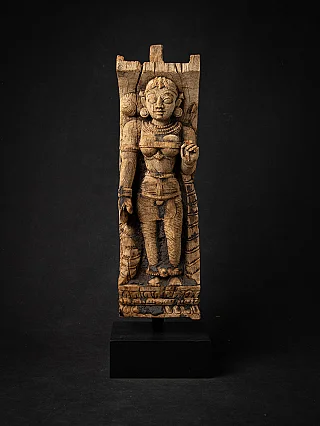
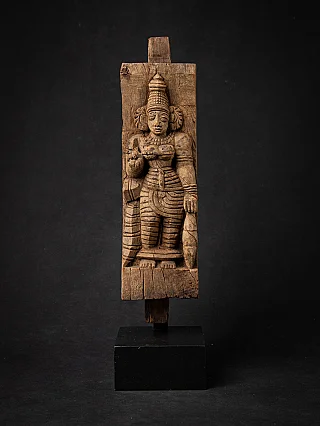
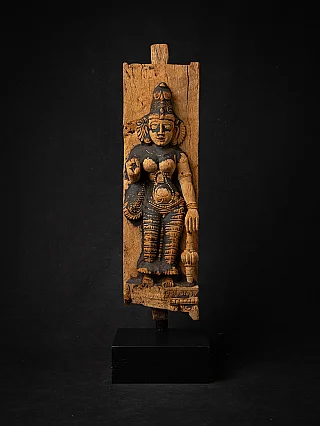
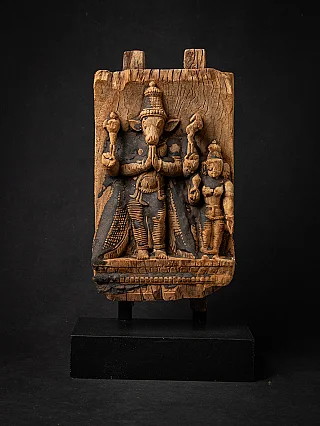
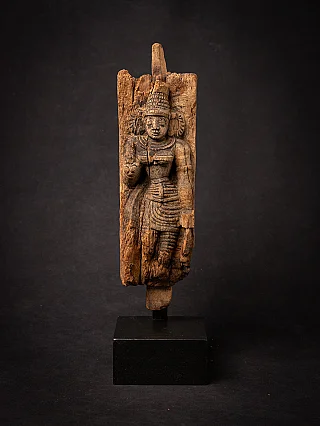
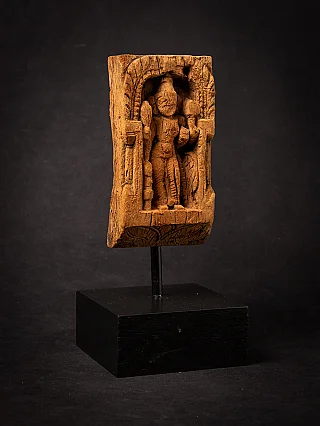
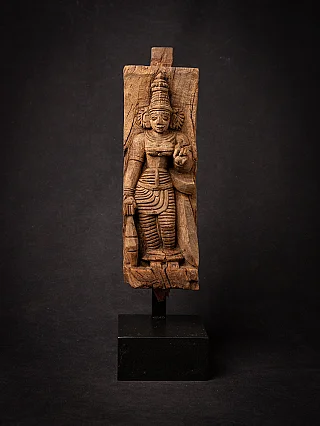
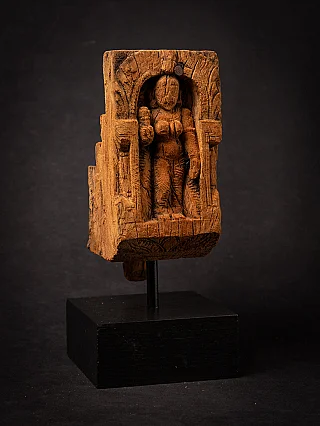
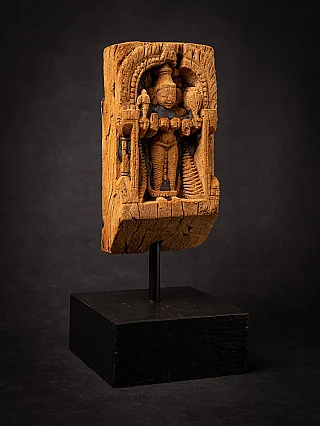
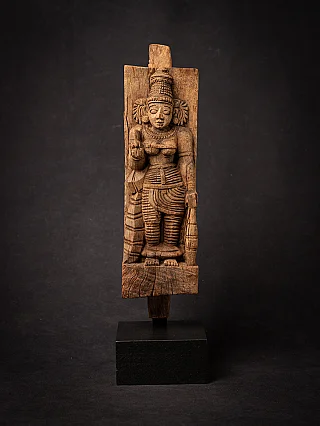
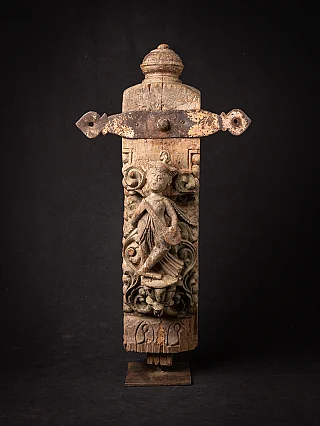
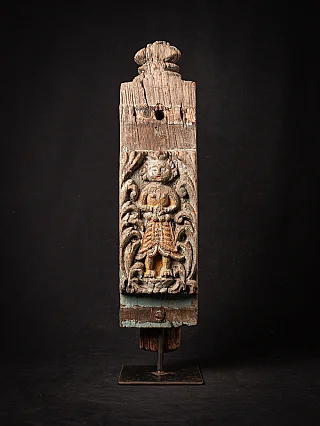
Bronze, brass, wood and marble images for temples and home shrines were made all over India in later centuries, often in older styles. South Indian temple chariots and doorways were decorated with carved wooden panels of gods and goddesses, and Rajasthan has a long tradition of white marble figures. Most Indian statues you will find on the market today belong to this period.
Indian or Nepali? A quick check
Nepal and northern India share many gods and much of their iconography, so the two are easily confused. Three things help:
- Material: Nepali statues are mostly gilded copper or bronze, often set with turquoise and coral. Older Indian pieces are far more often stone, and Indian metal images are usually ungilded bronze or brass.
- Face: Nepali faces have the soft, broad features of the Newar workshops of the Kathmandu Valley, with heavy-lidded eyes. Indian faces are fuller and more sensual, with a fuller mouth.
- Ornament: Nepali jewellery is fine and precise, with inlaid stones. Indian ornament is carved or cast in the same material as the figure.
Want to compare for yourself? Read about Buddha statues from Nepal or have a look at our Nepali Buddha statues.
Hindu, Jain and Buddhist statues
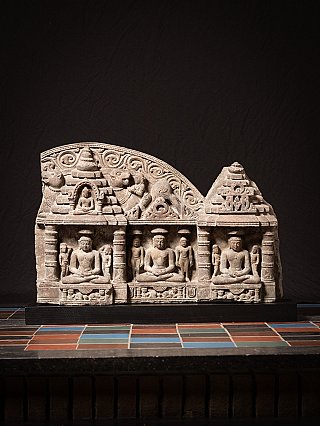
Next to the Buddha, Indian sculptors made images for three living religions. These are the forms collectors come across most often:
- Ganesha. The elephant-headed god of beginnings, who removes obstacles. He has a round belly, usually four arms and often a bowl of sweets and a small mouse at his feet. See our Ganesha statues.
- Shiva. Recognised by his trident, his drum, the snake around his neck and the crescent moon in his hair. He is also worshipped as the lingam, a rounded stone pillar. Read about Lord Shiva or see our Shiva statues.
- Vishnu and Krishna. Vishnu holds the conch and the discus and wears a tall cylindrical crown. Krishna, one of his forms, is often shown as a cowherd playing the flute. See our Vishnu statues and Krishna statues.
- Goddesses. Parvati, Lakshmi and the many forms of the goddess Devi stand gracefully in the triple bend, richly jewelled. See our Parvati statues.
- Hanuman. The monkey god, devoted servant of Rama. A five-headed form, Panchamukhi Hanuman, is popular in later marble and bronze. See our Hanuman statues.
- Jain Tirthankaras. They look much like a seated Buddha in meditation. They sit or stand rigidly upright and often carry a small diamond-shaped mark, the shrivatsa, in the middle of the chest. Whether they wear clothes depends on the Jain tradition: Digambara images are naked, while Svetambara images wear a thin lower garment, often have inlaid eyes and in temples are sometimes dressed with jewellery and a crown. An emblem on the base tells you which of the 24 Tirthankaras is shown.
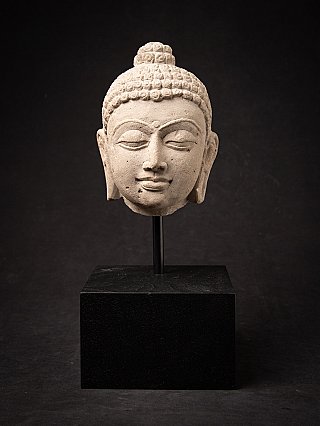
- Buddhas and Bodhisattvas. The Buddha wears a monastic robe and has a raised mound, the ushnisha, on top of his head. Bodhisattvas such as Avalokiteshvara are crowned and jewelled like princes.
Materials: sandstone, marble, bronze and wood
The material tells you a lot about where and when an Indian statue was made.
Sandstone
The classic material of Indian temple sculpture, quarried in Rajasthan, Madhya Pradesh and Uttar Pradesh. Its colour runs from cream and buff to pink and red. Old sandstone is soft to the eye, with rounded edges and a weathered skin. Browse our stone statues.
Marble
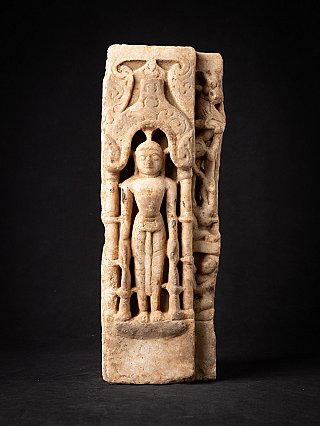
White marble from Rajasthan and Gujarat was used for Jain temples and for Hindu images, and it is still carved in Rajasthan today. Older marble takes on a warm, slightly yellowed tone. Read about marble Buddha statues or browse our marble statues.
Bronze and brass
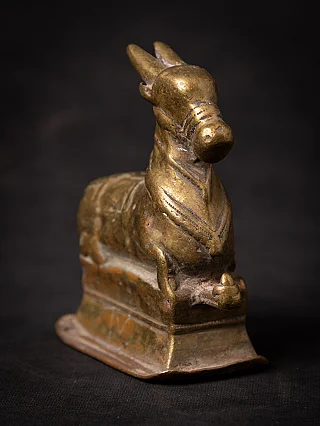
Indian metal images were cast with the lost-wax method, usually as solid pieces. They were rarely gilded and were washed and anointed in worship, which gives old pieces a smooth, worn surface and a dark patina in the recesses. Read about bronze Buddha statues or browse our bronze statues.
Wood and terracotta
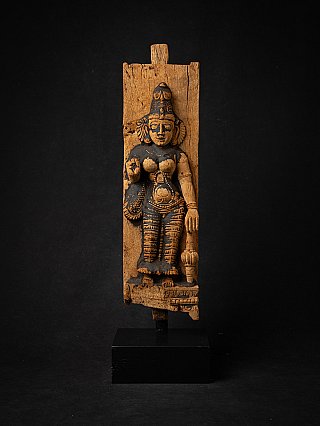
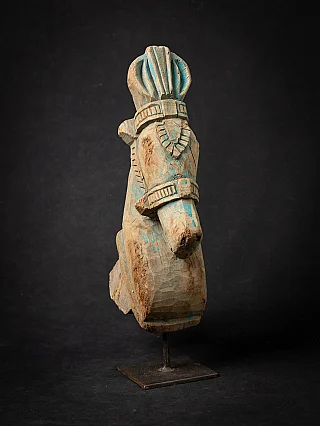
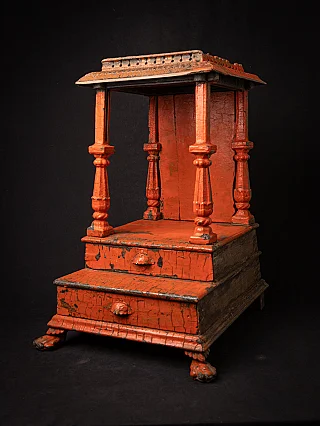
Wooden panels from temple chariots, doorways and shrines show gods and goddesses in deep relief, often with traces of old paint. Terracotta was the material of village shrines and is one of the oldest sculptural traditions in India. Read about wooden Buddha statues or browse our wooden statues.
Religion in India
The Buddha lived and taught in the plains of the Ganges, and for more than a thousand years India was the heart of the Buddhist world. Pilgrims still travel to Bodh Gaya and the Bodhi tree, where he reached enlightenment. After the 12th century Buddhism almost disappeared from the land of its birth, while it flourished in Sri Lanka, Southeast Asia and the Himalayas. Read more about the disappearance of Buddhism in India. Today about four in five Indians are Hindu, and Buddhists and Jains are small communities. That is why most Indian statues on the market are Hindu or Jain. Was the Buddha Indian or Nepali? Read was the Buddha born in Nepal or India.
Our buying trips in India
India has been part of our buying for years. In 2020 a full container arrived in Deventer from Odisha, on the east coast, a region with a long tradition of stone carving, with sandstone Buddhas, female figures and Hindu gods such as Shiva, Krishna and Lakshmi. See the photos of that shipment.
In March 2026 Peter Vredeveld and Gaurav Manandhar travelled to India again. In Delhi they met collectors and specialists in Indian sculpture, and in Jodhpur they looked at the sandstone carving of Rajasthan, a tradition closely tied to the region's great temples. Read the full story in our news item On the ground in India and Nepal.
Where our Indian statues come from
We follow the laws of every country we buy in, and we guarantee that the age and information we give for every piece are correct. Read our authenticity guarantee and our article on how to identify an antique Buddha statue. Have a statue of your own? Read how to care for your Buddha statue.
Frequently asked questions
How can I tell if a statue is from India?
Look at several features together: the material (sandstone or marble is common), the full and rounded body, the triple bend, the rich jewellery and, for Hindu gods, the number of arms and the objects in the hands. No single detail settles it on its own.
How old is my Indian statue?
The style gives a first idea of the period, but Indian workshops often worked in older styles long afterwards. Weathering, patina, tool marks and the way a piece was made help to narrow it down. A good place to start is our article on how to identify an antique statue.
How do I tell a Jain statue from a Buddha?
Clothing alone will not tell you, because some Jain images are naked and others, from the Svetambara tradition, wear a thin lower garment. Look at the posture and the chest instead: a Tirthankara sits or stands rigidly upright, often has the diamond-shaped shrivatsa mark on the chest and usually has an emblem on the base. The Buddha wears a monastic robe, usually over one or both shoulders, and has the ushnisha on top of his head.
Which Hindu god is my statue?
Look at the hands. An elephant head means Ganesha, a trident and drum mean Shiva, a conch and discus mean Vishnu, a flute means Krishna. Our page on Hindu gods helps you identify the others.
Can I buy an antique Indian statue legally?
India does not allow antiquities, which under Indian law means objects more than 100 years old, to be exported without permission from the government, so always ask a dealer where a piece comes from. We follow the laws of the countries we buy in. See our authenticity guarantee.
Do you ship Indian statues abroad?
Yes. We send statues from our gallery in Deventer, and delivery overseas is possible as well. Large or fragile pieces can be delivered and placed by us, also outside the Netherlands. See our order information.
Also from India: Hindu god statues, Buddha heads and stone statues.
Share this page